WHAT you need
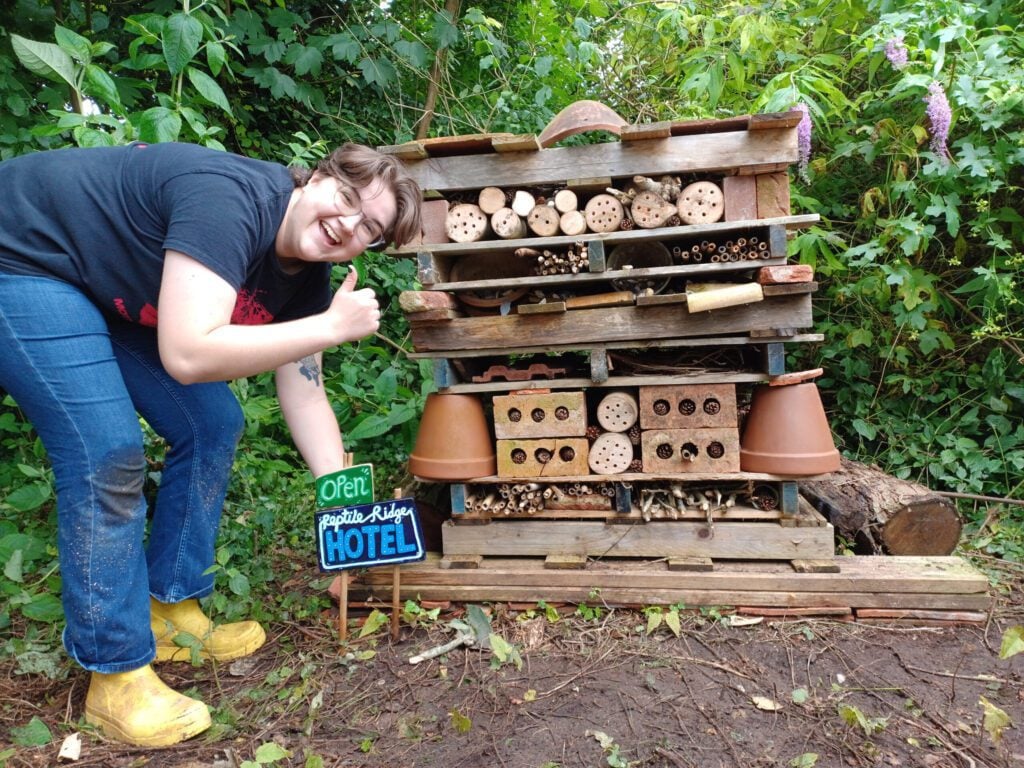
- Three to seven old wooden pallets
- Some bricks
- Plastic bottles
- Leaves, twigs, bark, straw, bamboo canes
- Pebbles and big stones
- Old logs
WHERE to build it
To make it a good home for as many insects as possible, build your tower where it gets a mix of sun and shade. Pick a spot that is level and sheltered from the wind.
WHEN to build it
You can build a bug tower any time, but the best time to build it is in winter, ready for bugs to move in during the spring.
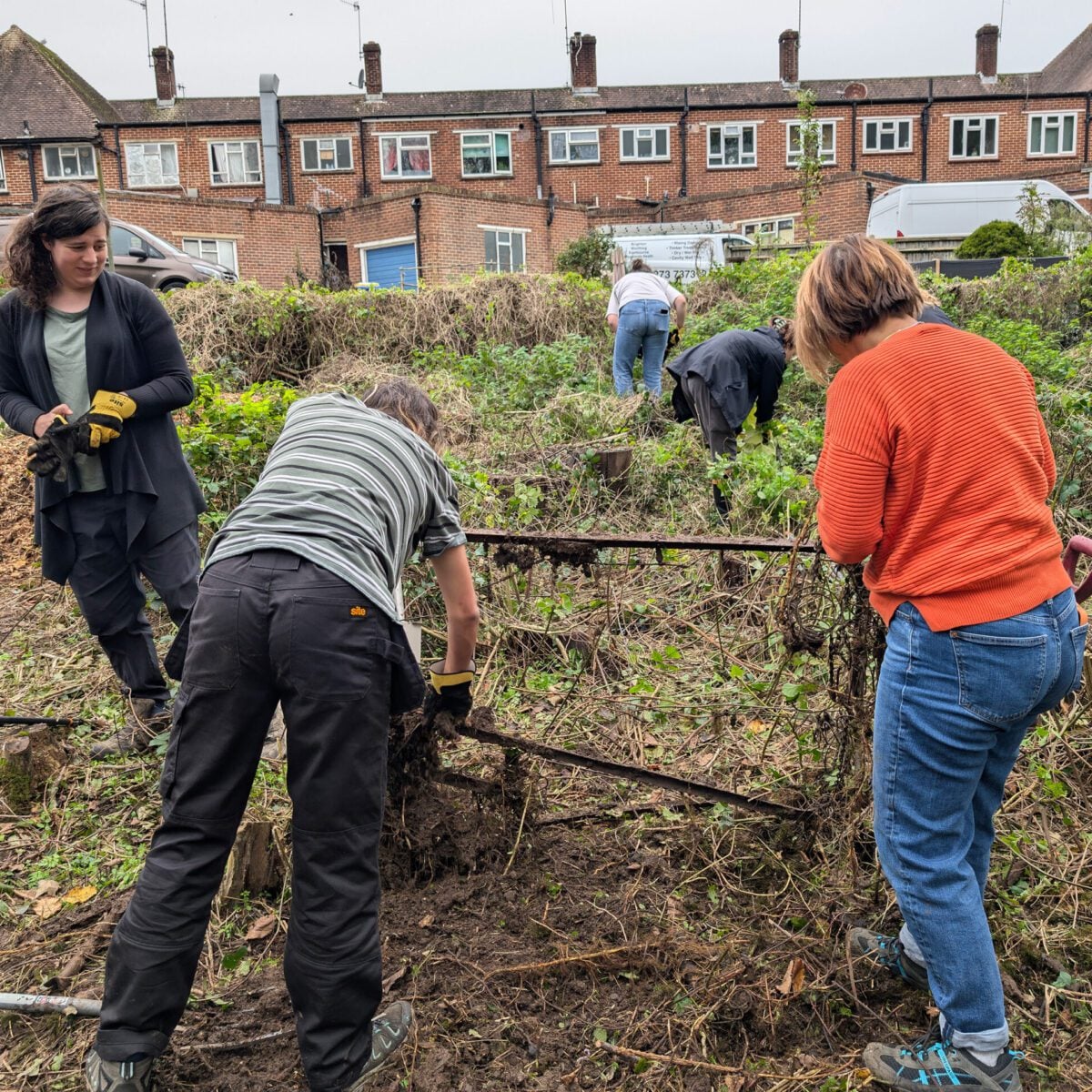
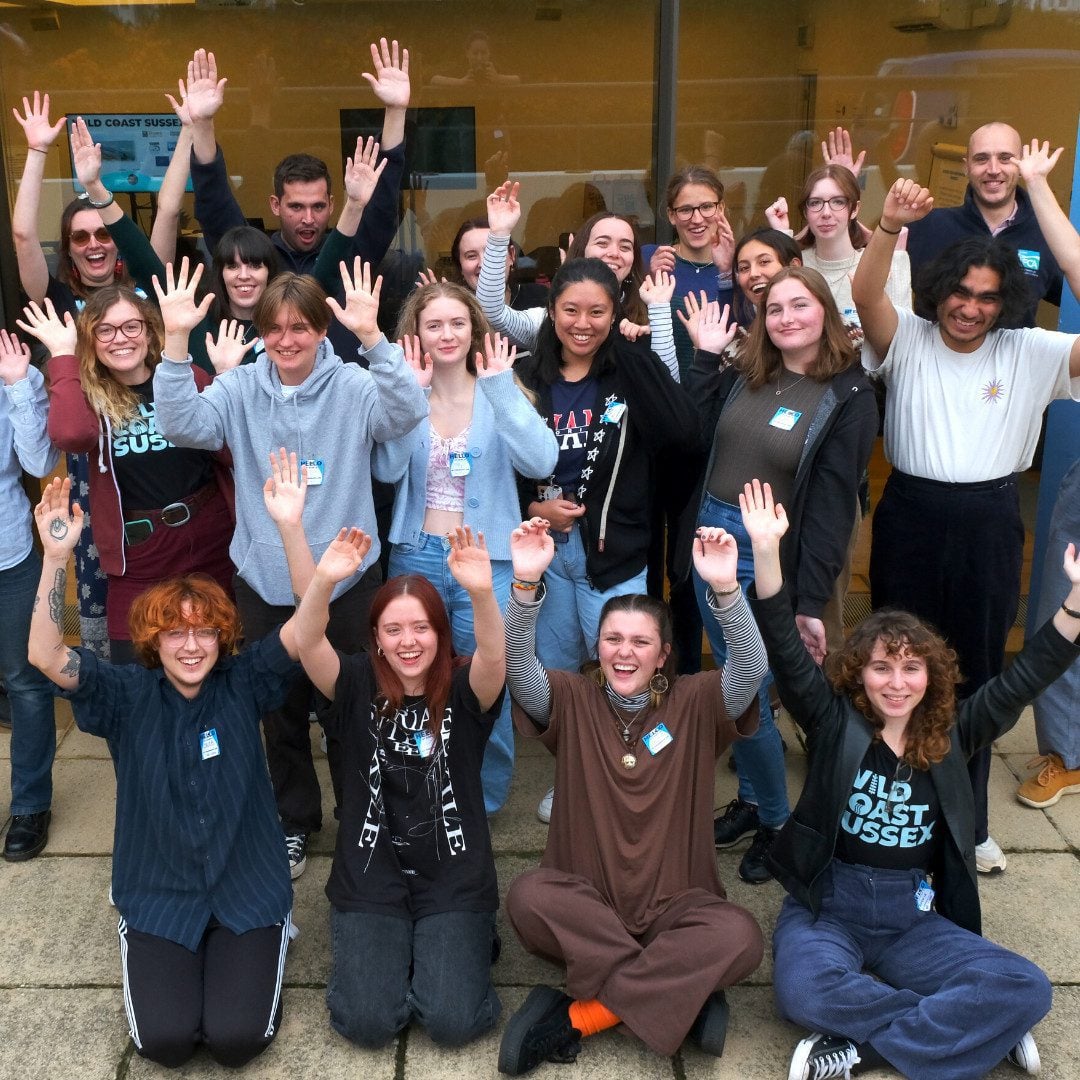
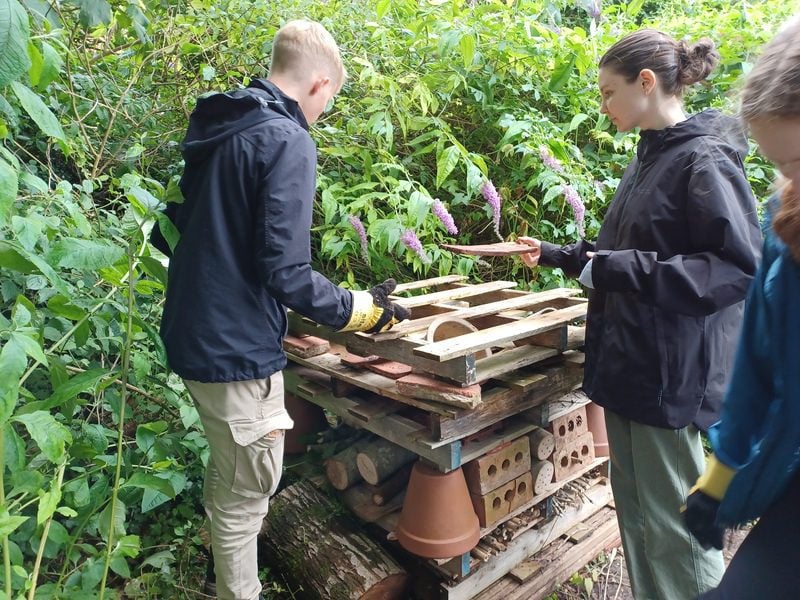 Bug hotel building at the Deneway © Sophie Atkinson
Building your bug tower
Every bug tower is unique! The most important thing is that it has lots of dark nooks and crannies where creatures can live, create cocoons or lay their eggs.
- Create an even base for your tower by laying out bricks on the ground.
- Stack the pallets, as evenly as possible on top of the bricks. You can put bricks between the pallets too. (Use long screws to secure the pallets if they’re wobbly.)
- Collect material to create your nooks and crannies in the gaps between the pallets. You can use:
- dead seedheads and stalks
- small piles of rocks
- old logs or wooden planks with different size holes drilled into them
- bundles of twigs or bamboo canes
- egg cartons, toilet roles or plastic containers stuffed with straw
- old plant pots or plastic bottles stuffed with materials
- Fill the gaps between the pallets with your materials. Don’t worry if you don’t have enough. You can add more over time.
- Cover the top of the tower with bark, old tiles or a piece of roofing to keep it dry. A roof with an overhang will help protect the tower from the rain. (Get bark from a local tree surgeon if you can. Don’t disturb old pieces of bark, which may already be sheltering insects.)
- Plant wildflower seeds on the top of your tower to create a roof garden if you like.
- Plant flowering plants around your bug tower to provide food for bees and butterflies.
- When you’re done, don’t disturb the tower. Give your guests a chance to move in.