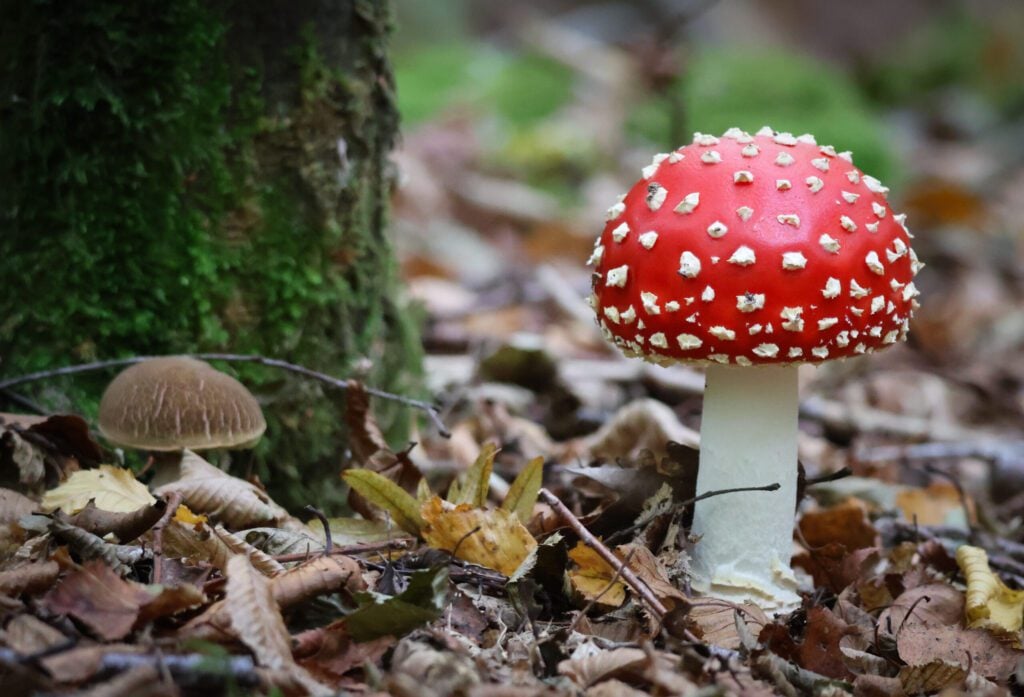
What are fungi?
Fungi are neither plant, nor animal, but in a kingdom of their own.
Fungi form intricate underground connections through tiny threads called mycelium. These vast networks are sharing chains for water, nutrients, and even information.
The above ground result is the part we can see – mushrooms.
Look, but don’t touch
We ask that you do not forage for fungi on our nature reserves.
Some fungi are edible, many are toxic and some can be fatal. It can be difficult to confidently identify fungi and even the experts are cautious, so we do not advise eating anything that you find.
Fungi produce and disperse spores for reproduction, so if you spot mushrooms, please leave them be so they can complete their life cycle, supporting biodiversity and allowing others to enjoy seeing them.
When & where to look
The best time to find fungi is from late summer and into autumn.
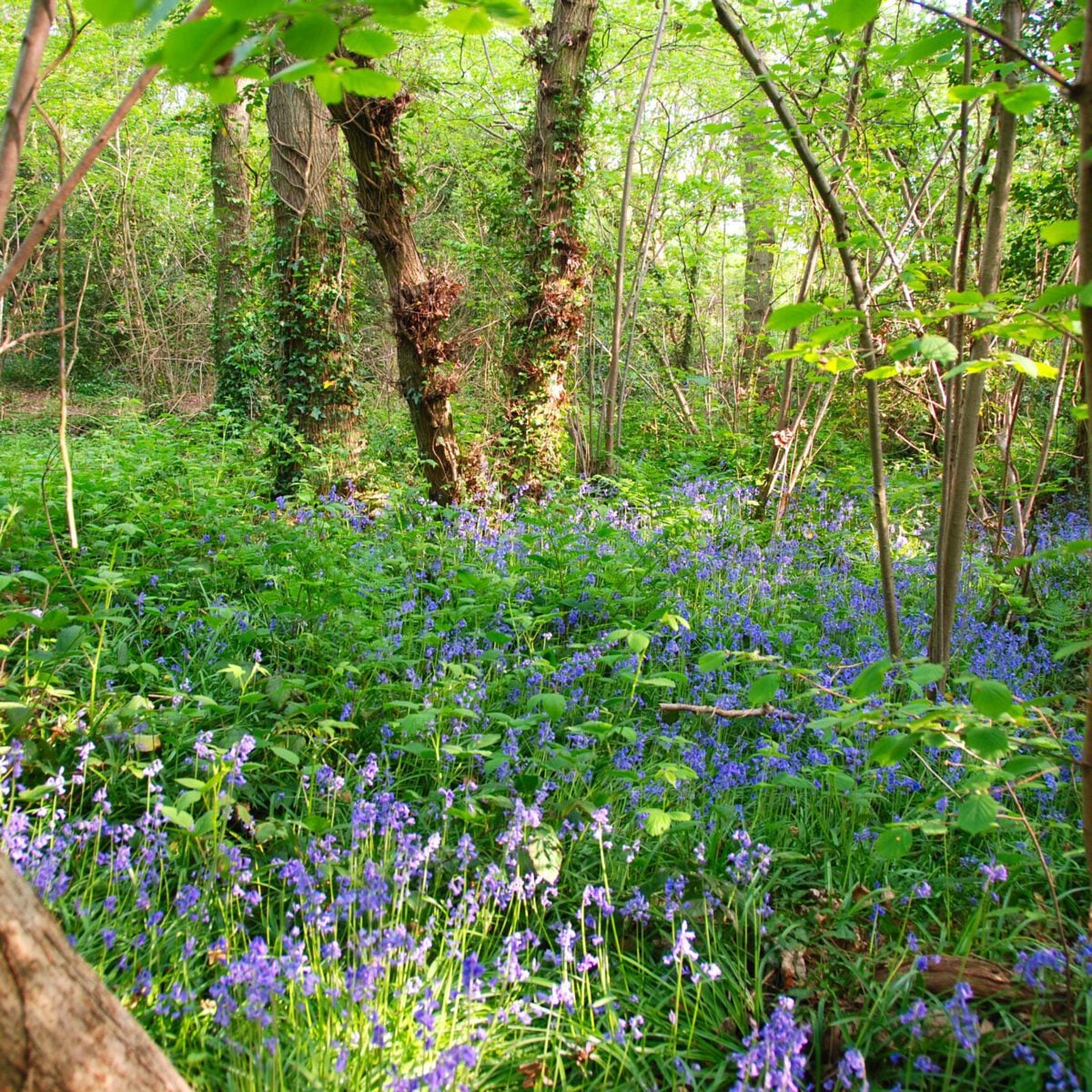
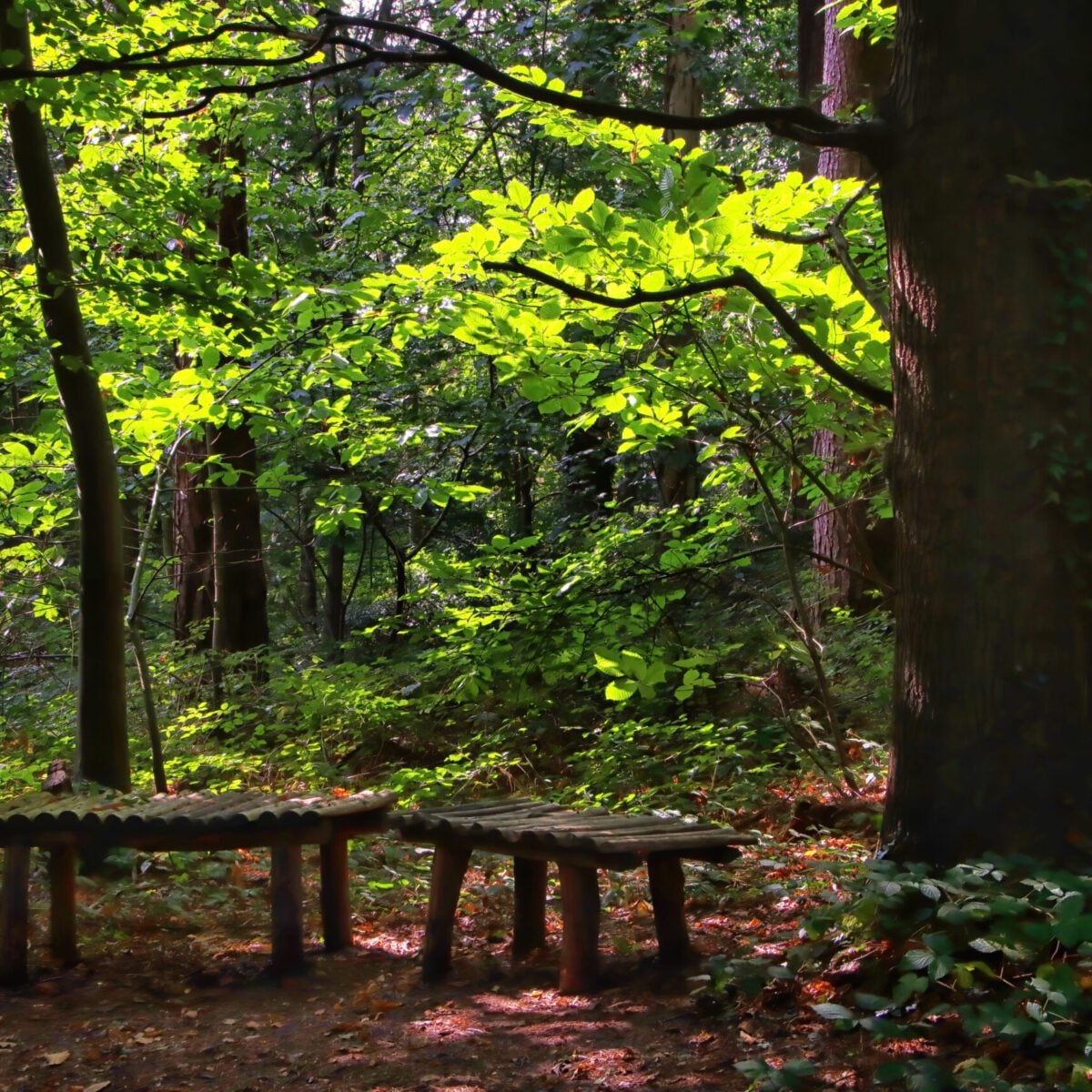
Many species of fungi can be found in woodland, on dead or dying wood, or poking up through leaf litter. Some species, like waxcaps, are grassland specialists. Fungi can also appear in gardens, parks and cemeteries.
Once you start looking for fungi, you will notice they can pop up in all sorts of places!
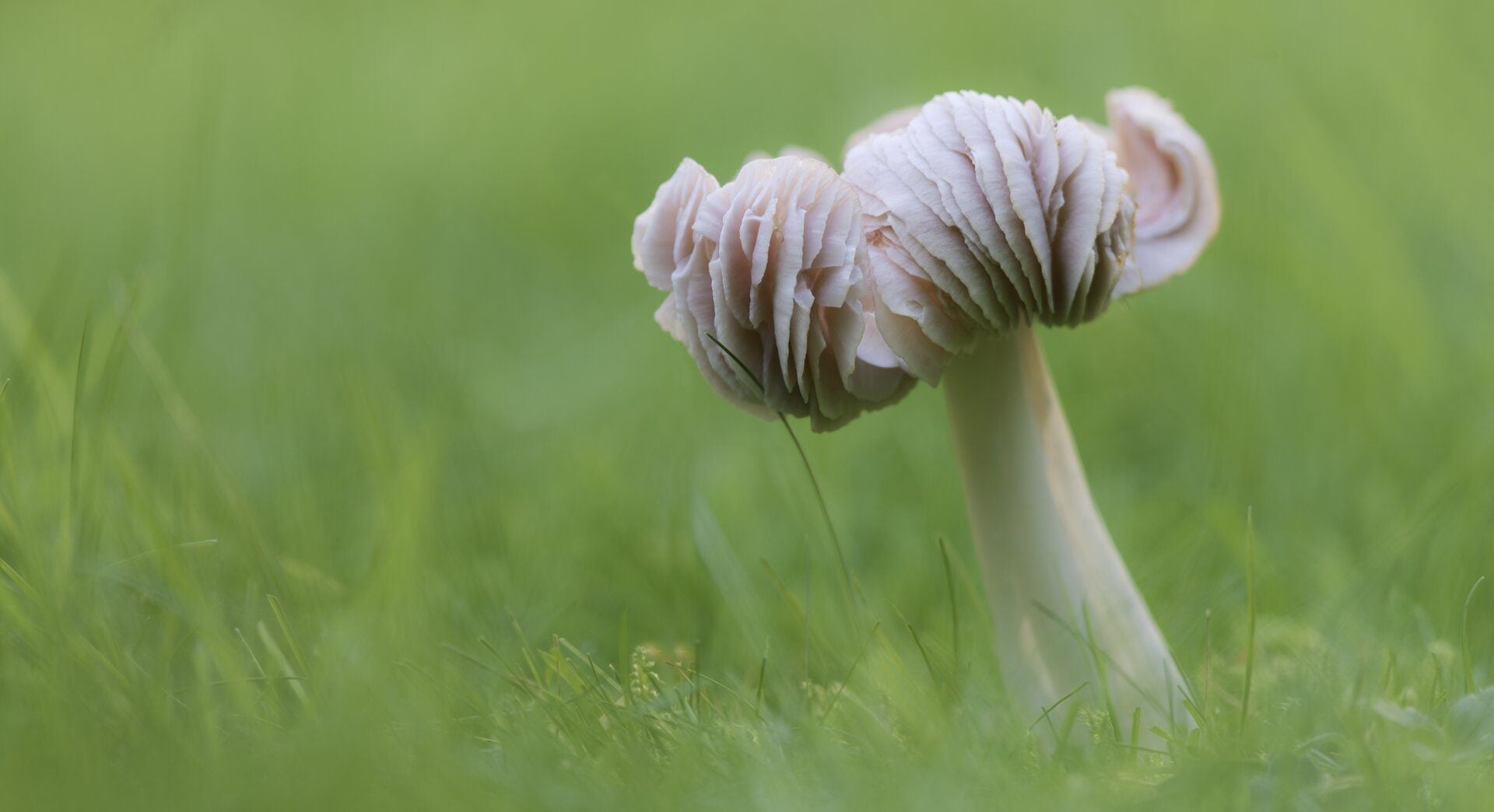
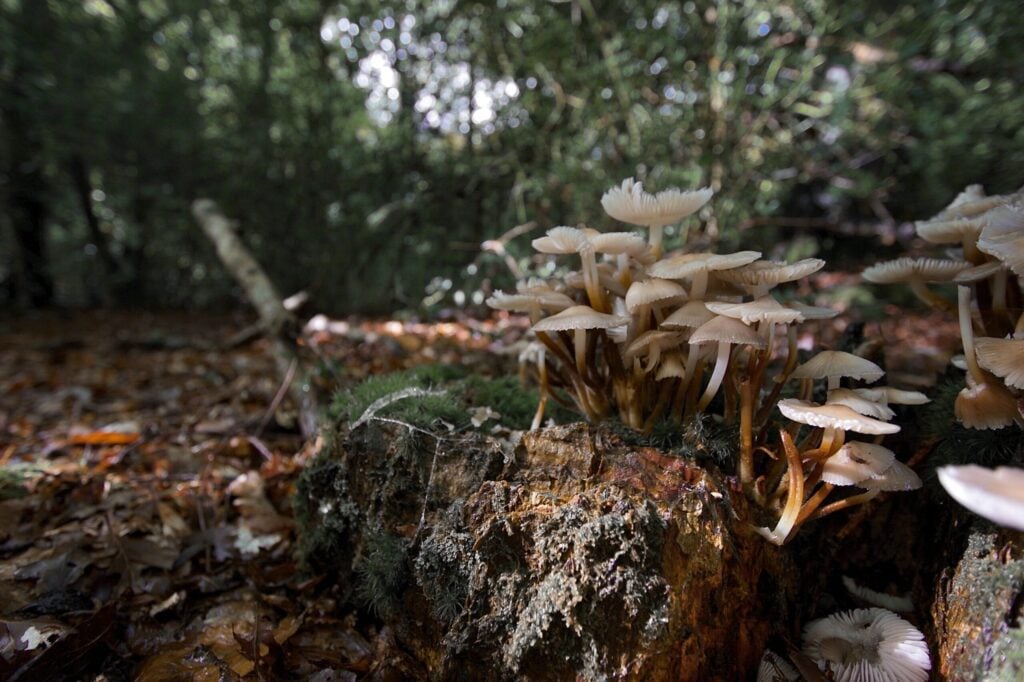 Common Bonnet © Neil Fletcher
Fungi and deadwood
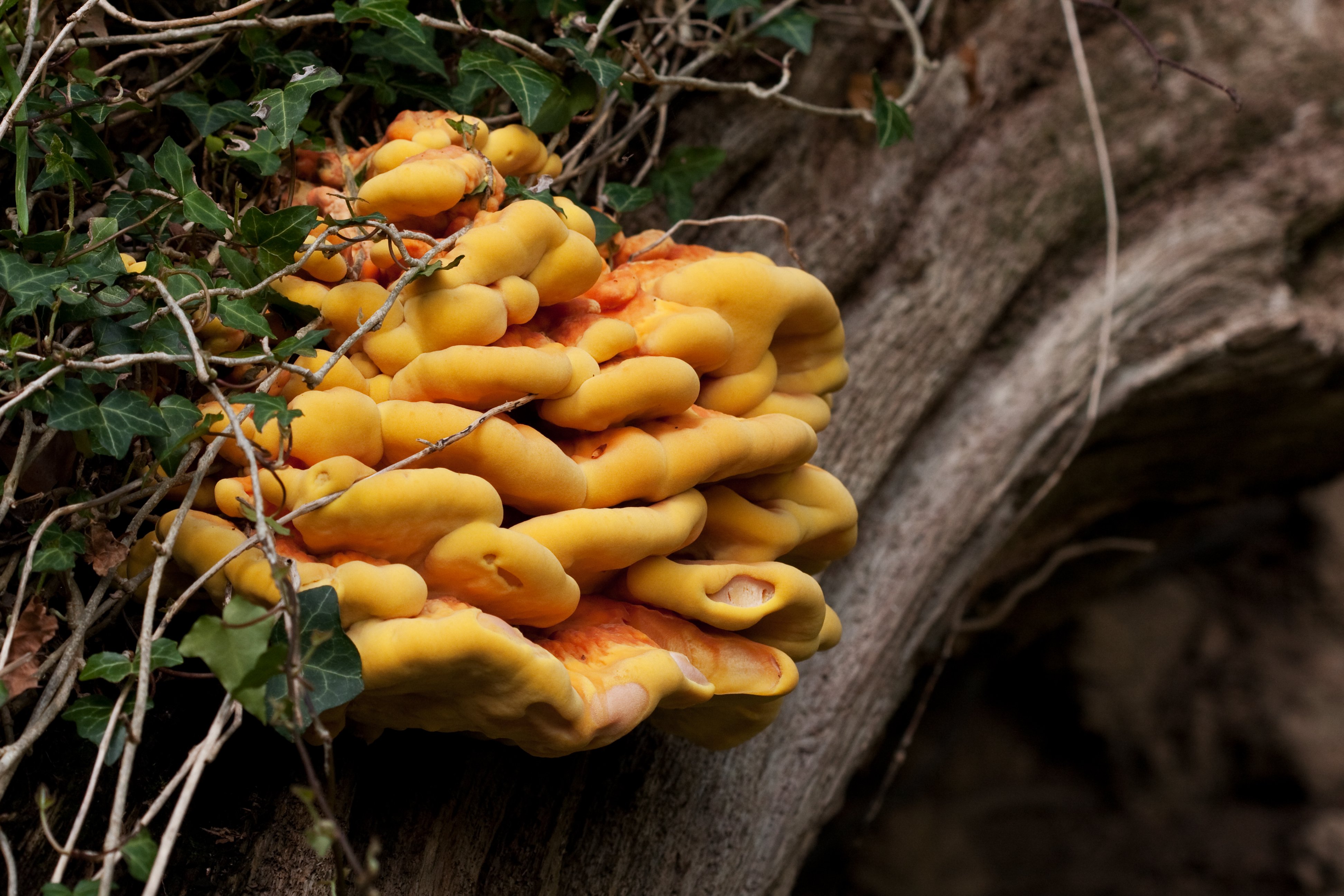
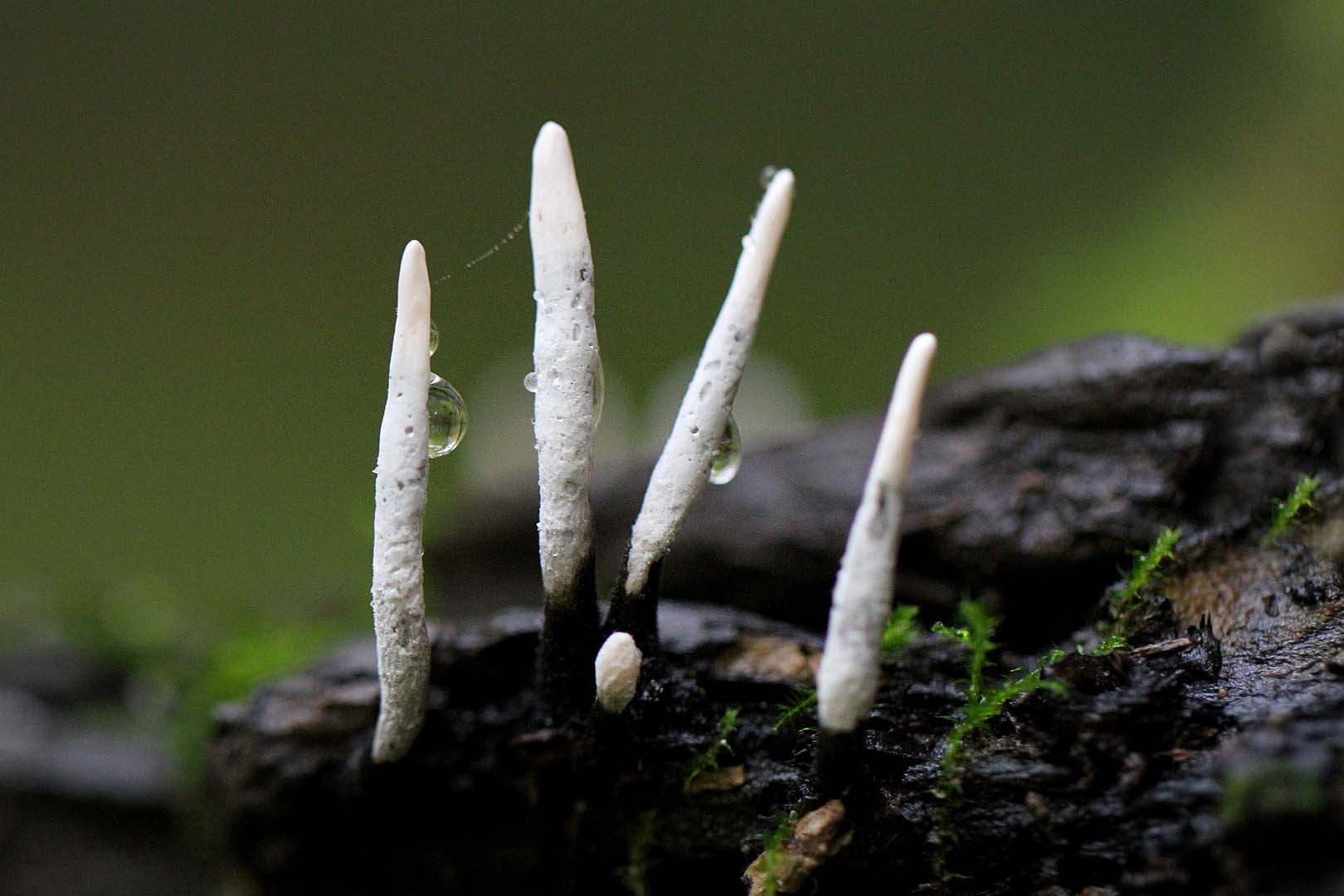
Dead and decaying wood is a vital habitat for many fungi species – and lots of other wildlife!
Insects burrow into the soft decaying wood, feeding and laying their eggs. Insectivorous birds and small mammals, like Hedgehogs, feed on these insects. Larger holes in standing deadwood are used by bats, owls and woodpeckers, for roosting and raising young.
A healthy woodland habitat includes a variety of layers and ages of trees and undergrowth, including those dying and decaying veterans. But it’s not just ancient forests that support this biodiverse habitat – you can do the same in your outdoor space. Resist tidying deadwood, or make a log pile, to provide a haven for deadwood loving wildlife.