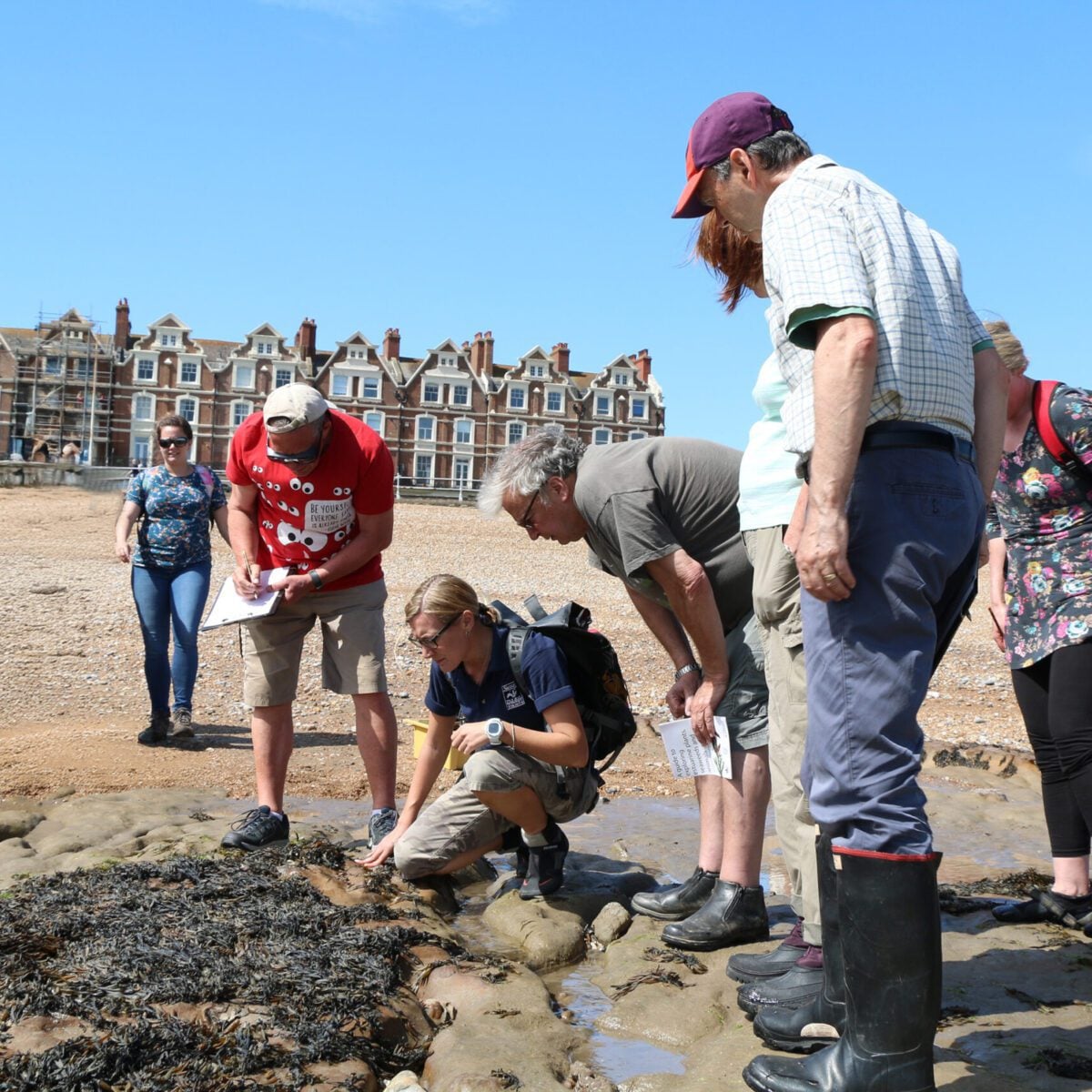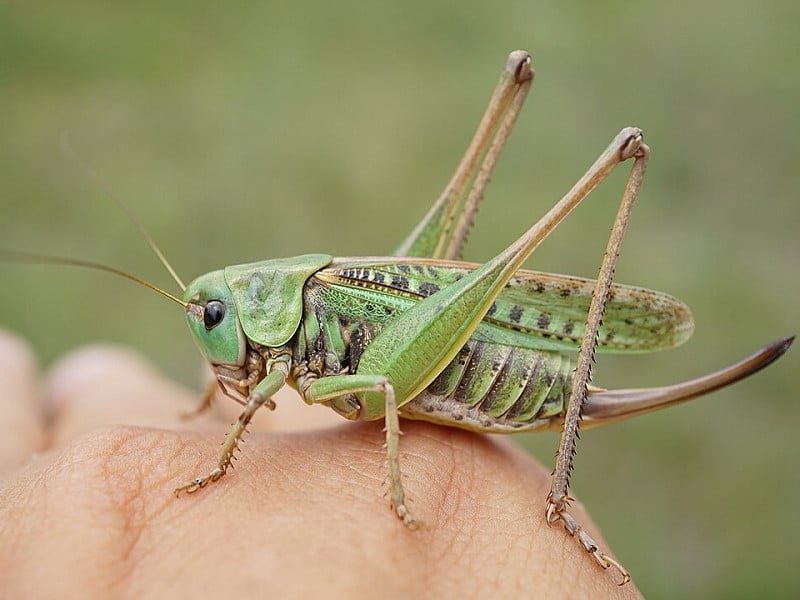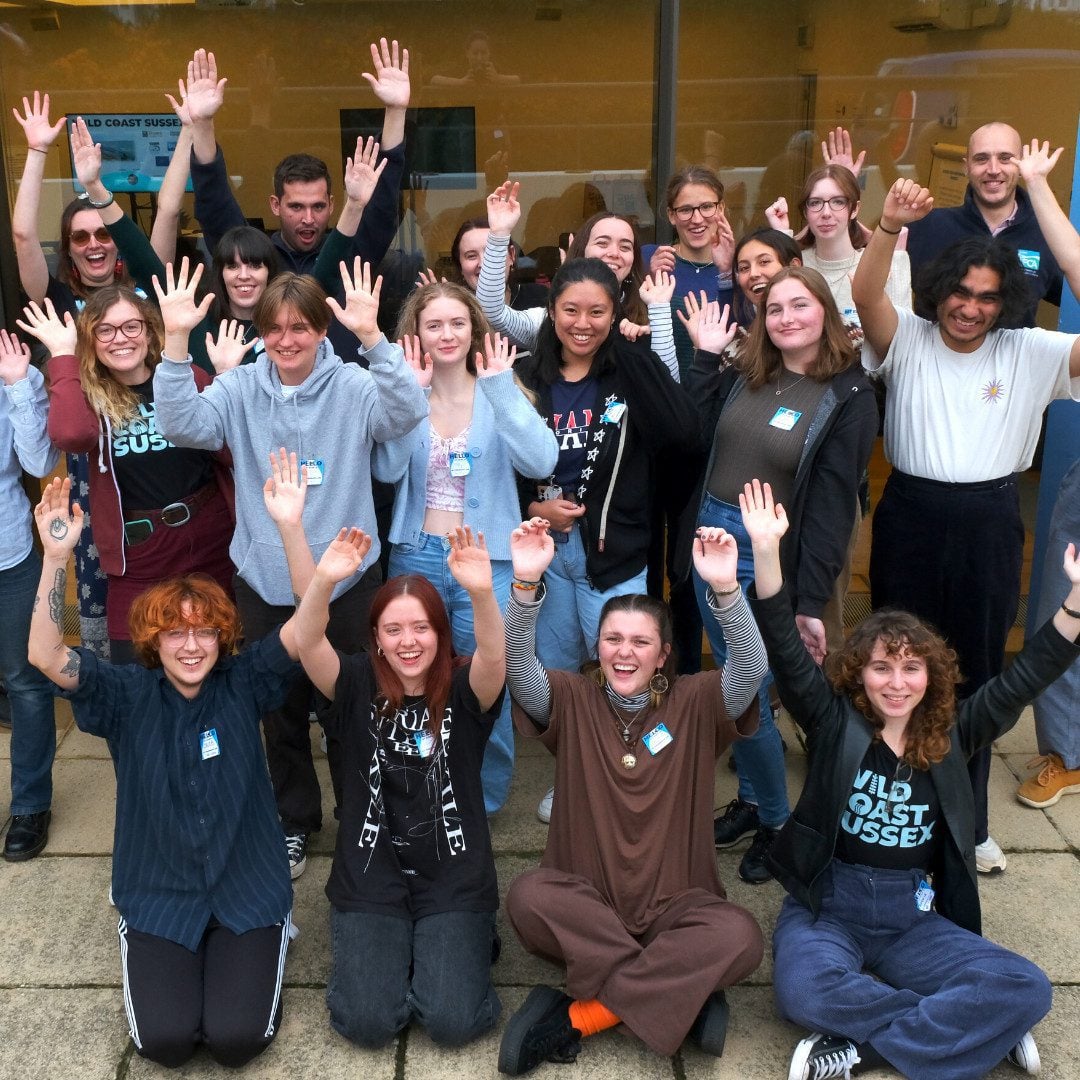
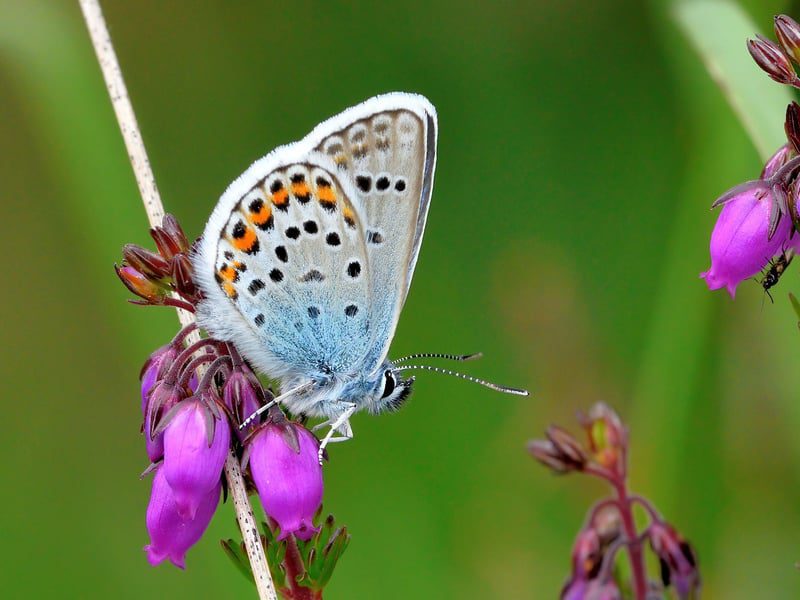
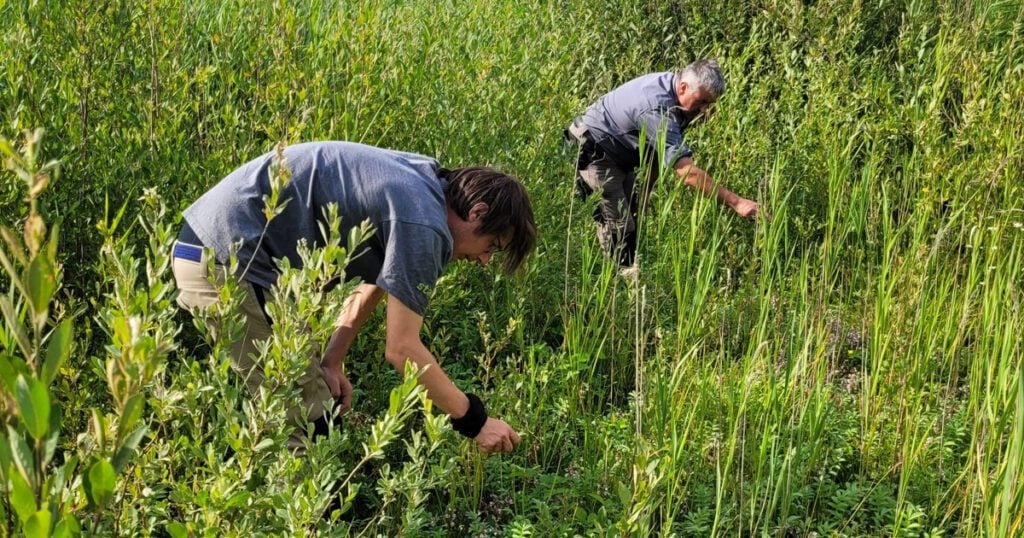
 Staff surveying at Rye Harbour © Alex Worsley
Why we’re doing it
Action based on reality
To defend and restore nature, we need evidence. It’s this that informs our decision making, helping us understand what’s best for different species and places.
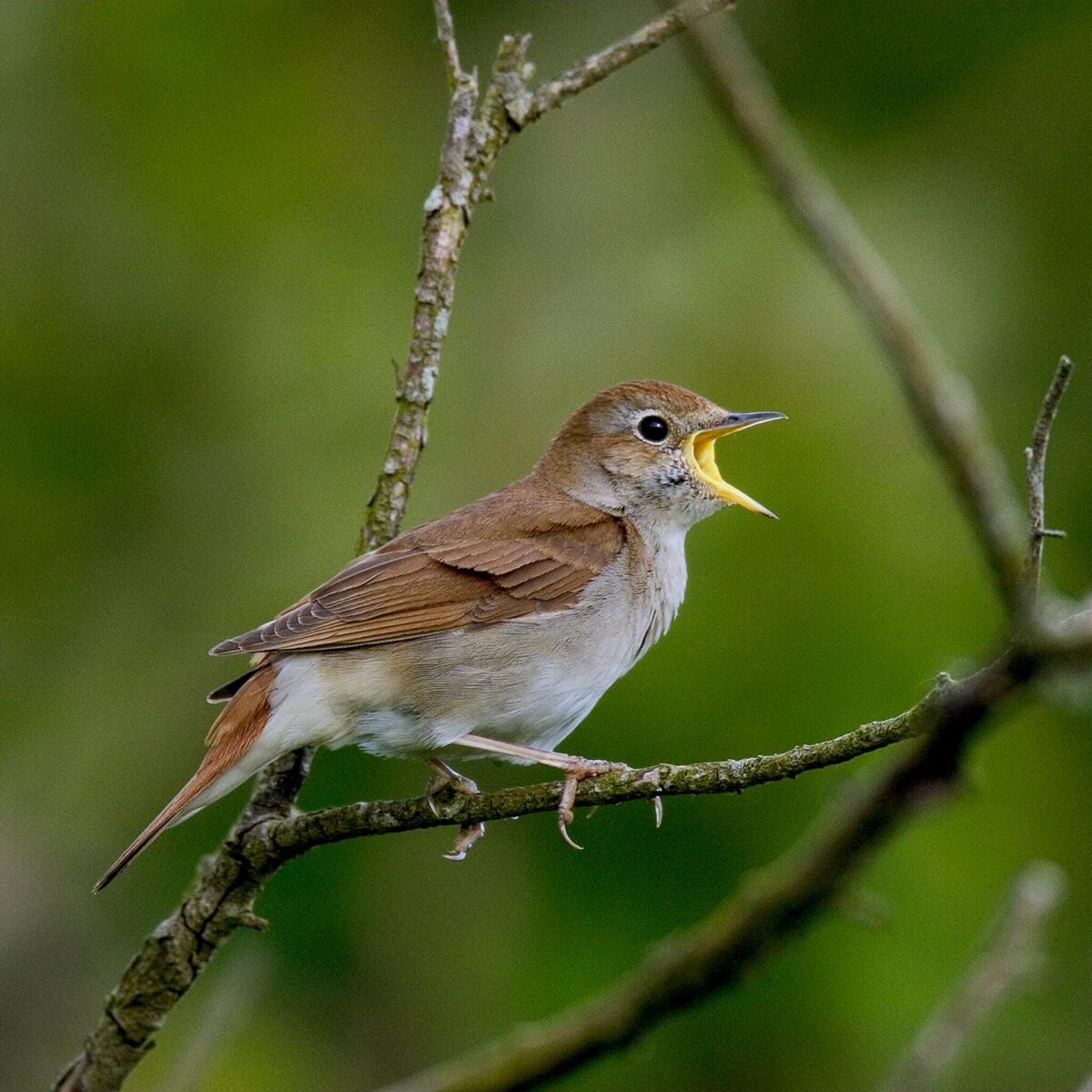
That means we collect ecological data – all sorts of things such as the presence of birds, plants or invertebrates, and the extent and condition of different habitats.
What we’re doing about it
Monitoring our reserves
Surveying enables us to understand what’s happening on our reserves. Collecting data over time means we can determine which species that are present there and pick out patterns of how the picture is changing over time.
This is especially important in the face of the changing climate we’re seeing in the UK and globally. With this knowledge we can learn and adapt our conservation management actions and make sure we’re working in the right way for nature.
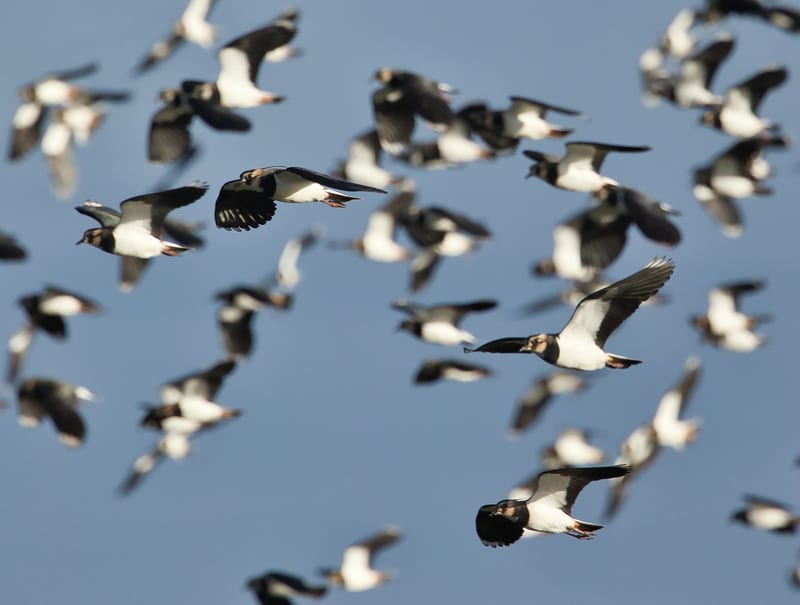 Lapwings in flight © Barry Yates
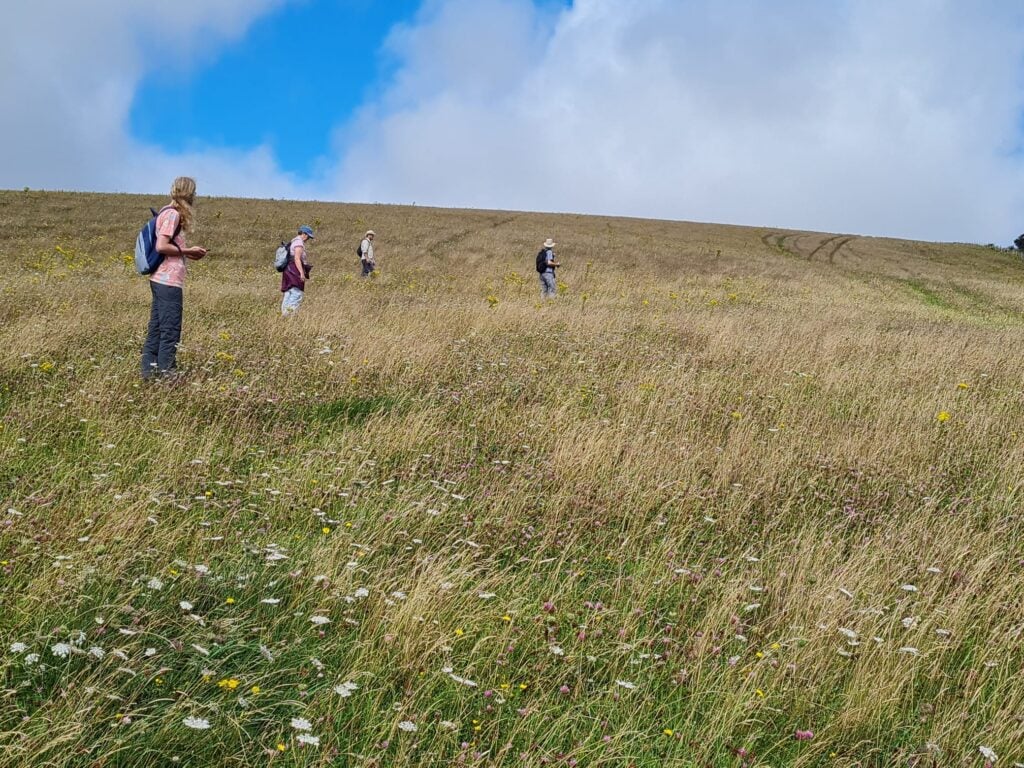 Surveying downland © Alice Parfitt
What we’re doing about it
Gathering and sharing data across Sussex
Sussex Wildlife Trust hosts the Sussex Biodiversity Record Centre (SxBRC), an expert team of data and biodiversity specialists.
The records centre maintains relationships with biological recorders and other data providers – collating, verifying and disseminating as much available information as possible about the plants, animals, habitats and important wildlife and geological sites in Sussex.
All this work helps the Trust – and many others across Sussex – to make decisions informed by the best available evidence.
What we’re doing about it
Supporting citizen science
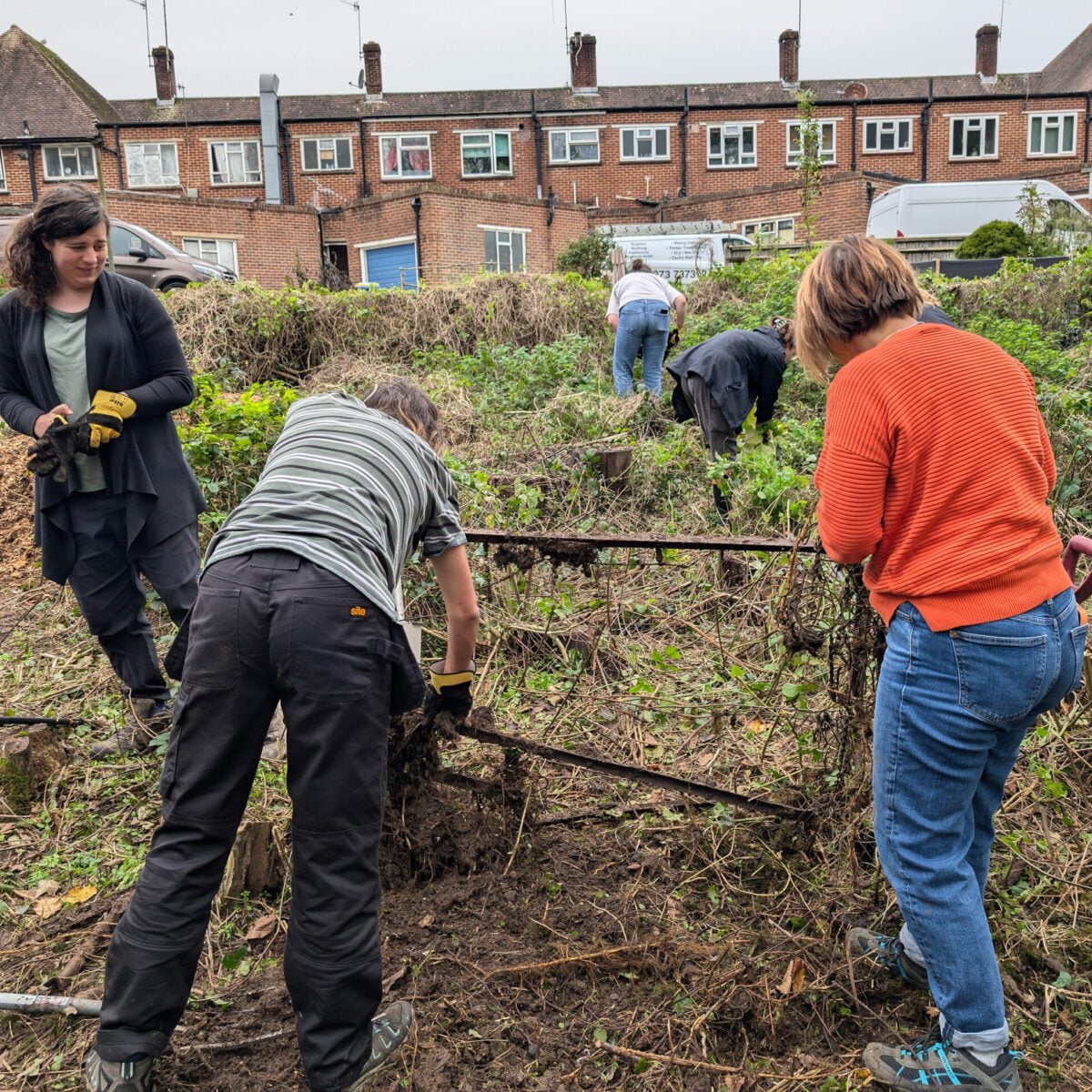
We support people to get involved in data collection through volunteering and community action.
Anyone can get involved – whether that’s by logging your personal sightings via iRecord, joining a team to survey our nature reserves or training up with a community group.
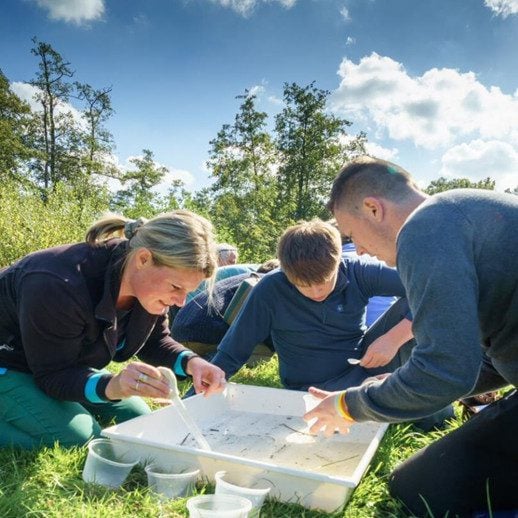 Surveying for otter evidence @ Fran Southgate