


What records are useful?


How to share your sightings
If you’re confident about the identity of what you have found, use iRecord to submit your record.
If you would like help to identify your wildlife first, try iNaturalist.
The Sussex Biodiversity Record Centre (SxBRC)
Sussex Wildlife Trust hosts the SxBRC, run by an expert team of environmental data specialists.
The Centre provides impartial, high-quality data to support informed decisions involving nature across Sussex.
The value of data
Without biodiversity data, we can’t understand what’s happening to wildlife.
Better information can help target better action. From regular organised surveys by experts to casual records submitted by individuals – it all counts!
Sign up for an account with iRecord – it can be accessed via the website, or via an app on your phone.
 Leaf litter surveying © Michael Blencowe
Need ID help? Try iNaturalist
iNaturalist gives you access to a global community of knowledgeable nature specialists who can usually help you with an identification.
iNaturalist is great for people that are relatively new to biological recording, as well as encouraging recording within local communities or at activities such as ‘bioblitzes’.
Start monitoring locally
Do you want to gain a better understanding of what wildlife is using your local greenspace?
This guide by ecologist Laurie Jackson helps groups and individuals develop basic skills and improve their knowledge of wildlife surveying.
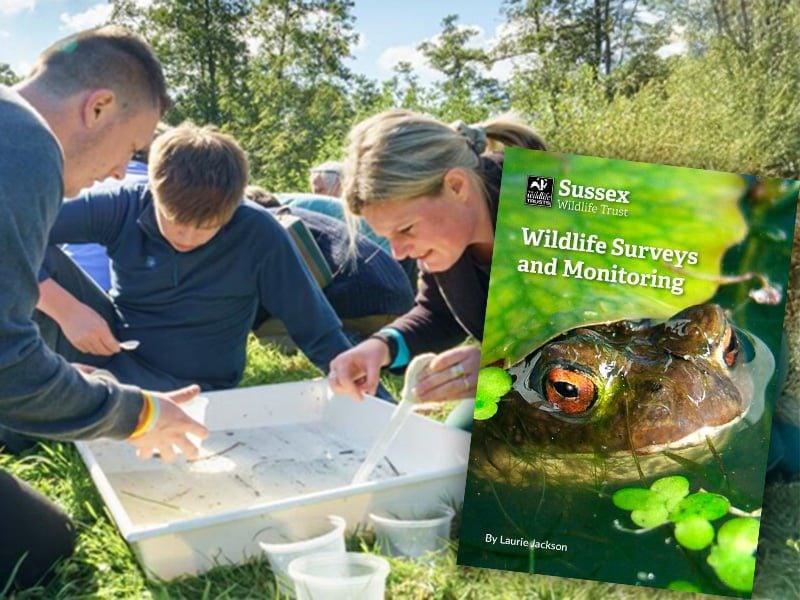 Monitoring guide image © Fran Southgate