Take action
Become a member
Memberships builds our community and gives us a predictable income, which lets us plan and sustain longer projects that can have a greater impact. The more members we have, the more we can do to protect the Sussex countryside and coast.
Make a donation
Membership builds our community and gives us a predictable income, which lets us plan and sustain longer projects that can have a greater impact. The more members we have, the more we can do to protect the Sussex countryside and coast.
Overview
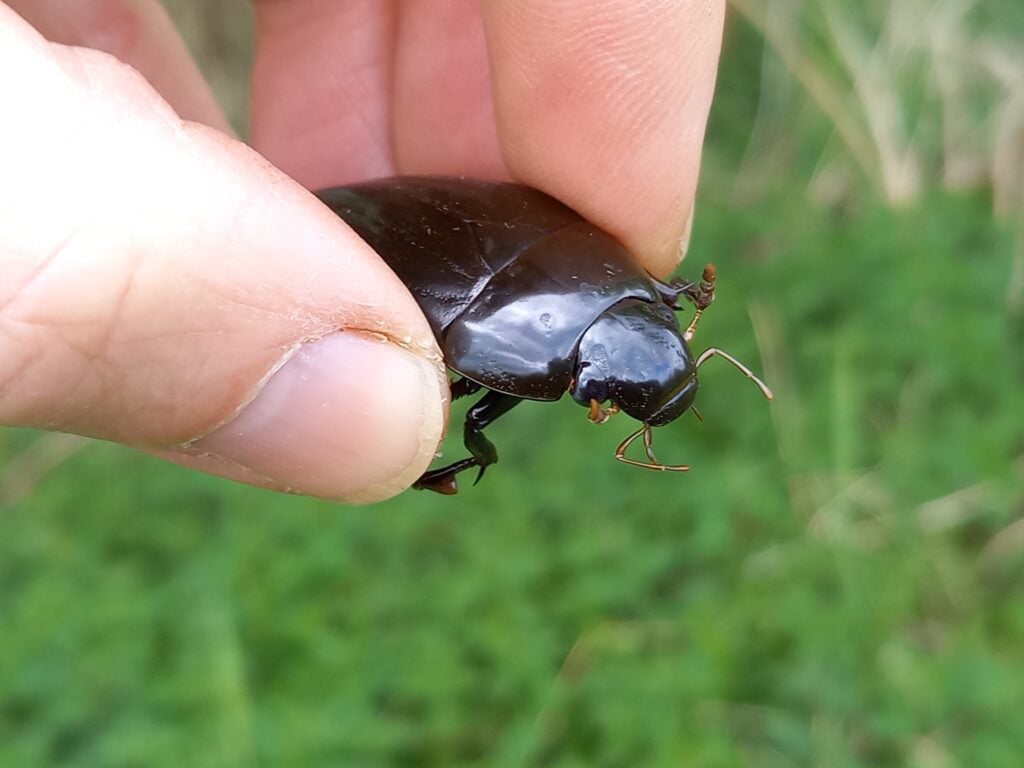
The Great Silver Water Beetle lives in ditches and pools with reedbeds and lots of aquatic vegetation. Although they spends most of their time underwater, they need to return to the surface regularly to breathe and top up the air supply stored in a bubble against their body.
Not technically classed as a ‘diving beetle’, Great Silver Water Beetles are a species of scavenger water beetle. Great Silver Water Beetles are strong fliers and, like many other beetles, may sometimes be attracted to moth traps. However, they are rare in the UK and only found in a few distinct locations.
Key Facts
- An enormous black water beetle. Viewed from above, it is oval shaped, but from the side you can see the underside is flattened, unlike the rounder diving beetles. Its clubbed antennae also help separate it from diving beetles. It has long hind legs, each with a distinctive long, sharp spine protruding from the inside. In water, it holds a film of air against its belly, creating a silvery sheen that gives the great silver water beetle its name.
- The larvae of Great Silver Water Beetles are predators and feed on water snails. They leave characteristic bite marks on empty snail shells.
- Up to 4.8 cm
Status
Classed as Near Threatened on the GB Red List
Seasonality
All year round