Take action
Become a member
Memberships build our community and give us a predictable income, which lets us plan and sustain longer projects that can have a greater impact. The more members we have, the more we can do to protect the Sussex countryside and coast.
Make a donation
Nature in Sussex is struggling right now. Every pound counts when it comes to the critical work needed to help nature recover. No matter how big or small, your donation will help us make a difference together.
Overview
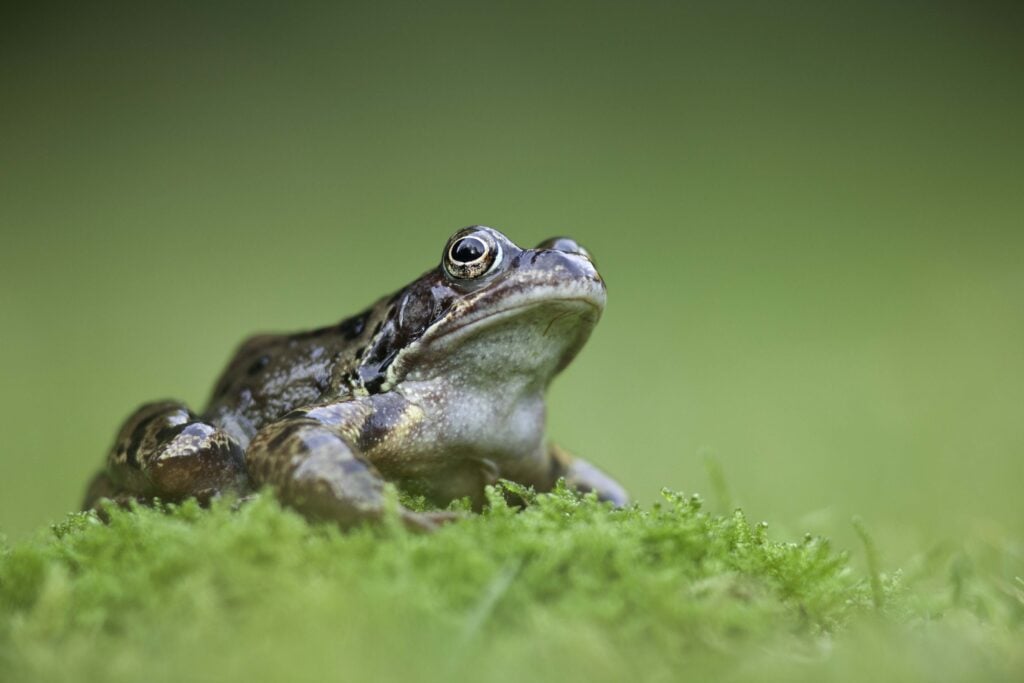
Common Frogs are amphibians, breeding in ponds during the spring and spending much of the rest of the year feeding in woodland, gardens, hedgerows and tussocky grassland.
They are familiar inhabitants of garden ponds, where they lay their eggs in big ‘rafts’ of spawn. They feed on a variety of invertebrates and even smaller amphibians.
Key Facts
- The Common Frog varies in colour enormously, from green to brown and even red or yellow. It has smooth skin, a dark ‘mask’ behind the eye and long back legs, covered in dark bands. It hops and jumps rather than walks, and lays spawn in large jelly-like clumps.
- Male Common Frogs have ‘nuptial pads’ on their front feet to help them grip on to females during the breeding season. The male frog will wrap itself around the female and fertilise her eggs as they are produced; a female frog may lay up to 4,000 eggs in one spring! Frogs can spawn as early as December or as late as April depending on the weather. After hatching, tadpoles take about 14 weeks to metamorphose into froglets.
- Length: 8-13cm Weight: 22g Average lifespan: 5-10 years
Status
Common. Protected in the UK under the Wildlife and Countryside Act, 1981
Seasonality
February to October