
Take action
Become a member
Memberships builds our community and gives us a predictable income, which lets us plan and sustain longer projects that can have a greater impact. The more members we have, the more we can do to protect the Sussex countryside and coast.
Make a donation
Membership builds our community and gives us a predictable income, which lets us plan and sustain longer projects that can have a greater impact. The more members we have, the more we can do to protect the Sussex countryside and coast.
Overview
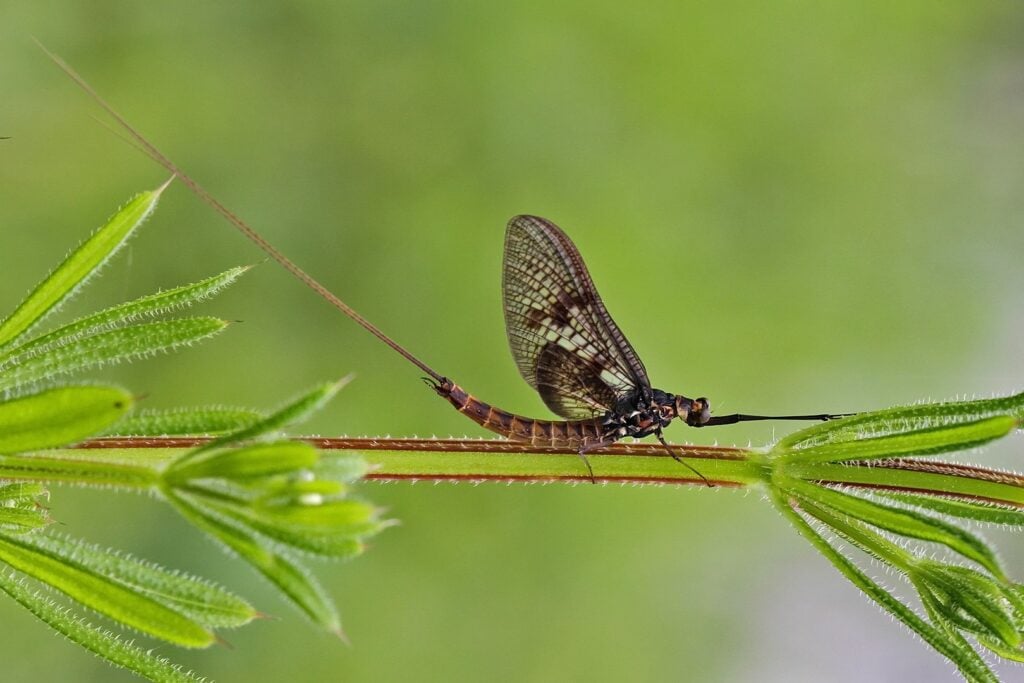
The Common Mayfly is one of 51 species of mayfly in the UK, and is on the wing from April until September (nymphs are present all year-round). Mayflies are common around freshwater wetlands, from fast-flowing rivers to still lakes, where the larvae spend their lives underwater, feeding on algae and plants.
In the summer, the adults hatch out – sometimes simultaneously and in their hundreds; they have very short lives (just hours in some cases), during which they display and breed. Many species do not feed as adults as their sole purpose is to reproduce, dying once they have mated. The name ‘mayfly’ is misleading as many mayflies can be seen all year-round, although one species does emerge in sync with the blooming of hawthorn (or ‘mayflower’).
Key Facts
- Adult mayflies are delicate animals with broad, clear wings that have a lace-like appearance, very short antennae and up to three very long, fine tail bristles. They hold their wings vertically, closed over their backs. Mayfly larvae also have three ‘tails’. The common mayfly has a creamy-green abdomen with distinctive brown markings towards the rear end, three long, black tails, and translucent, spotted wings.
- Fishing flies are made of feathers and are designed to look like various species of mayfly because they are a favourite food for Brown Trout and Atlantic Salmon.
- Length: 1.5-3.0cm
Status
Common.
Seasonality
All year round