Take action
Become a member
Memberships build our community and give us a predictable income, which lets us plan and sustain longer projects that can have a greater impact. The more members we have, the more we can do to protect the Sussex countryside and coast.
Make a donation
Membership builds our community and gives us a predictable income, which lets us plan and sustain longer projects that can have a greater impact. The more members we have, the more we can do to protect the Sussex countryside and coast.
Overview
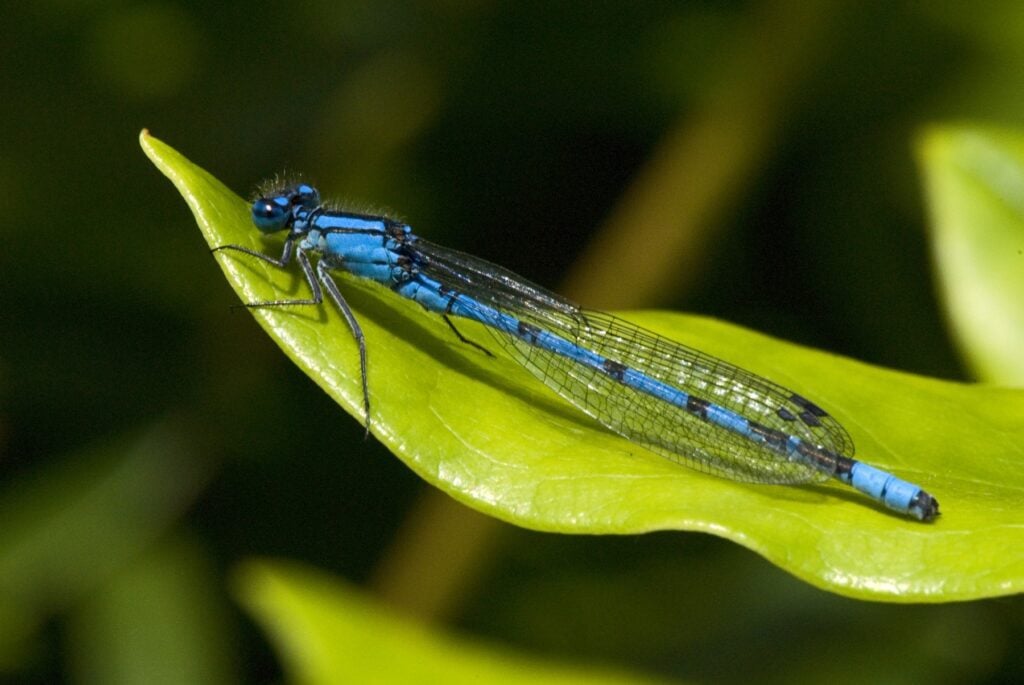
The Common Blue Damselfly is our most common damselfly and can be found around almost any waterbody, or away from breeding sites in grassland and woodland. It is a regular visitor to gardens and is on the wing from April to September.
The Common Blue Damselfly is an aggressive species: males will defend their females as they lay their eggs, both from their own kind and other species. As with other damselflies, when common blues mate they form a ‘mating wheel’ in which the male clasps the female by the neck and she bends her body around to his reproductive organs.
Key Facts
- The male Common Blue Damselfly is pale blue with bands of black along the body; the female is either blue or dull green, with distinctive black ‘torpedo’ markings. To identify the small blue damselflies, of which there are seven species in the UK, it helps to concentrate on the pattern on the second segment of the males’ abdomen, just behind the thorax. In the common blue damselfly, this segment is blue with a black button mushroom-shaped mark.
- When dragonflies and damselflies first emerge they are often duller in colour, a state known as ‘teneral’, and it can take a few days for them to change into their brilliant hues. For example, common blue damselflies are a pinkish-brown when they first emerge, turning sky-blue later on.
- Length: 3.2cm
Status
Common.
Seasonality
April to September