Take action
Become a member
Memberships builds our community and gives us a predictable income, which lets us plan and sustain longer projects that can have a greater impact. The more members we have, the more we can do to protect the Sussex countryside and coast.
Make a donation
Membership builds our community and gives us a predictable income, which lets us plan and sustain longer projects that can have a greater impact. The more members we have, the more we can do to protect the Sussex countryside and coast.
Overview
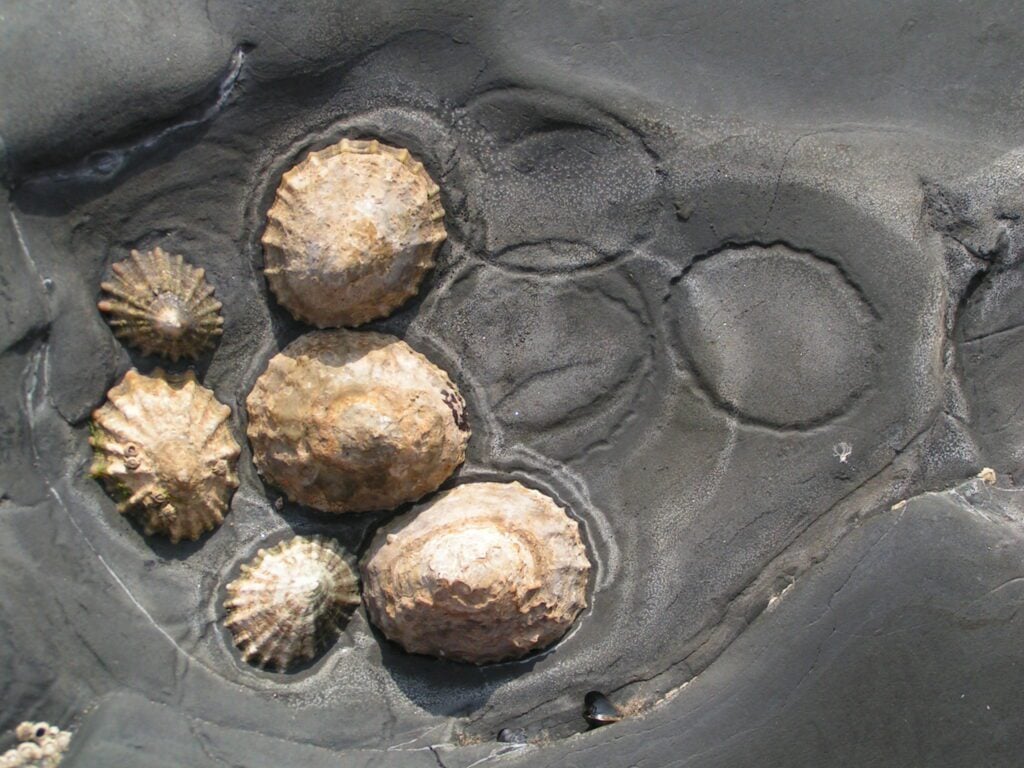
Although Limpets may not look impressive at first glance, once the tide comes in they spring to action, moving around rocks eating algae using their tough tongue. Their tongue is the world’s strongest known biological structure – it needs to constantly scrape algae off of tough rocks!
Key Facts
- There are three very similar species of limpet found on UK shores. The Common Limpet has a greyish, conical shell and is slightly larger than the other two. The Black-footed Limpet has a smaller flatter shell and is mainly found around the south of the country. The China Limpet has an orange patch on the inside of its shell.
- Limpets move around over the rocks when the tide is in, but always return to their own favourite spot when the tide goes out, following the mucus trail that they have deposited. This spot becomes worn by the edges of the shell, and eventually an obvious ‘scar’ in the rock is created. This ‘home scar’ helps the Limpet to better attach to the rock, stopping it drying out until the next tide comes in.
- Do not attempt to remove a limpet stuck onto a rock, you may damage the muscles used to keep them there.
- Length: 4cm Lifespan: 10-20 years
Status
Common
Seasonality
All year round