Take action
Become a member
Memberships builds our community and gives us a predictable income, which lets us plan and sustain longer projects that can have a greater impact. The more members we have, the more we can do to protect the Sussex countryside and coast.
Make a donation
Membership builds our community and gives us a predictable income, which lets us plan and sustain longer projects that can have a greater impact. The more members we have, the more we can do to protect the Sussex countryside and coast.
Overview
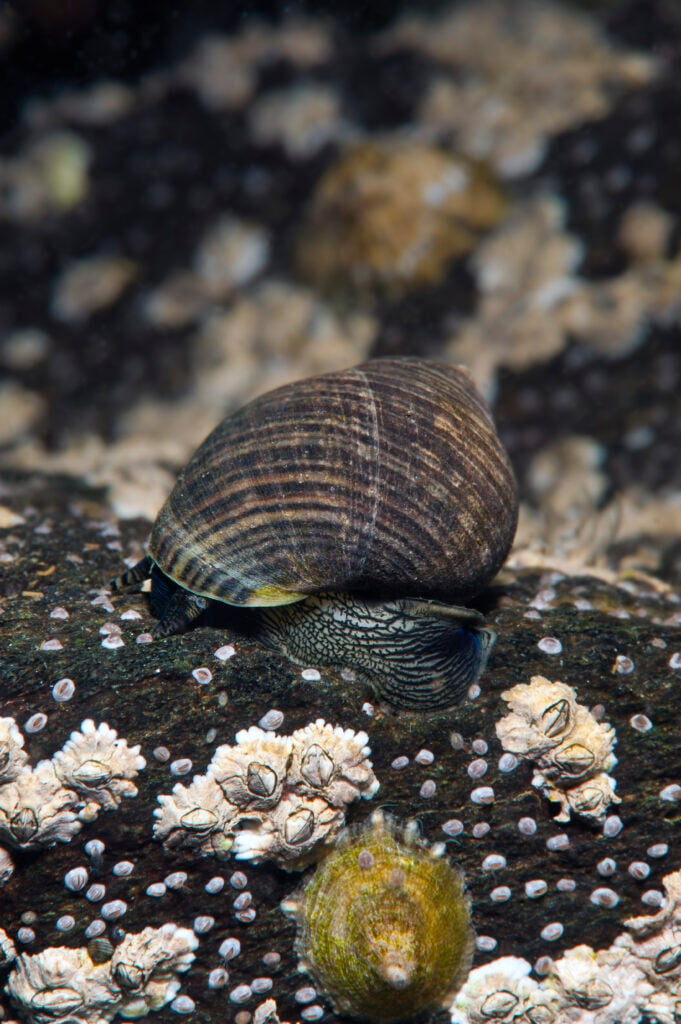
This large sea snail is found on rocks and amongst seaweeds around the middle to lower parts of the shore. Also known as the Common Periwinkle or Winkle, it looks similar to a land snail, with a dark brown or grey banded shell and little eye stalks poking out.
Key Facts
- The Edible Periwinkle has a rounded, whorled shell, usually greyish-brown in colour. It has concentric ridges, dark lines and a pointed apex. It is distinguished from similar, snail-like periwinkles and topshells by the slightly larger size, rounded shape and generally plainer colours.
- The Edible Periwinkle feeds by grazing on algae on the rocks using its rasping tongue, called a radula. They don’t like dry areas, so will often be spotted clumped together in a crevice or rockpool at low tide.
- Height: 3-5cm
Status
Common
Seasonality
All year round