Take action
Become a member
Memberships builds our community and gives us a predictable income, which lets us plan and sustain longer projects that can have a greater impact. The more members we have, the more we can do to protect the Sussex countryside and coast.
Make a donation
Membership builds our community and gives us a predictable income, which lets us plan and sustain longer projects that can have a greater impact. The more members we have, the more we can do to protect the Sussex countryside and coast.
Overview
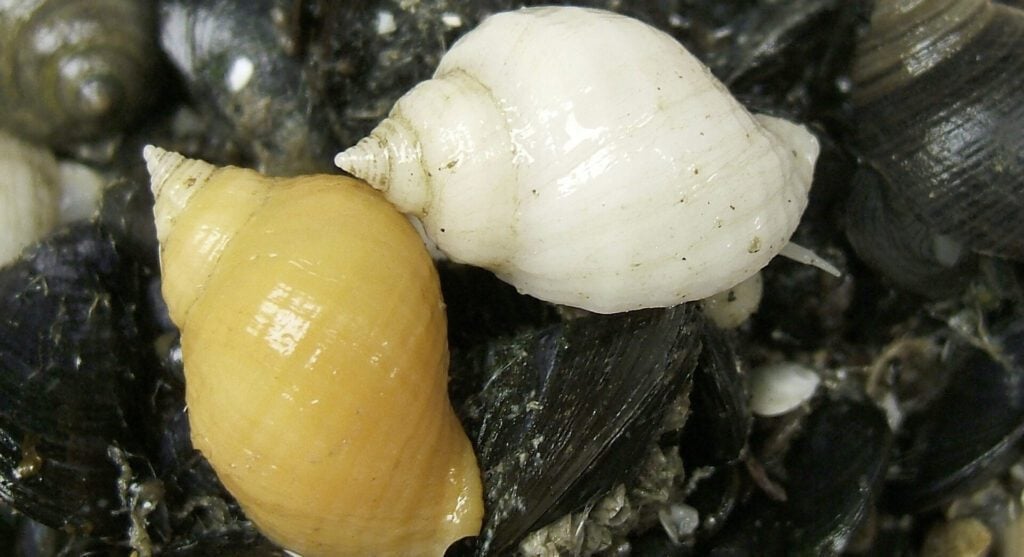
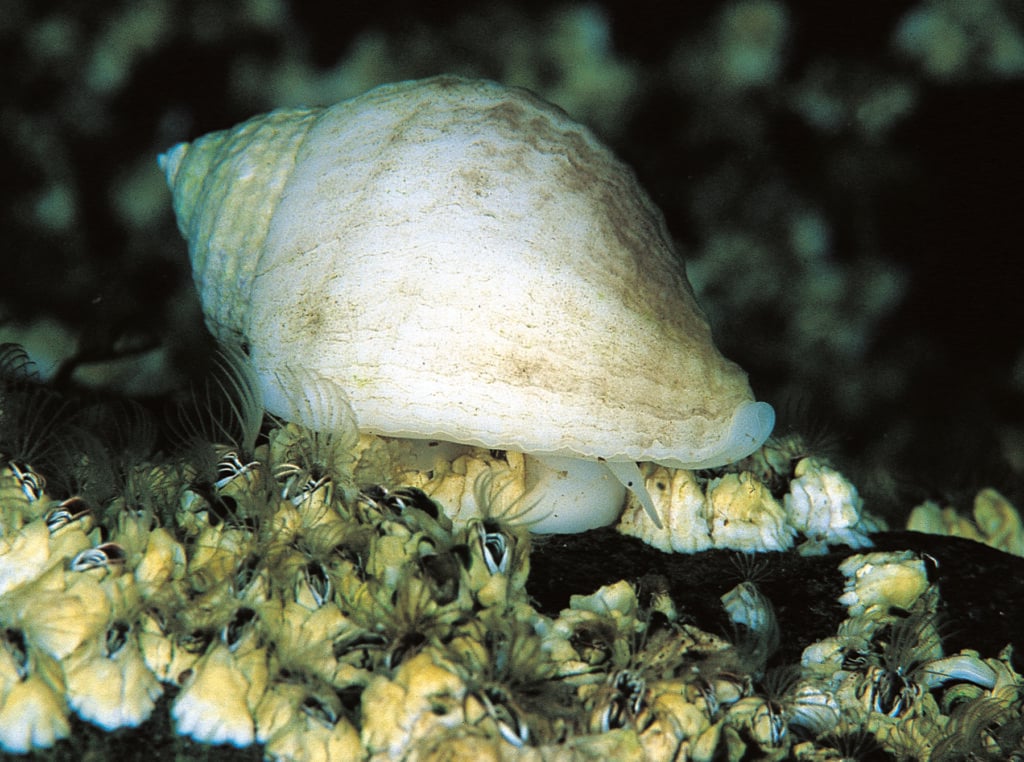
With a pointed snail-like shell, Dog Whelks are found on the lower shore wherever there are barnacles or mussels – their favourite food. Once fed, Dog Whelks will rest in a crevice for a number of days before feeding again. Dog Whelks avoid dense mussel beds as the mussels can trap the whelk using their sticky byssus threads.
Key Facts
- Dog Whelks have a conical shell with a pointed spire. They predominantly have white shells in the UK, but may be brown or yellow. The Dog Whelk is smaller than the Common Whelk, smoother than the Netted Whelk and more rounded than the Oyster Drill. The animal itself is white or cream coloured but rarely seen.
- The Dog Whelk feeds on mussels and barnacles by boring through their shells. It then injects enzymes to digest the prey within its shell, sucking the resulting ‘liquid soup’ out through its proboscis. It can take days to eat its prey this way.
- Dog Whelks lay their eggs in small yellowish capsules which can be spotted under rocky overhangs on the lower shore. Each capsule contains up to a thousand eggs – though most of these will become food for the few that hatch and develop.
- Length: 3-6cm
Status
Common
Seasonality
All year round