Take action
Become a member
Memberships builds our community and gives us a predictable income, which lets us plan and sustain longer projects that can have a greater impact. The more members we have, the more we can do to protect the Sussex countryside and coast.
Make a donation
Membership builds our community and gives us a predictable income, which lets us plan and sustain longer projects that can have a greater impact. The more members we have, the more we can do to protect the Sussex countryside and coast.
Overview
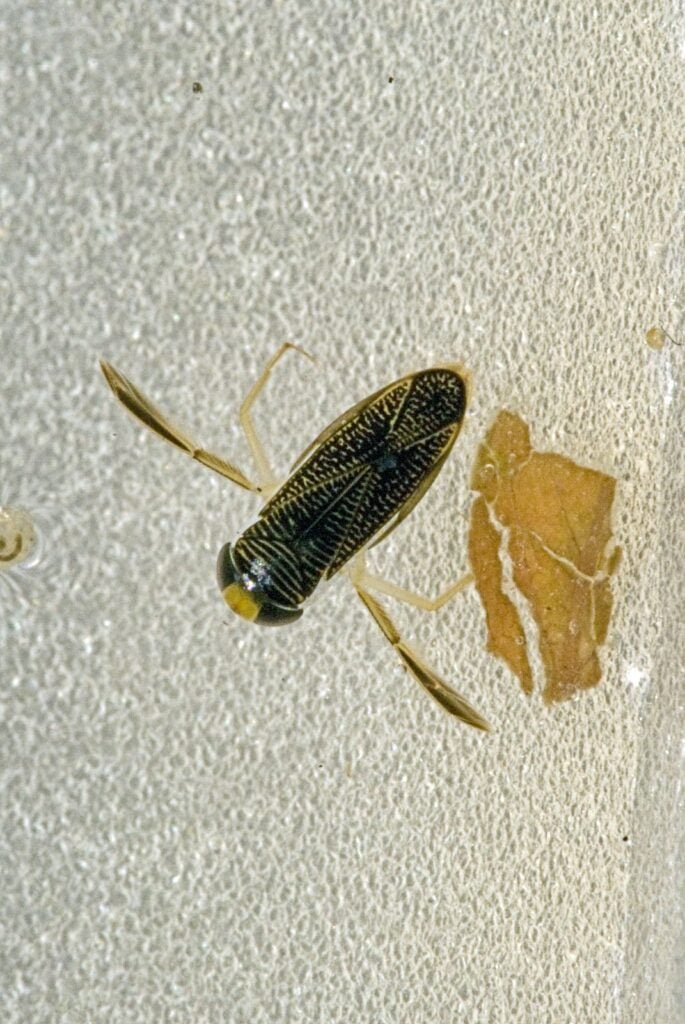
The Lesser Water Boatman is one of a number of water boatmen species in the UK. It is common and widespread in weedy ponds, lakes and ditches. It is also herbivorous, eating algae and detritus, unlike the carnivorous Common Backswimmer.
Like other aquatic bugs, Lesser Water Boatmen need to breathe at the water’s surface, but they have developed an ingenious trick to allow them to remain under water for longer: they hang upside-down, collecting air from the water’s surface and then carry it around as a bubble on their body. During warm weather the adults may take flight.
Key Facts
- The Lesser Water Boatman is dark brown with yellow, close-set stripes. It has powerful oar-like, hairy hind legs, which it uses as paddles as it swims. Its body resembles the shape of a boat, hence it’s common name. The various species of water boatmen are very difficult to tell apart from each other, but can be easily distinguished from backswimmers because they do not swim upside-down.
- There are many different species of ‘water boatmen’ in the UK, which fall into the families: Corixidae (lesser water boatmen); and Notonectidae and Pleidae (backswimmers or greater water boatmen). Males of some species stridulate or ‘sing’, making grasshopper-like noises to attract mates; these songs may be heard during the summer, especially at night.
- Length: up to 1.5cm
Status
Common.
Seasonality
All year round