Take action
Become a member
Memberships build our community and give us a predictable income, which lets us plan and sustain longer projects that can have a greater impact. The more members we have, the more we can do to protect the Sussex countryside and coast.
Make a donation
Membership builds our community and gives us a predictable income, which lets us plan and sustain longer projects that can have a greater impact. The more members we have, the more we can do to protect the Sussex countryside and coast.
Overview
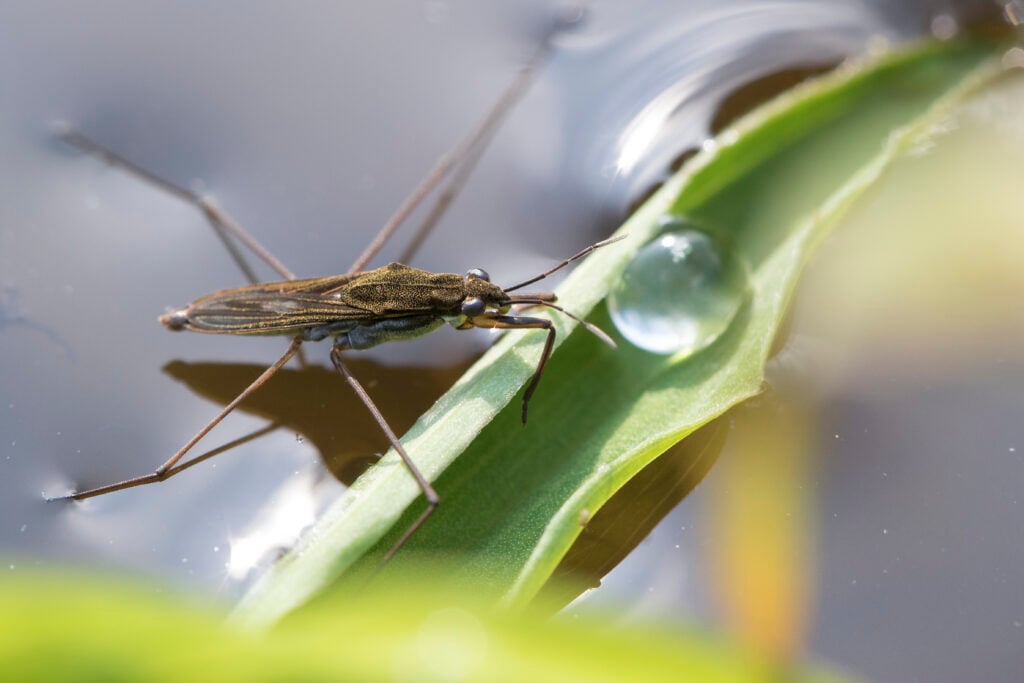
There are nine species of pond skater in the UK, which range between 1-2cm in length. Often seen in large groups, they ‘skate’ around on the surface of the water in ponds, lakes, ditches and slow-flowing rivers, feeding on smaller insects which they stab with their sharp mouthparts or ‘beaks’.
The Common Pond Skater emerges from hibernation in April and lays its eggs. Hatching soon after, the nymphs go through a number of moults.
Key Facts
- The brownish-black, long-legged Common Pond Skater is only likely to be confused with the smaller, thinner, more fragile-looking Common Water-measurer, or the smaller, chunkier, Shorter-legged Water Cricket.
- Common Pond Skaters have water-repellent hairs on the bottom of their feet, enabling them to walk on the surface film of the water. They hunt by detecting vibrations in this film.
- Length: up to 1.5cm
Status
Common.
Seasonality
April to November