Take action
Become a member
Memberships build our community and give us a predictable income, which lets us plan and sustain longer projects that can have a greater impact. The more members we have, the more we can do to protect the Sussex countryside and coast.
Make a donation
Nature in Sussex is struggling right now. Every pound counts when it comes to the critical work needed to help nature recover. No matter how big or small, your donation will help us make a difference together.
Overview
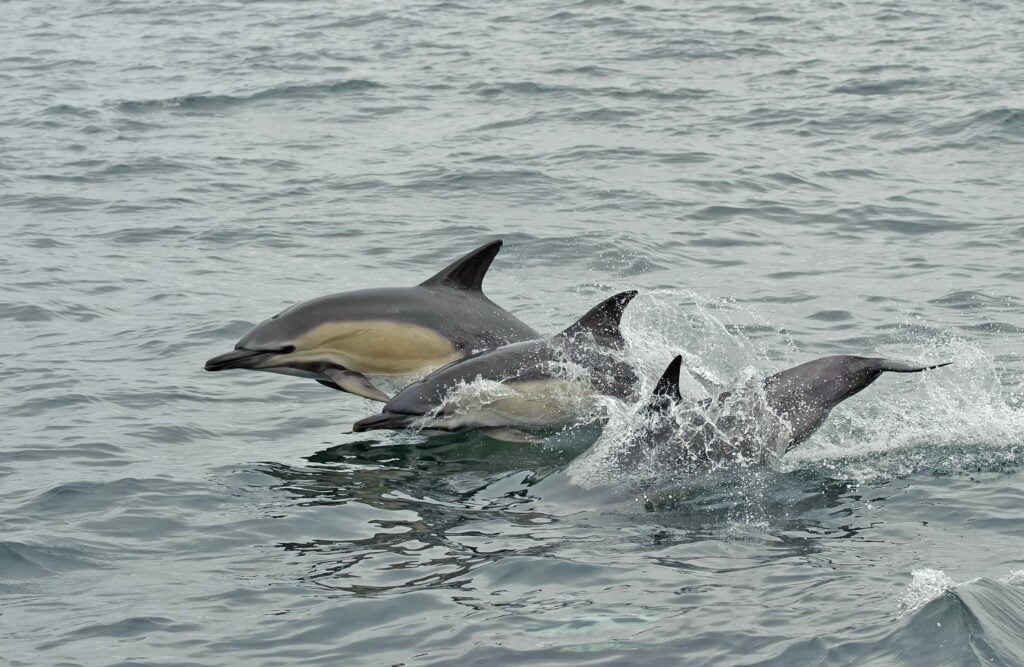
Common Dolphins (also referred to as Short-beaked Common Dolphins) are an offshore species but often come close to shore to feed.
They are highly social and normally found in groups, travelling at speed and frequently leaping from the water. They feed mainly on fish and will work together to herd their prey into a ball.
Key Facts
- A slender dolphin, they are dark grey above and whiter below. Common Dolphins have a distinctive hourglass pattern on their sides, including an obvious yellow-cream area starting behind the long, narrow beak.
- The dorsal fin is tall and triangular and curves slightly backwards.
- Common Dolphins are fast! They can reach swimming speeds of around 30 miles per hour when chasing food or bowriding alongside boats.
- Length: up to 2.7m Weight: up to 150kg Average Lifespan: up to 35 years
Status
Protected in the UK under the Wildlife and Countryside Act, 1981, listed under CITES Appendix II and classified as a Priority Species under the UK Post-2010 Biodiversity Framework. Also protected under the Conservation (Natural Habitats, etc.) Regulations (Northern Ireland) 1997
Seasonality
All year round