Take action
Become a member
Memberships builds our community and gives us a predictable income, which lets us plan and sustain longer projects that can have a greater impact. The more members we have, the more we can do to protect the Sussex countryside and coast.
Make a donation
Membership builds our community and gives us a predictable income, which lets us plan and sustain longer projects that can have a greater impact. The more members we have, the more we can do to protect the Sussex countryside and coast.
Overview
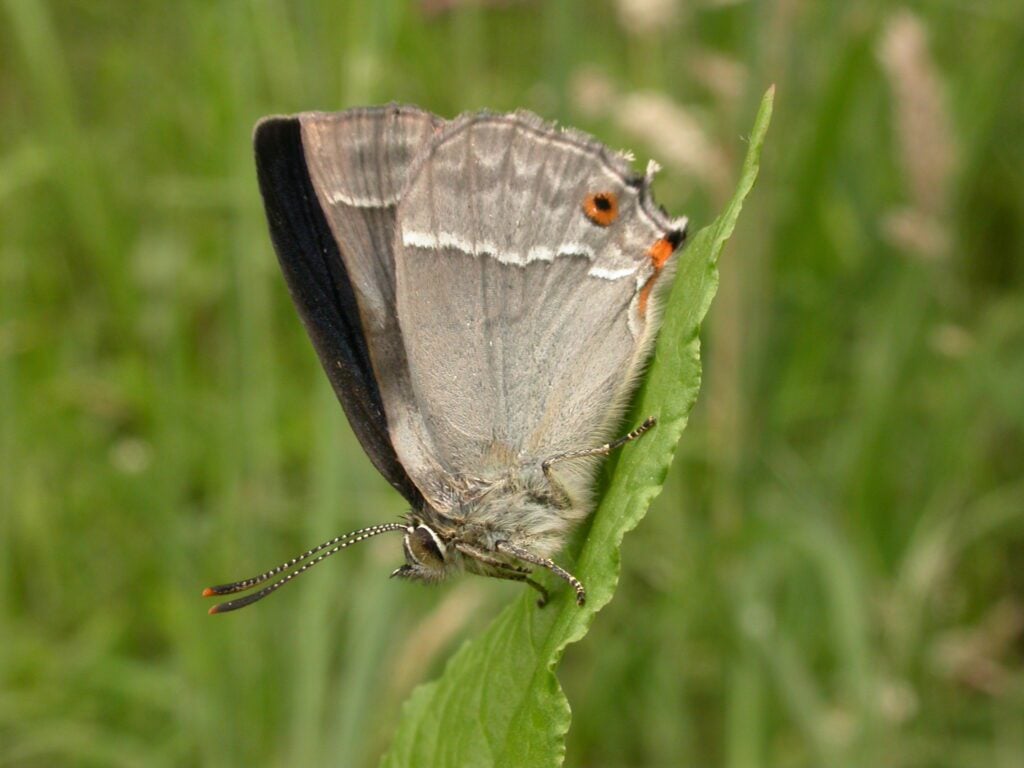
The Purple Hairstreak is rarely seen as it spends most of its time perched on leaves at the top of Oak trees. Very occasionally, it does come down to ground level, but it is best spotted with binoculars: males can sometimes be seen chasing each other in the treetops.
Key Facts
- The Purple Hairstreak is an unmistakeable butterfly. Females are black above, with a purple patch on the forewings, while males are almost entirely purple above with a black border. The underside of both sexes is a silvery-grey, with an orange eyespot on the hindwing.
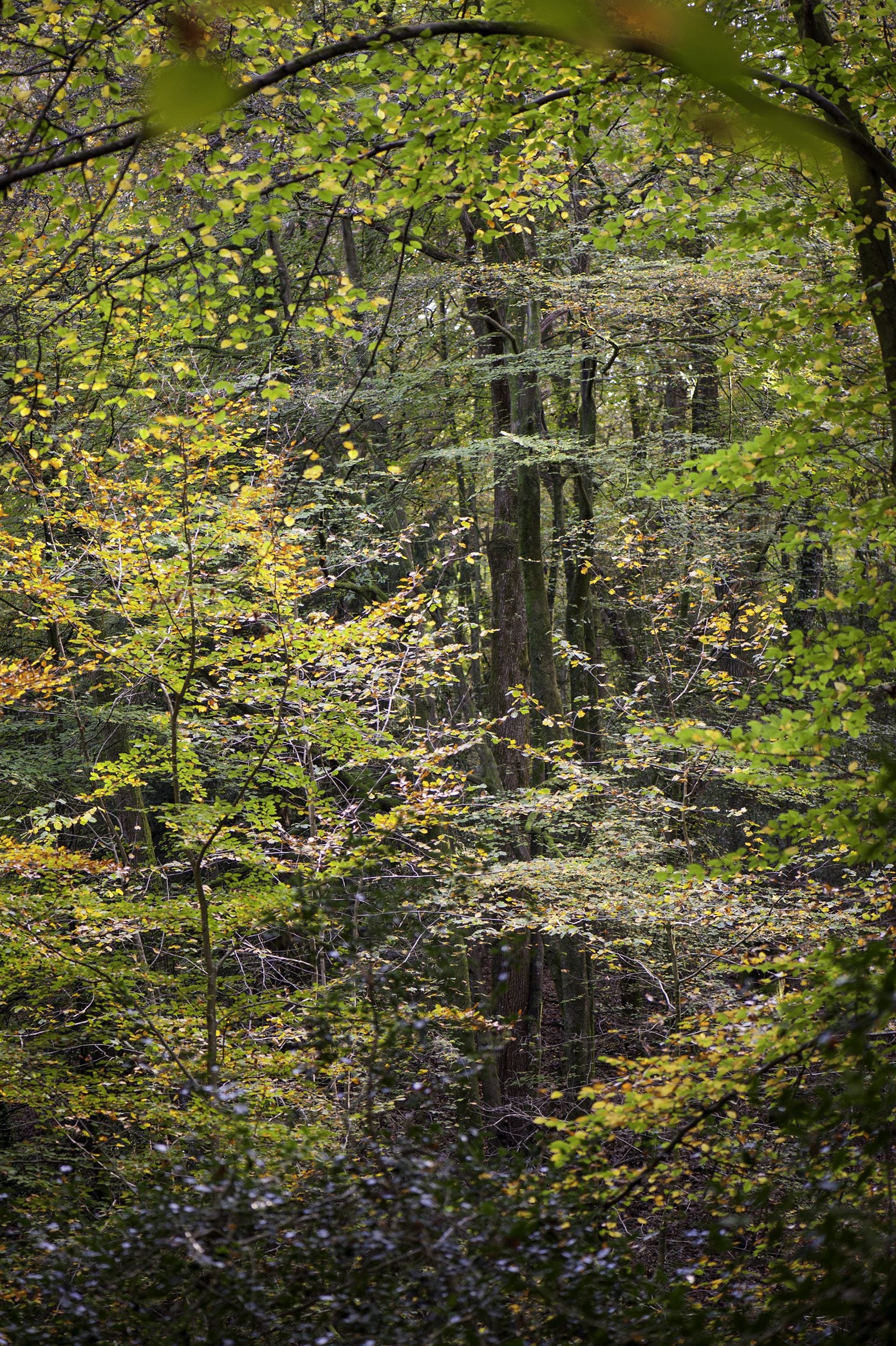
- The Purple Hairstreak is the only butterfly in the UK which is entirely reliant on the Oak tree, and can be found in Oak woodland and on solitary Oak trees in parks or along hedgerows. It can use our two native species – Sessile Oak and Pedunculate Oak – as well as the introduced Turkey and Evergreen Oaks.
- Wingspan: 3.1-4.0cm
Status
Common.
Seasonality
June to September