Take action
Become a member
Memberships builds our community and gives us a predictable income, which lets us plan and sustain longer projects that can have a greater impact. The more members we have, the more we can do to protect the Sussex countryside and coast.
Make a donation
Membership builds our community and gives us a predictable income, which lets us plan and sustain longer projects that can have a greater impact. The more members we have, the more we can do to protect the Sussex countryside and coast.
Overview
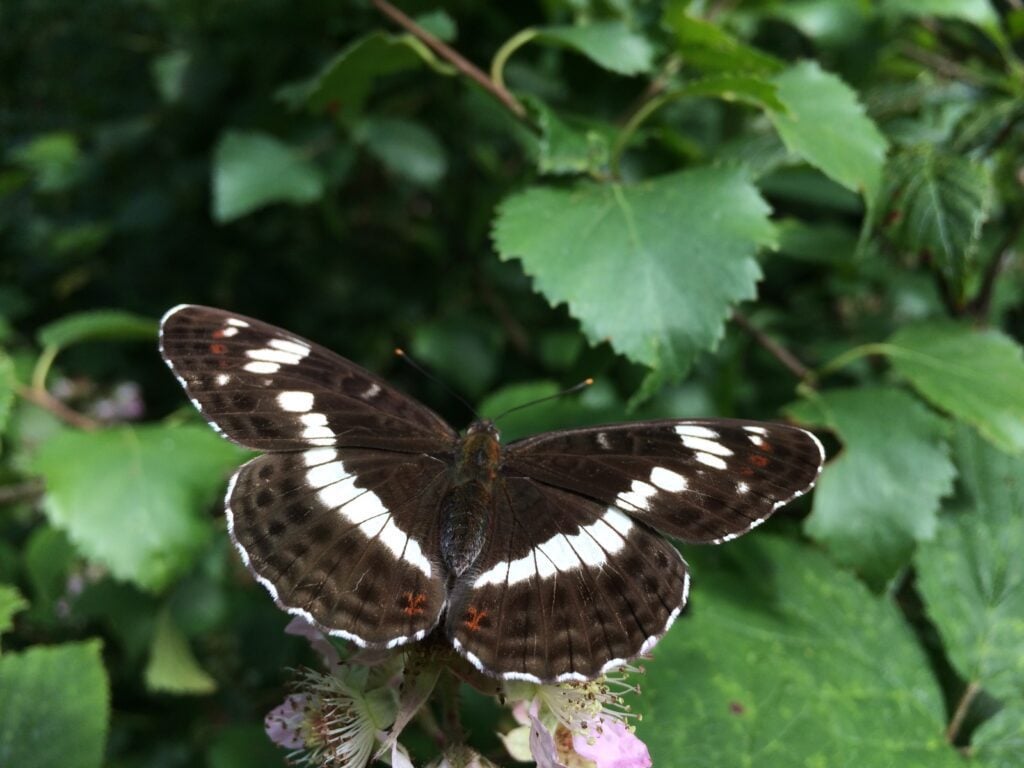
The White Admiral is a medium-sized butterfly found in shady woodlands, clearings and rides in late summer.
Adults are often found on the flowers of Bramble and lay their eggs on Honeysuckle leaves, which the caterpillars feed on. Usually seen in ones or twos, they are never very common, but are widespread in southern England.
Key Facts
- The White Admiral is a black butterfly with distinctive white bands on the wings and a gingery-brown underside. It has a characteristic flight pattern of short periods of wingbeats followed by long glides. The similar Purple Emperor is larger.
- There is usually only one brood of White Admirals per year, with adults emerging in June and July. Eggs are laid in late summer, and the new larvae wrap themselves in a silken leaf shelter for the winter.
- Wingspan: 5.6-6.6cm
Status
Priority Species under the UK Post-2010 Biodiversity Framework.
Seasonality
June to August