Take action
Become a member
Memberships build our community and give us a predictable income, which lets us plan and sustain longer projects that can have a greater impact. The more members we have, the more we can do to protect the Sussex countryside and coast.
Make a donation
Membership builds our community and gives us a predictable income, which lets us plan and sustain longer projects that can have a greater impact. The more members we have, the more we can do to protect the Sussex countryside and coast.
Overview
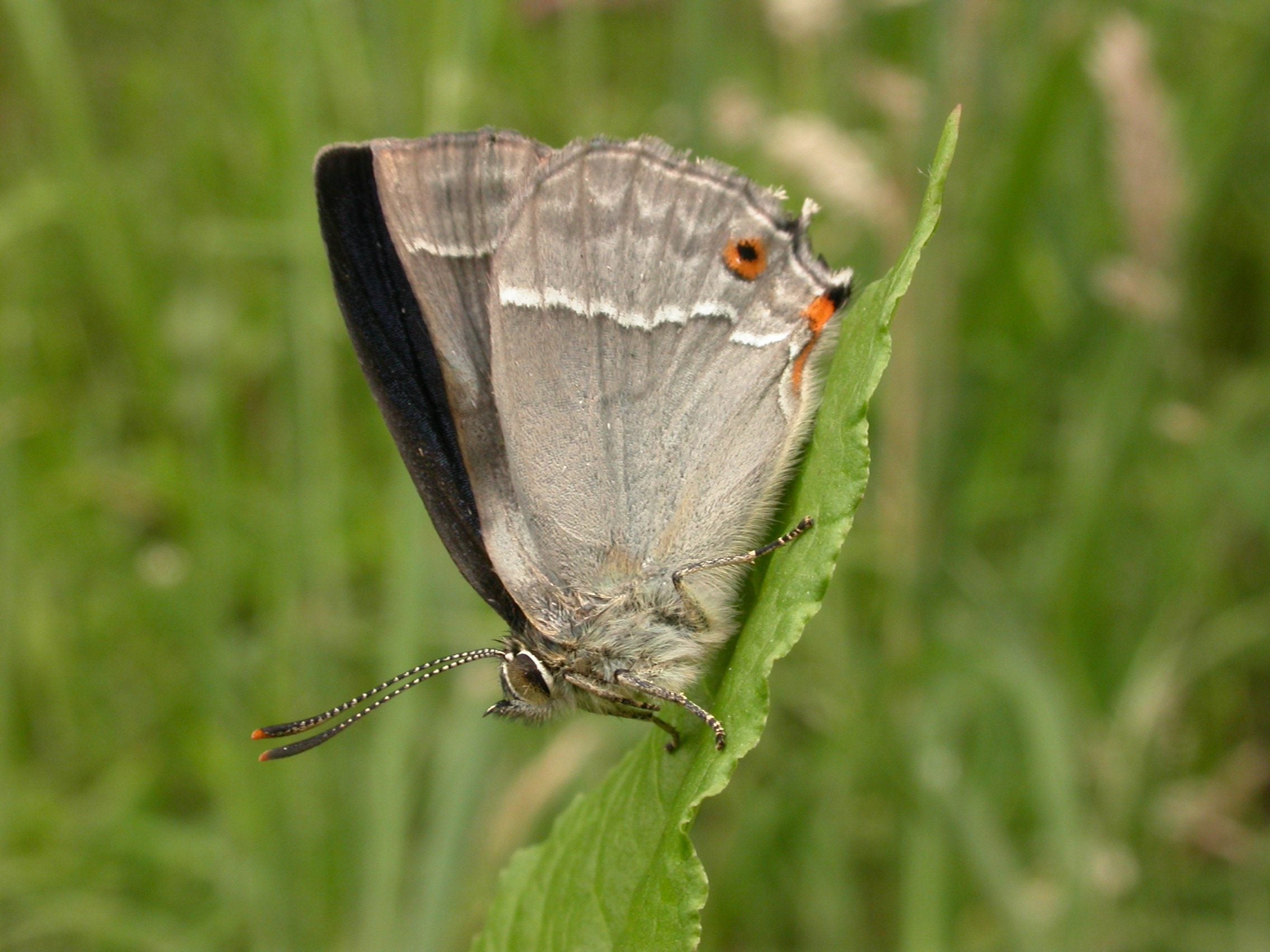
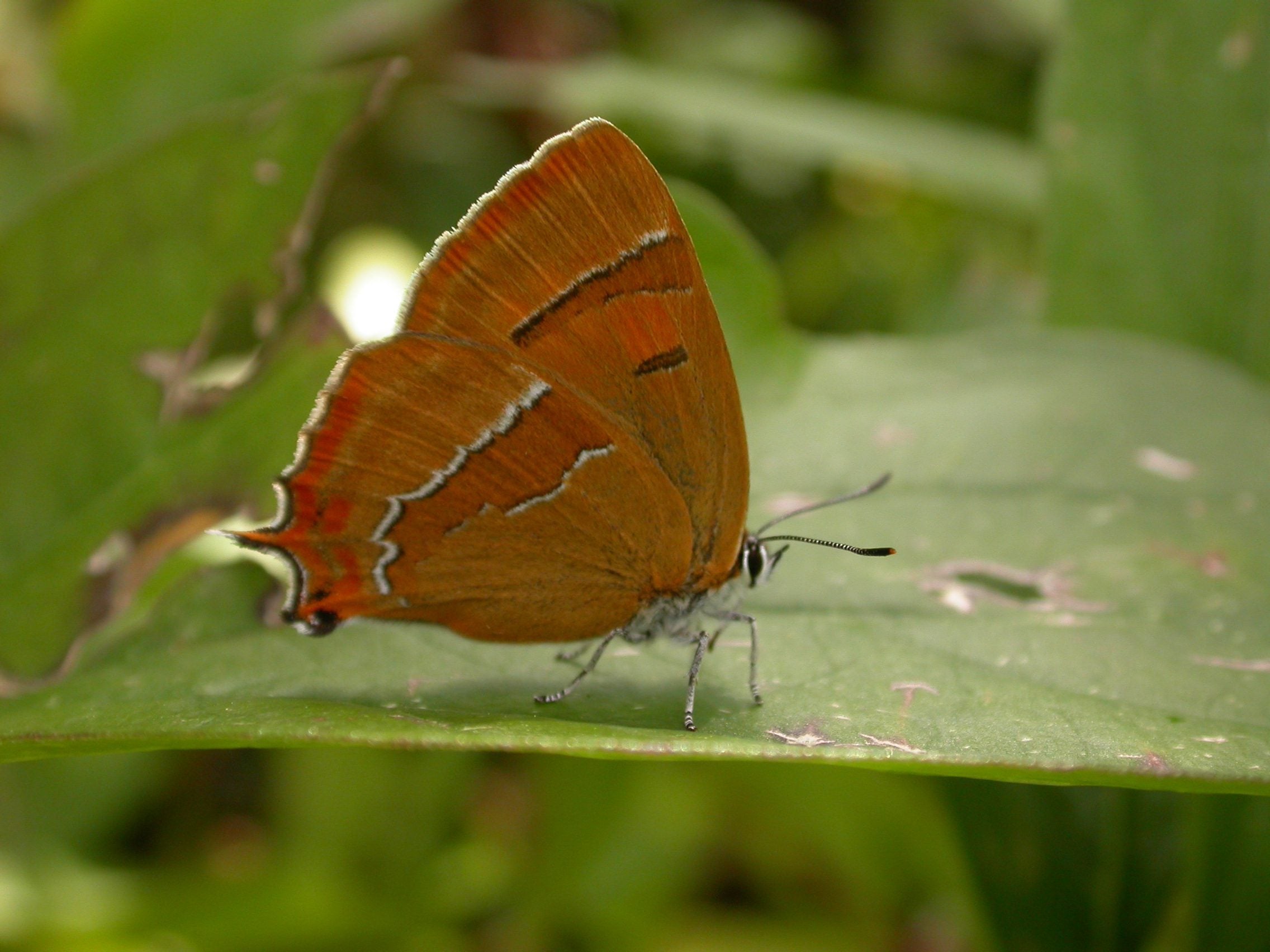
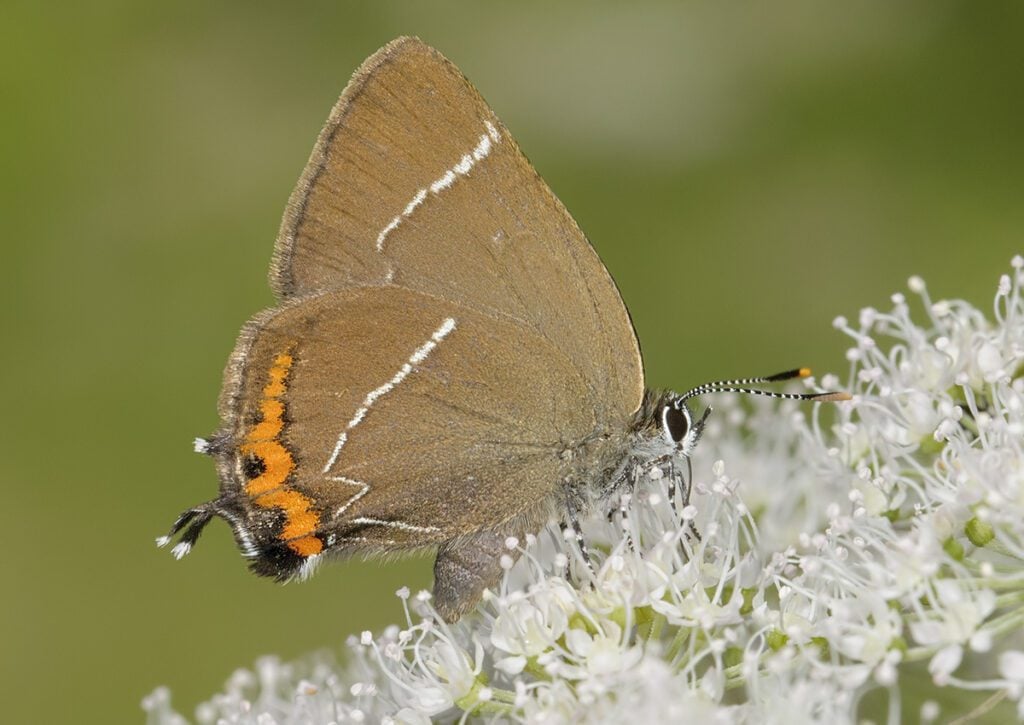
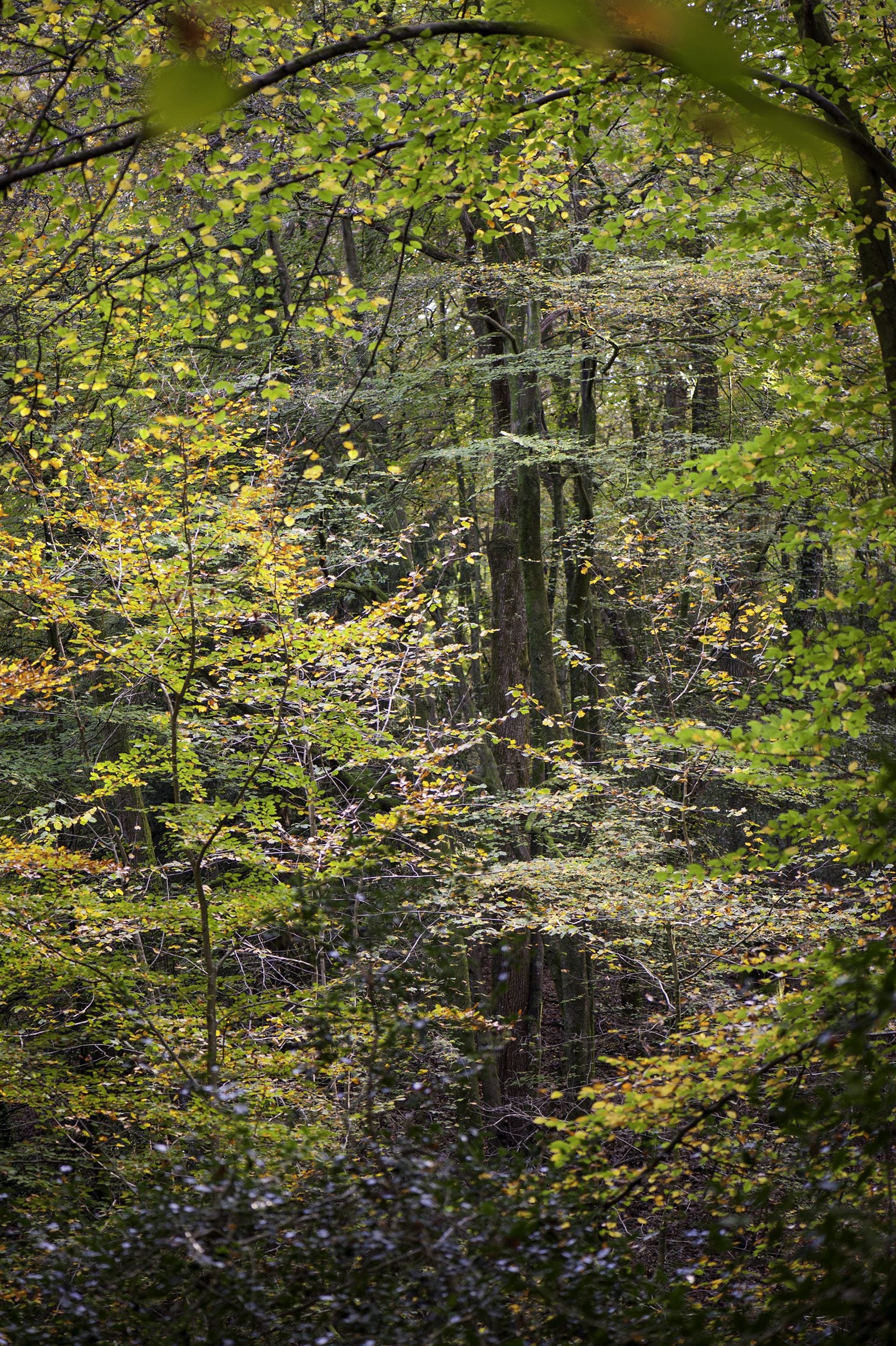
The White-letter Hairstreak is a small butterfly that breeds in Elm trees in hedgerows, woodland rides and scrub. It can be hard to spot as it flutters around the treetops, but does come down to lower levels to nectar on flowers like bramble. Caterpillars are well camouflaged, looking like young buds and leaves.
Key Facts
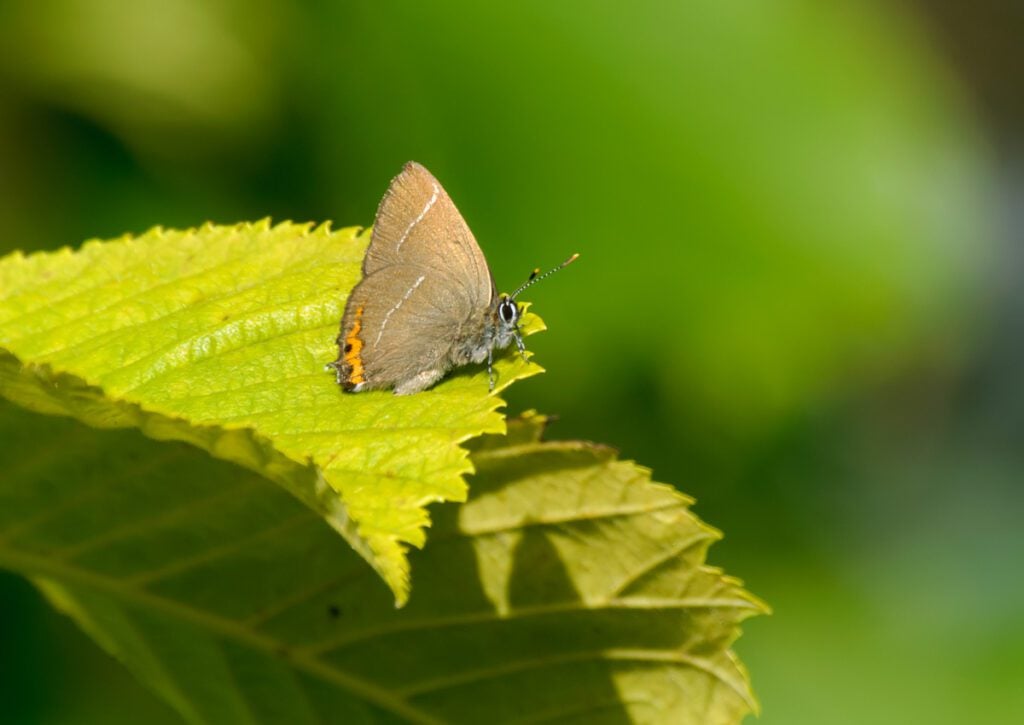
- The White-letter Hairstreak is a small, brown butterfly that has white, W-shaped lines on the underside of the wings. The Black Hairstreak is similar, but sports a row of black spots on the hindwings.
- There are five species of hairstreak butterfly in the UK. The name comes from the thin streak of white dashed across the underside of their hindwings, which forms the ‘W’ shape in the White-letter Hairstreak.
- Wingspan: 2.5-3.5cm
Status
Protected in the UK under the Wildlife and Countryside Act, 1981. Priority Species under the UK Post-2010 Biodiversity Framework.
Seasonality
Adults are on the wing from June to August, and there is only one brood per year