Take action
Become a member
Memberships builds our community and gives us a predictable income, which lets us plan and sustain longer projects that can have a greater impact. The more members we have, the more we can do to protect the Sussex countryside and coast.
Make a donation
Membership builds our community and gives us a predictable income, which lets us plan and sustain longer projects that can have a greater impact. The more members we have, the more we can do to protect the Sussex countryside and coast.
Overview
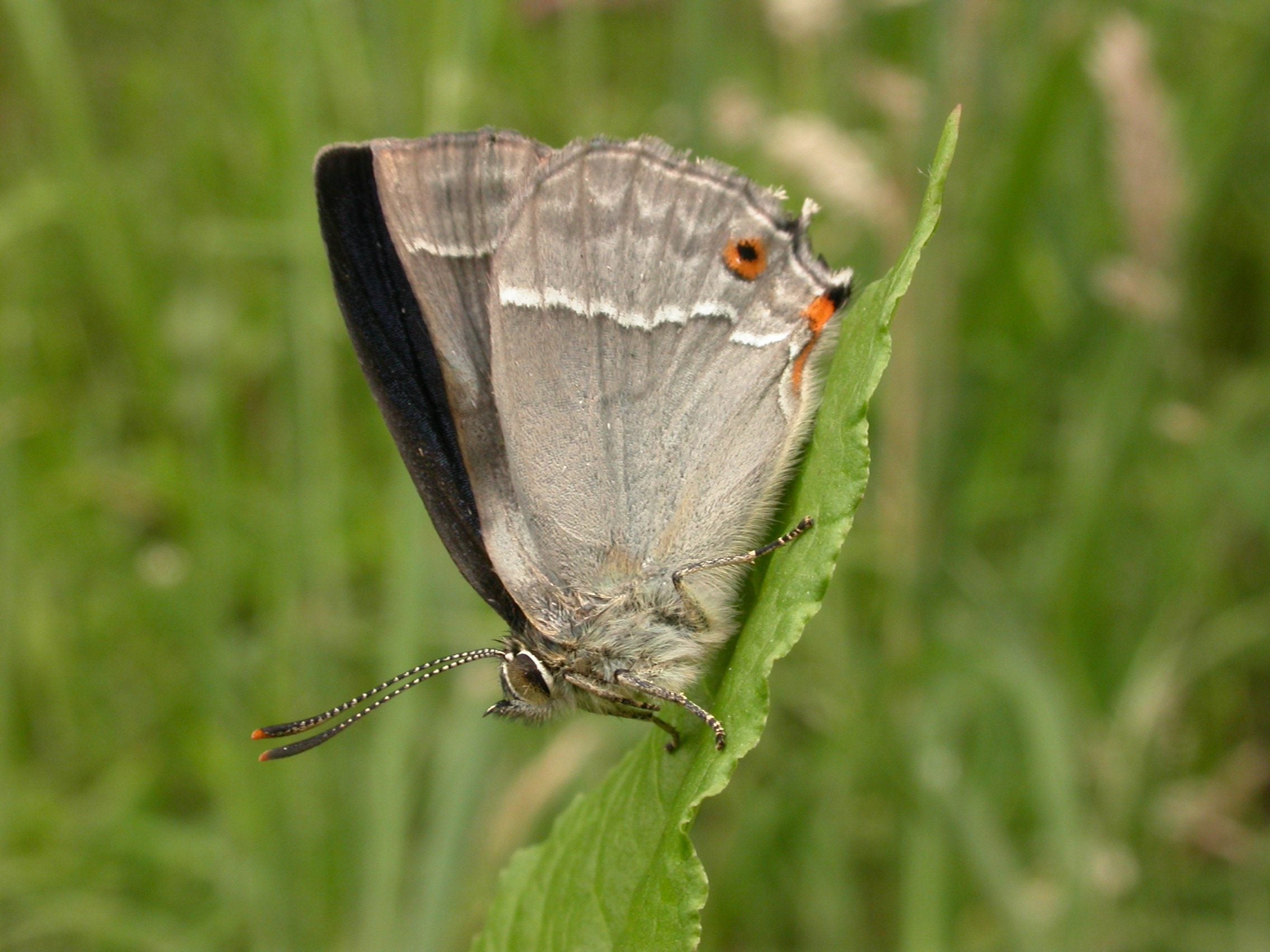
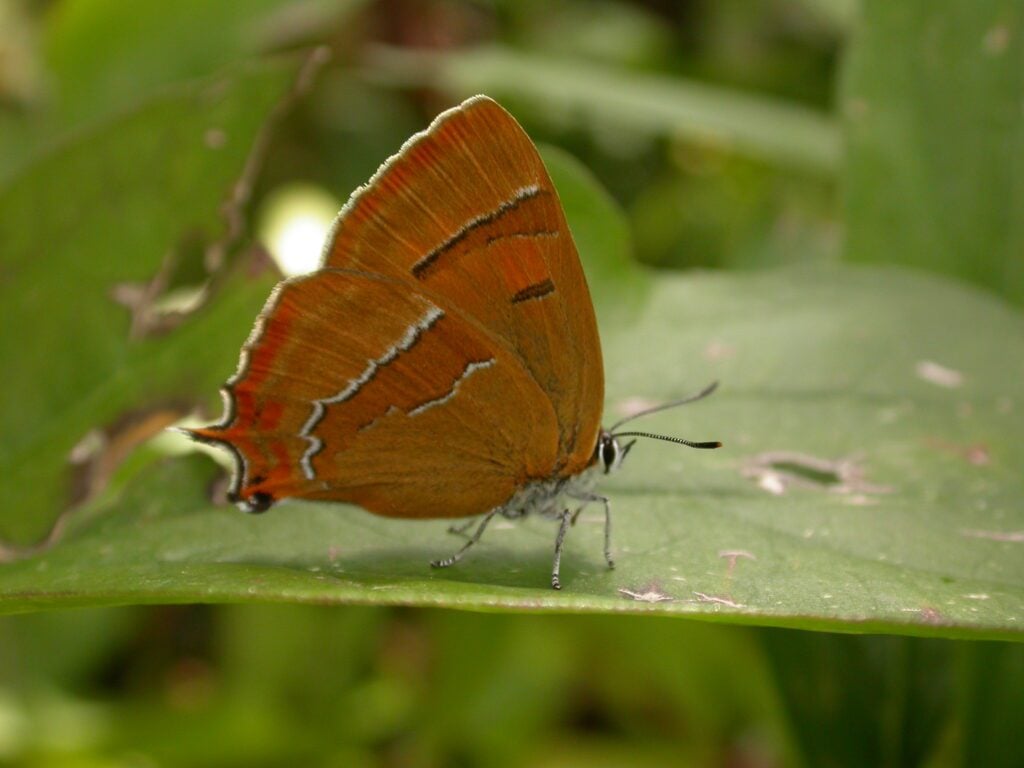
The largest of the UK’s hairstreaks, the Brown Hairstreak is an elusive butterfly that spends most of its time either high in the tops of large Ash Trees (called ‘master trees’), or among thick hedges.
Brown Hairstreak’s are found at woodland edges and along hedgerows in southern England from late July until November. Adults feed on honeydew from aphids, while caterpillars feed exclusively on Blackthorn.
Key Facts
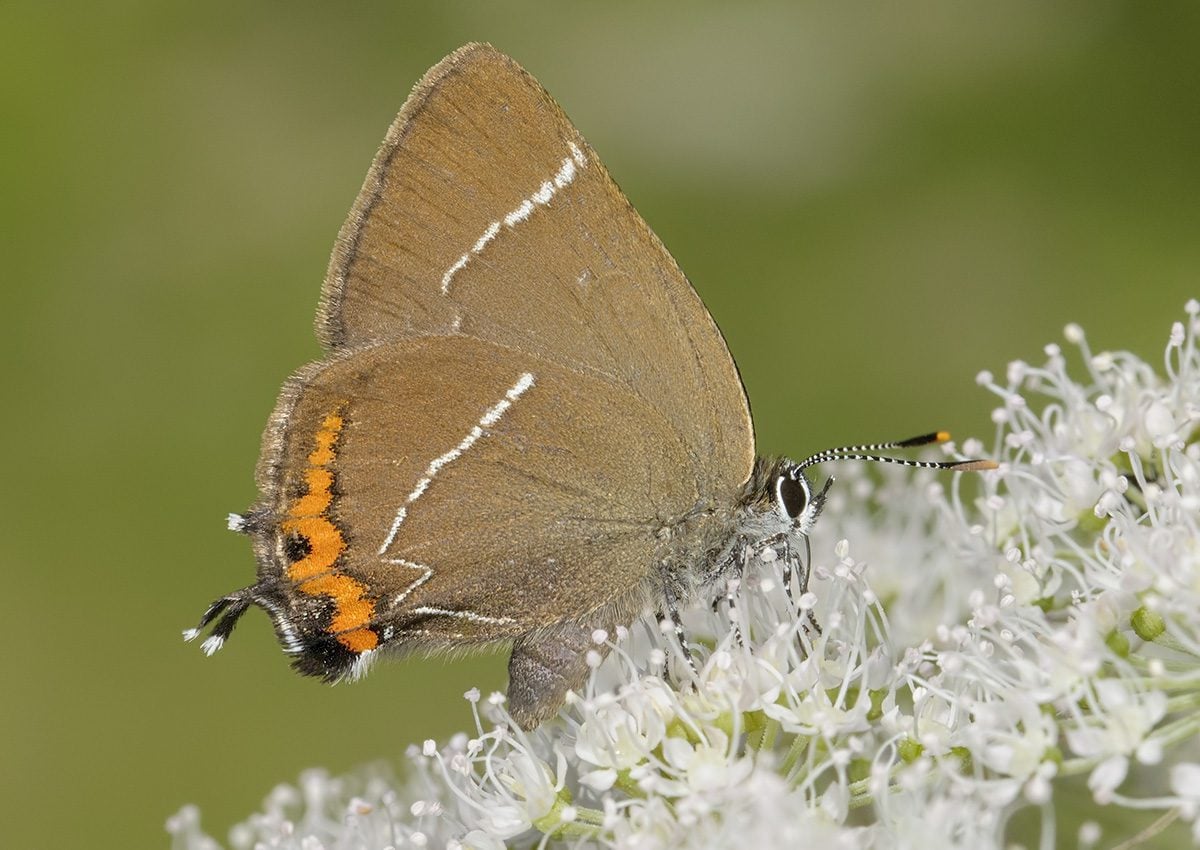
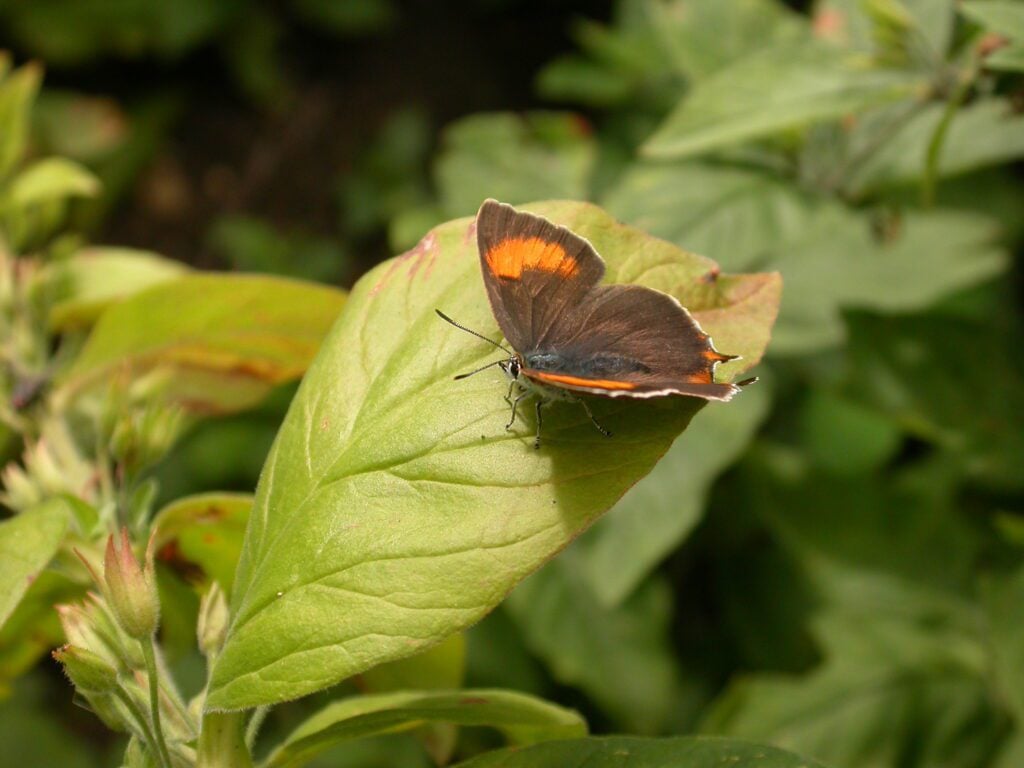
- The Brown Hairstreak is a large hairstreak, with brown upperwings and small ‘tails’ protruding from the hindwings. Females have a brilliant orange patch in the top corner of each forewing. The underwings are a distinctive bright orange, with two white lines streaked across them.
- Female Brown Hairstreaks lay conspicuous, round, white eggs on young Blackthorn shoots. Looking like Blackthorn leaves, the older caterpillars are extremely well camouflaged and feed only at night.
- Wingspan: 3.6-4.5cm
Status
Protected in the UK under the Wildlife and Countryside Act, 1981. Priority Species under the UK Post-2010 Biodiversity Framework.
Seasonality
July to September