Take action
Become a member
Memberships builds our community and gives us a predictable income, which lets us plan and sustain longer projects that can have a greater impact. The more members we have, the more we can do to protect the Sussex countryside and coast.
Make a donation
Membership builds our community and gives us a predictable income, which lets us plan and sustain longer projects that can have a greater impact. The more members we have, the more we can do to protect the Sussex countryside and coast.
Overview
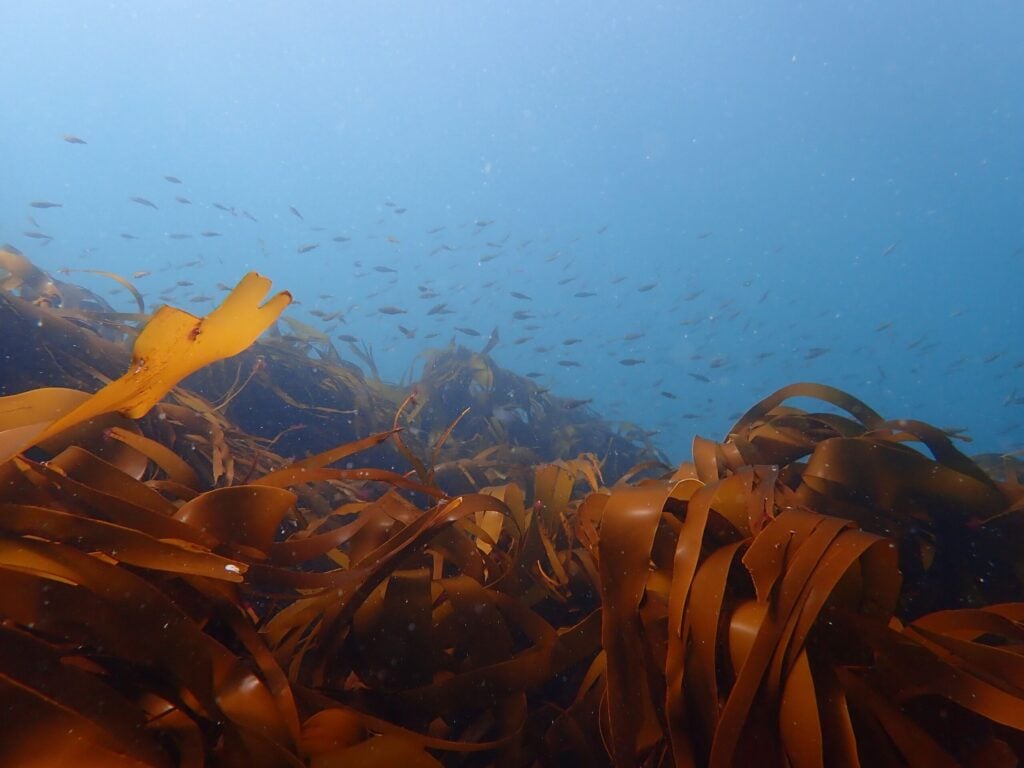
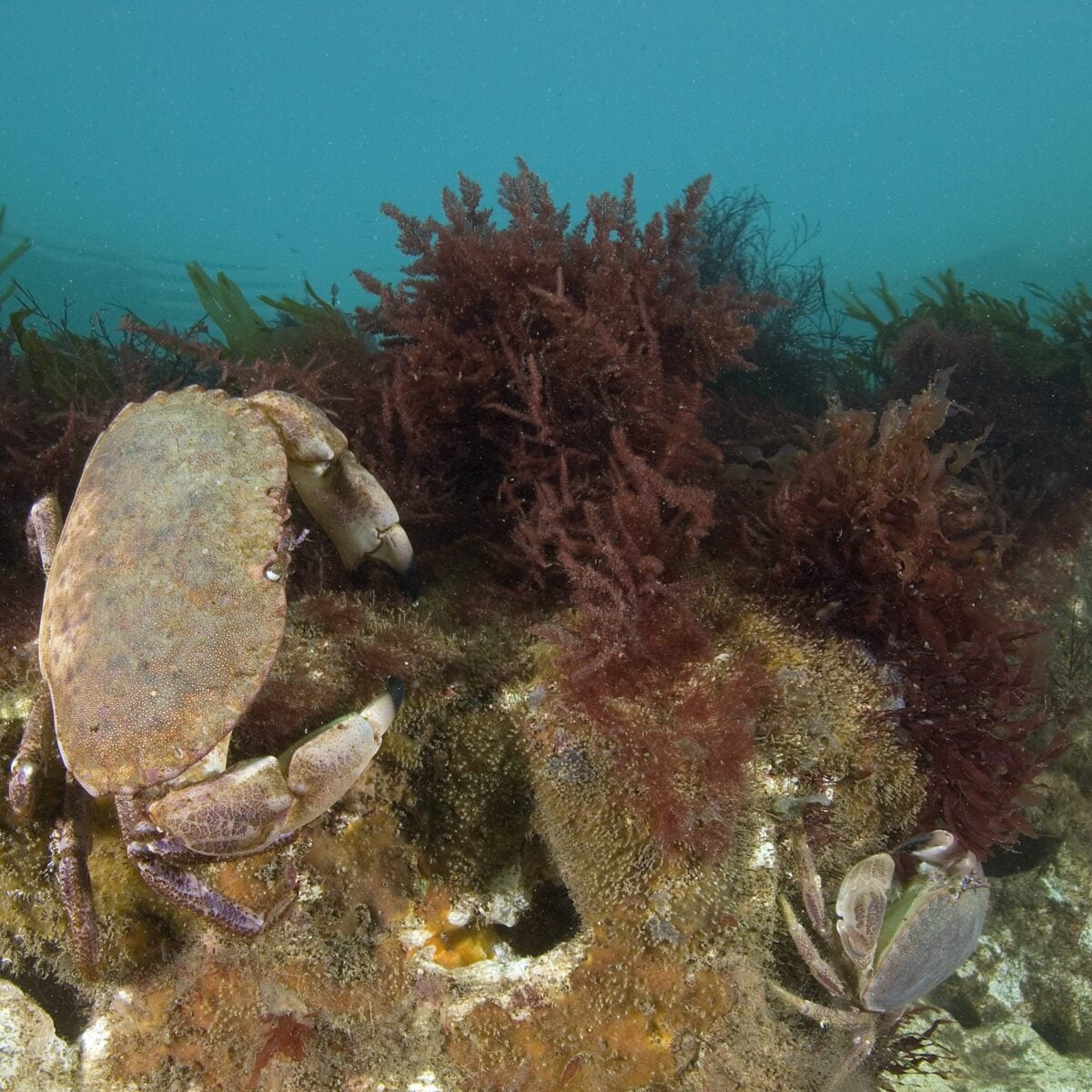
Much like in terrestrial forests, kelp creates a canopy, which provides shelter and habitat for other wildlife, which in turn provide food for others. As such, kelp is considered an ecosystem engineer; those species that form the basis of a habitat upon which other species flourish.
There are four different types of Kelp in Sussex, all large, brown in colour, and with different shapes to their flat blades (the seaweed equivalent of leaves).
- Oarweed (Laminaria digitata)
- Tangle (Laminaria hyperborea)
- Sugar Kelp (Saccharina latissima)
- Furbellows (Saccorhiza polyschides) – not a true kelp, but is often considered a ‘pseudokelp’ due to similar appearance and ecology
Key Facts
- Kelp once grew in abundance beneath the Sussex waves, providing food, shelter, and hunting grounds for all manner of other marine species – fish, crustaceans, seabirds and mammals such as seals and dolphins all benefitted from the plentiful ecosystems that kelp creates.
- In the 1980s, storms, marine heatwaves and poor water quality had a negative effect on Sussex kelp, and persistent damage was caused by intensive and regular trawling of the seabed for commercial fishing. This destructive and indiscriminate practice decimated the biodiversity of the Sussex seabed.
- In March 2021, bottom-towed trawling was prohibited from 304 square kilometres of our Sussex seabed, thanks to a campaign which then kick-started the Sussex Kelp Recovery Project.
- By stopping this damaging practice, rewilding of the seabed has begun, to recover not just kelp, but other seabed habitats and the myriad of species they in turn supports.
- Blue Mussels create sprawling ‘biogenic reefs’ across the seabed and act as a grounding for kelp spores to attach to and grow. The thick kelp coverage provides shelter for the young juvenile Black Sea Bream (sometimes known as ‘Porgy’), who make nests for their eggs in craters in seabed gravel.
- The underwater forests provide coastal defences, buffering storms and absorbing energy from waves. After heavy storms at sea, you may notice kelp washed up on beaches, where it has become detached.
Status
Kelp forests and beds are estimated to occur along more than 19,000 km, or approximately 60% of the UK’s coastline.
Kelp has not been officially classified by the IUCN, however, The Red List for British seaweeds assessed species against the IUCN criteria and reported Oarweed as Vulnerable, and Tangle and Sugar Kelp as Near Threatened.
Seasonality
All year round
How we can help kelp
- Support the ban of damaging trawling practices in other parts of the UK – keep your eyes on petitions to sign and contact your MP!
- Consider the fish you eat – by choosing more sustainable fishing options you can support the protection of kelp forests and their associated ecosystems. The MCS Good Fish Guide is a great place to start.
- Reduce your carbon footprint – one of the biggest threats to our underwater forests is marine heatwaves, caused by climate change.
- Become a Citizen Scientist and be part of the Sussex Kelp Recovery Project’s research program by letting us know when and where you see kelp along the Sussex coast – out at sea or washed up on land.