Take action
Become a member
Memberships builds our community and gives us a predictable income, which lets us plan and sustain longer projects that can have a greater impact. The more members we have, the more we can do to protect the Sussex countryside and coast.
Make a donation
Membership builds our community and gives us a predictable income, which lets us plan and sustain longer projects that can have a greater impact. The more members we have, the more we can do to protect the Sussex countryside and coast.
Overview
Chalk is a famously soft kind of rock, so chalk reefs attract special rock-boring animals such as Piddocks, spionid worms and Boring Sponges.
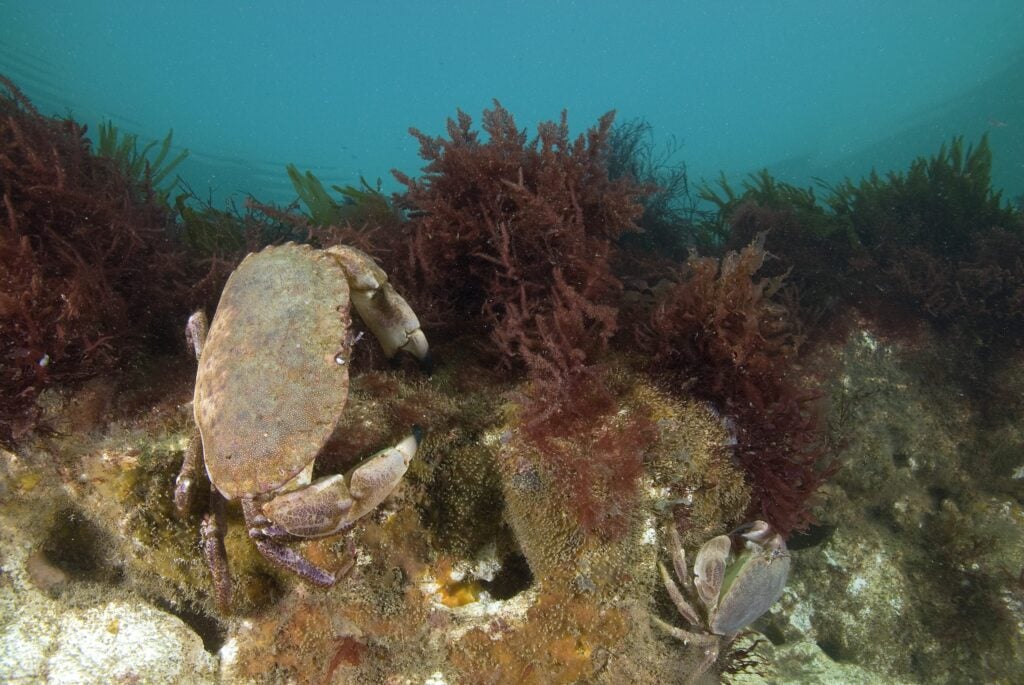
These rock-boring animals create cracks and crevices in the chalk, which in turn provide homes for many other creatures such as Tompot Blennies and Lobsters. This marine life on the seabed attracts more mobile species to move into the area, in search of food, shelter or a mate.
How does chalk form its own reef?
Chalk is a white limestone formed from the shells of tiny marine organisms (plankton) that lived in seas that covered much of Britain around 70 to 100 million years ago. When these tiny organisms died, they sank to the seafloor and formed layers of shells which built up and hardened into chalk deposits over millions of years.
You might hear ‘reef’ and think ‘coral’, but reefs can be made from anything, including chalk. A reef is simply a ridge, ledge or outcrop that sticks out of the surrounding seabed. Over time, waves and currents wear away chalk cliffs and the seafloor, leaving behind a rocky reef surface with arches, ledges, and cracks. This chalk then provides a base which marine life can bore, settle and grow on.
Where are Sussex’s chalk reefs?
You can see chalk reefs where there are chalk cliffs or where chalk bedrock is exposed on the seabed.
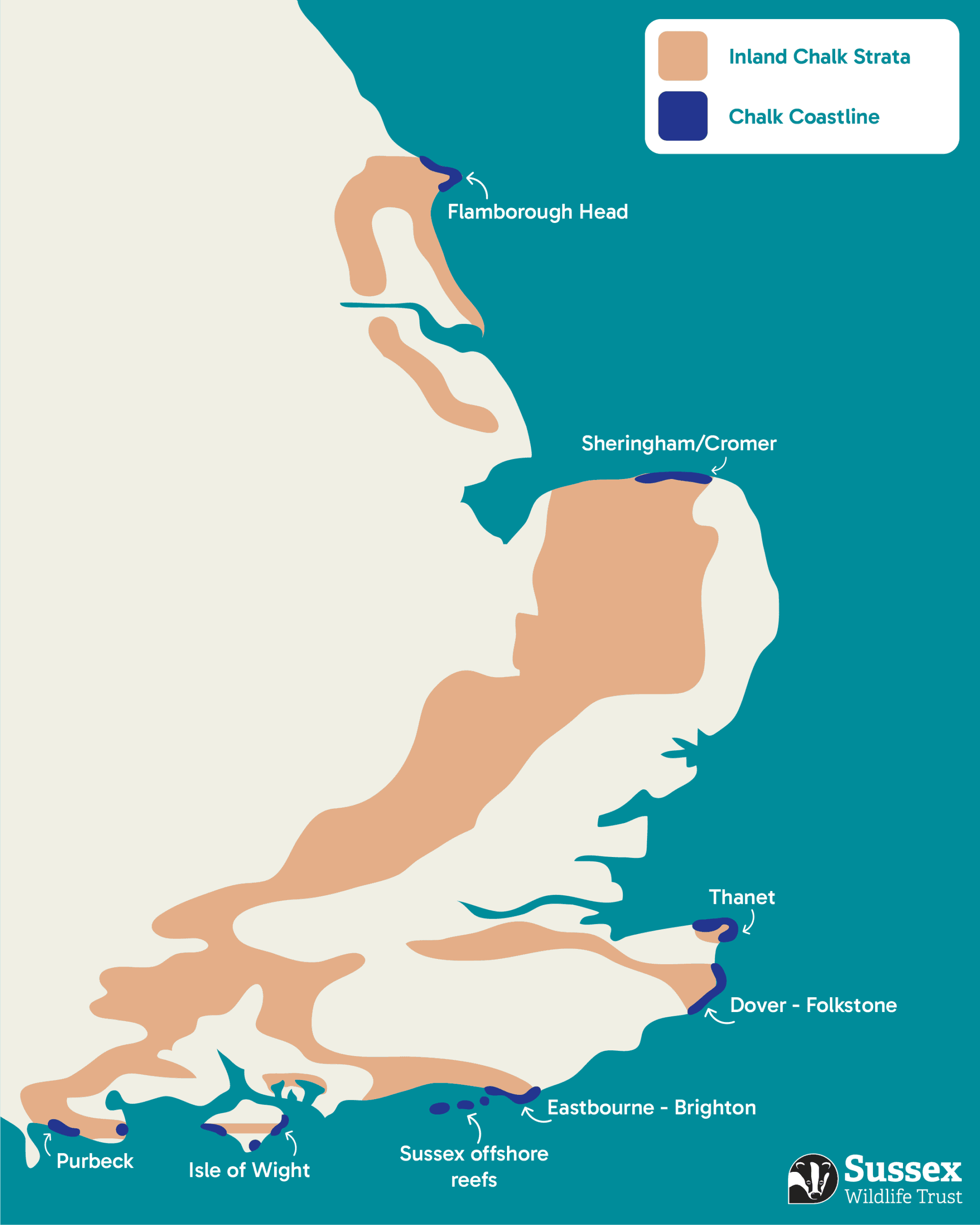
Here in Sussex there are some great examples between Brighton and Eastbourne. Further offshore, chalk reef runs in patches from Brighton to Shoreham, with further outcrops in the Kingmere Marine Conservation Zone (south of Littlehampton and Worthing).
Chalk forms less than 1% of Britain’s coastline, with more than half of that being found in Sussex and Kent. Internationally, coastal chalk is even more scarce, with most of it in north-west Europe. England holds a globally significant proportion of all the world’s marine chalk, meaning we have a special responsibility to protect it.
What to look for
Some chalk reefs are exposed when the tide is out – look for areas with soft white rocks. You might see cracks and shelves in the chalk, known as crevices and ledges. There may also be rock pools, small pools of water left behind by the tide. These areas are often teeming with seaweed and marine life such as algae, sponges, sea anemones, and small fish or crabs living on or around the reef.
How can we protect and restore chalk reefs?
Though a protected habitat, chalk reefs remain at risk from various human activities.
Any human activities which cause increased erosion or damage to the chalk reef structure threaten this special habitat. Over a third of coastal chalk in Sussex alone has been modified by coastal defences and other forms of engineering work. This often damages the biodiversity of chalk reefs, as does toxic contamination and the physical loss of areas of chalk altogether. Incoming species such as Pacific Oysters and Wireweed are also a threat, as they can outcompete and displace the wildlife that’s already here.