Take action
Become a member
Memberships builds our community and gives us a predictable income, which lets us plan and sustain longer projects that can have a greater impact. The more members we have, the more we can do to protect the Sussex countryside and coast.
Make a donation
Membership builds our community and gives us a predictable income, which lets us plan and sustain longer projects that can have a greater impact. The more members we have, the more we can do to protect the Sussex countryside and coast.
Overview
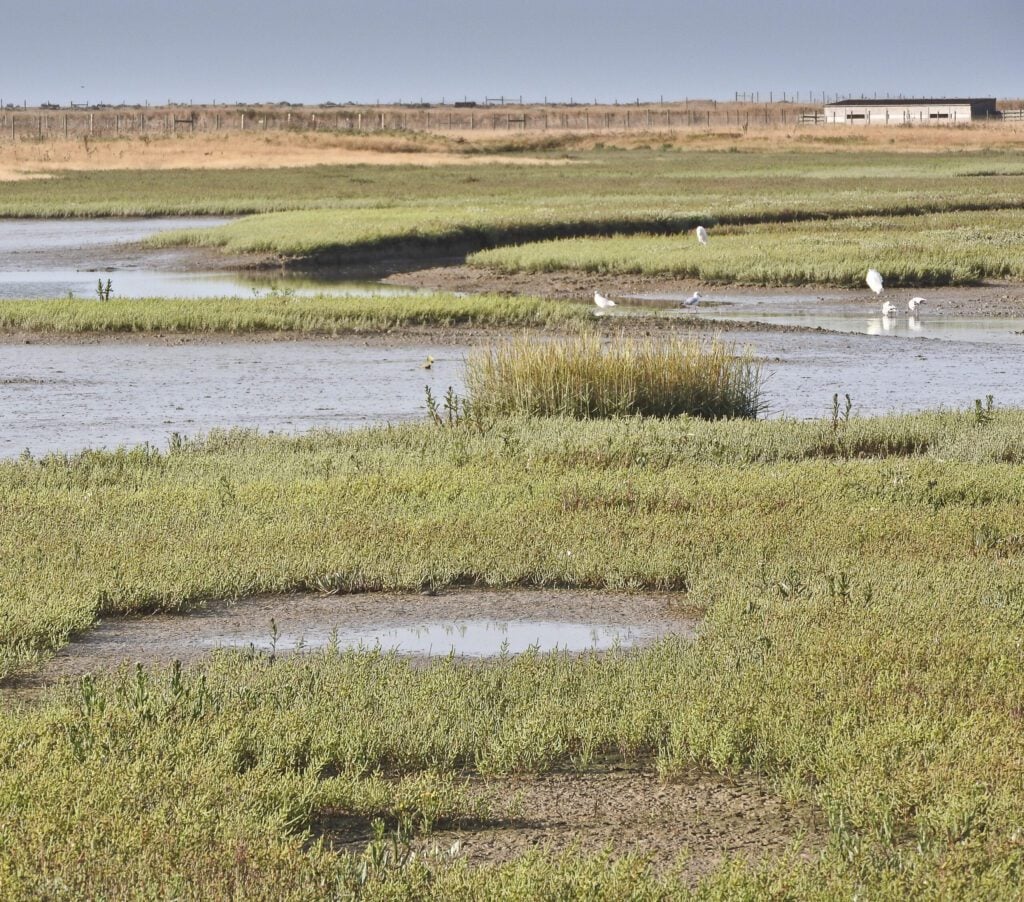
In coastal areas sheltered from waves, slow-moving tides gently lap over a flat expanse of fine mud. Covered at high tide and exposed during low tide, mudflats support a wealth of life; bristle worms, bivalves and mud snails – all food for flocks of wading birds.
How saltmarsh and mudflats form
Mudflats form within the shelter of estuaries or natural harbours, where fine silt and clay sediments settle. The mud is very fertile thanks to its high content of organic material, making mudflats ideal for hosts of filter-feeding and scavenging invertebrates.When the accumulating mud rises above the water surface saltmarsh plants can colonise. These capture more sediment and allow the marsh to keep building for as long as it is still low enough to be flooded by the higher tides.
Where to find saltmarsh and mudflats in Sussex
Found in sheltered estuaries and natural harbours, such as Pagham Harbour, and the Adur estuary at Shoreham in West Sussex, and at Rye Harbour in East Sussex.
A natural solution to the climate crisis
In saltmarshes carbon is captured by plants growing in the saltmarsh through photosynthesis and is stored both in the plant and the sediment beneath, which can extend several metres deep.
A hectare of saltmarsh can capture two tonnes of carbon a year and lock it into sediments for centuries. If the saltmarsh remains undisturbed the carbon in the soil can be stored for millennia.
We know from experience that restoring nature can help soak up carbon emissions – known as natural solutions to climate change – whilst contributing many additional benefits. When healthy, our natural habitats can reduce the risk of flooding, help prevent coastal erosion, improve people’s health and wellbeing and much more.
How can we protect and restore saltmarsh and mudflats?
Saltmarshes have been historically threatened, having been ‘reclaimed’ from the sea for use as farmland during as early as Roman times, but modern developments threaten to squeeze them out of existence. Trapped between increasingly frequent storms and rising seas, and hard sea defences that prevent them from moving inland, saltmarshes are being eroded in many places.
As well as being a vital habitat for thousands of waders and waterfowl, the role that saltmarshes play in defending our coasts from erosion by waves is increasingly recognised, and efforts are being made to protect and restore them.
Although saltmarshes tend to need little conservation management, many have a long tradition of low-intensity grazing, which is important in maintaining their diversity. Re-alignment of sea-defences can allow for expansion of this habitat.