Take action
Become a member
Memberships builds our community and gives us a predictable income, which lets us plan and sustain longer projects that can have a greater impact. The more members we have, the more we can do to protect the Sussex countryside and coast.
Make a donation
Membership builds our community and gives us a predictable income, which lets us plan and sustain longer projects that can have a greater impact. The more members we have, the more we can do to protect the Sussex countryside and coast.
Overview
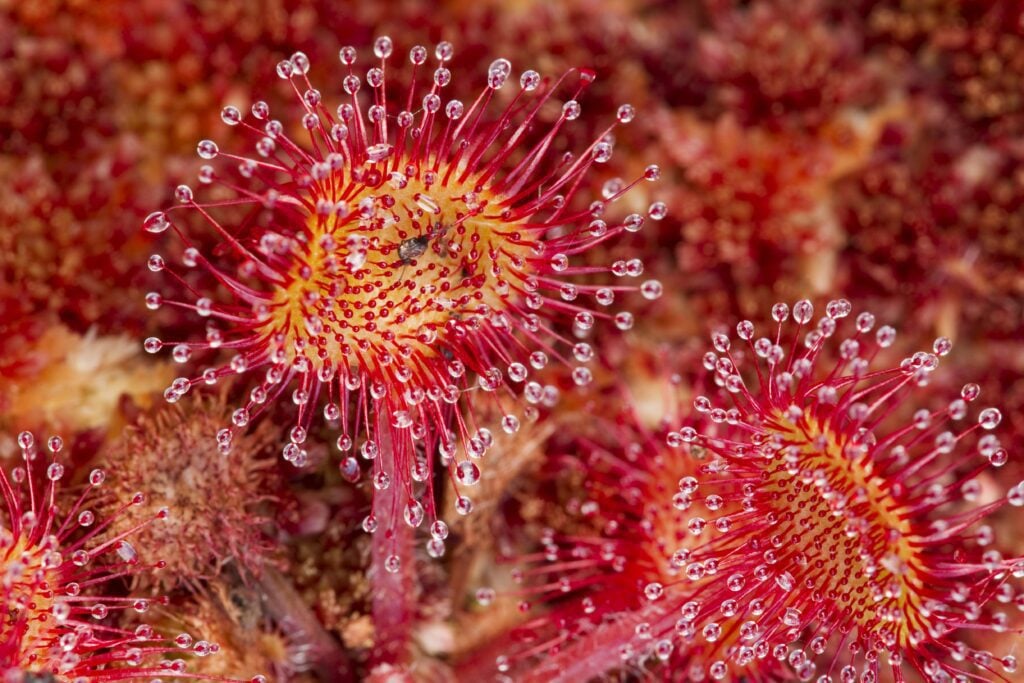
A tiny, slender plant, Round-leaved Sundews stand out from the crowd – the acidic habitats it lives in don’t provide enough nutrients, so it has evolved a carnivorous way of life to supplement its diet.
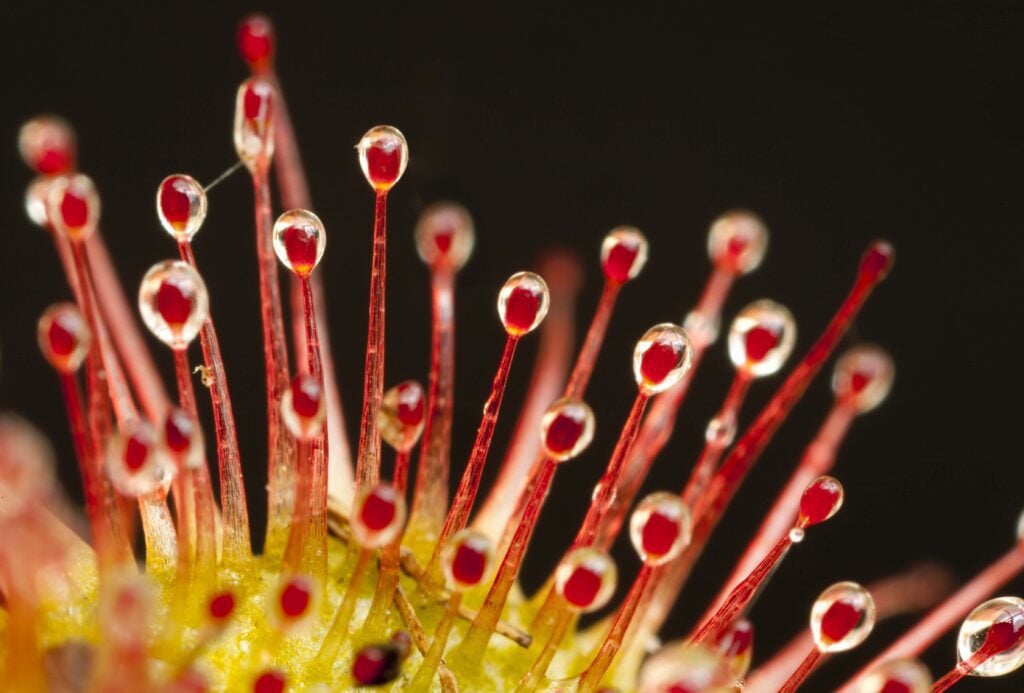
Hair-like tendrils on each reddish leaf are tipped with glistening droplets that attract passing insects. But this ‘dew’ is very sticky, trapping the insect; the sundew’s tendrils detect the presence of its stuck prey and curl inwards to engulf it. Eventually, the whole leaf wraps around the insect which is digested.
Key Facts
- The greeny-red leaves of the Round-leaved Sundew are covered in red ‘hairs’ and arranged at the base of the plant in a rosette. The white or pink flowers appear in summertime at the top of hairless, red stems. The Round-leaved Sundew can be distinguished from the Oblong-leaved Sundew by the rounder shape of its leaves.
- The ‘dew’ of Round-leaved Sundews once formed the basis of anti-ageing potions as people believed it was a source of youth and virility – the sundew itself glistening and moist even in the most fierce sun. Later on, the plant was also used as a love charm because of its power to lure and trap helpless insects.
- Height: up to 20cm
Status
Common.
Seasonality
June to August