
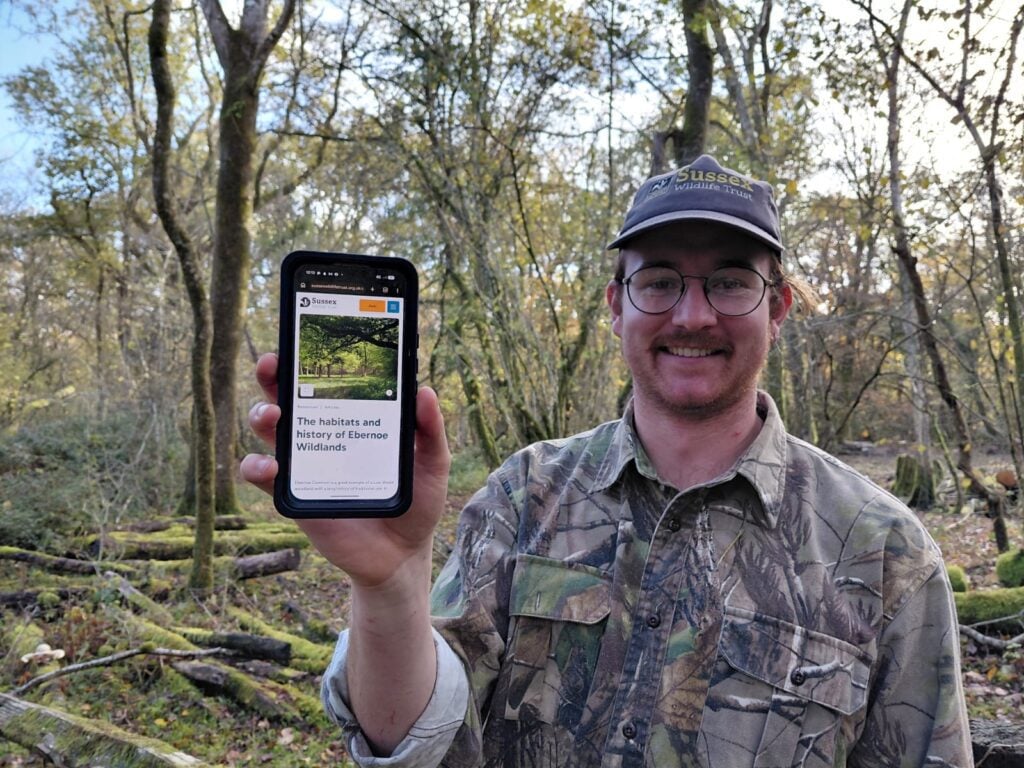
Sussex Wildlife Trust is aiming for 1 in 4 people across Sussex to have taken some kind of meaningful action for wildlife by 2030. That’s around 400,000 people.
It is, as one person described such things, a big, hairy, audacious goal. Pursuing it means strengthening our resources and reaching new audiences.
We know that existing supporters want inspiring and trustworthy information about wildlife in Sussex, the latest updates on what’s happening, and clear routes to get involved. The new site is designed to make all these things better and easier to use.
We also need resources that we all feel excited to share with family, friends, colleagues and neighbours. Something that looks good, works well on a mobile phone – and that might just inspire someone to take action for the first time.
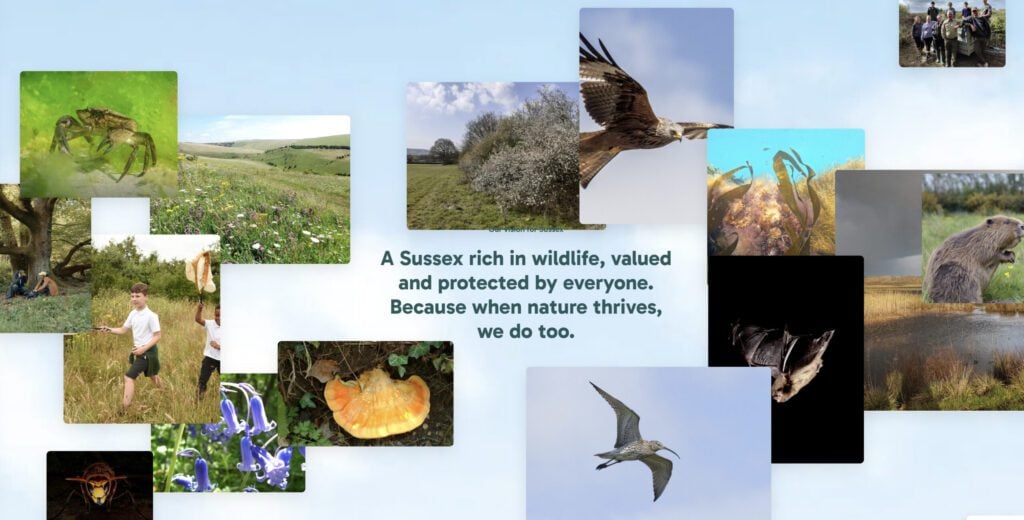
New entry points to saving nature
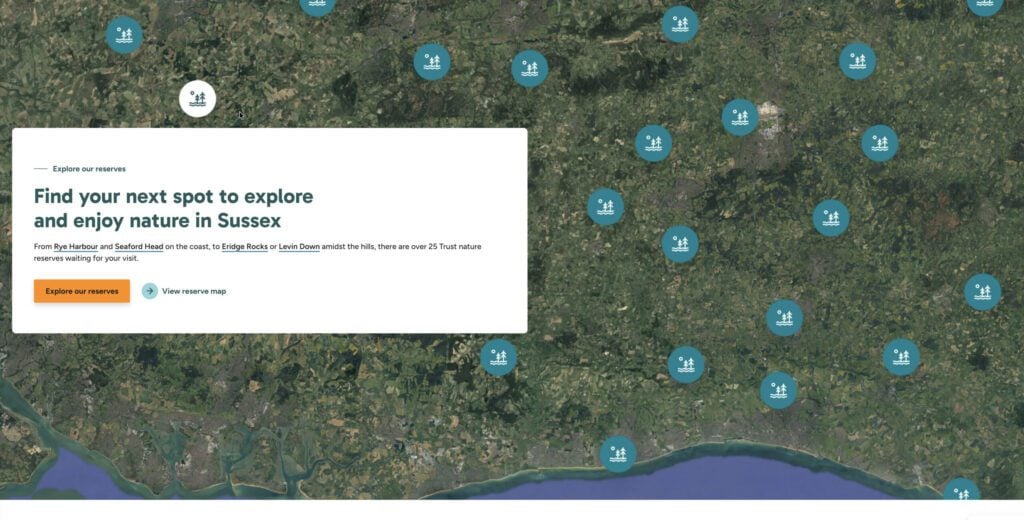
The new homepage begins with new ways to find places to visit and things to do in Sussex, leading to a revamped Reserves section, and a whole new Activities section, full of ideas for getting outside and getting to know nature in Sussex.
You will see there are lots more ‘calls to action’ across the new site – linking good information with next steps that people can take, whether that’s sharing records of what you’ve found, finding a local community group, signing up to an event, or joining as a member. We’ve peppered lots of ways to go deeper and get more involved, throughout the site.
For instance, you’ll see a series of pages on topics such as bringing back species, youth action and coast and sea, which spotlight big issues that we’re working on and explain why and how we’re tackling them.
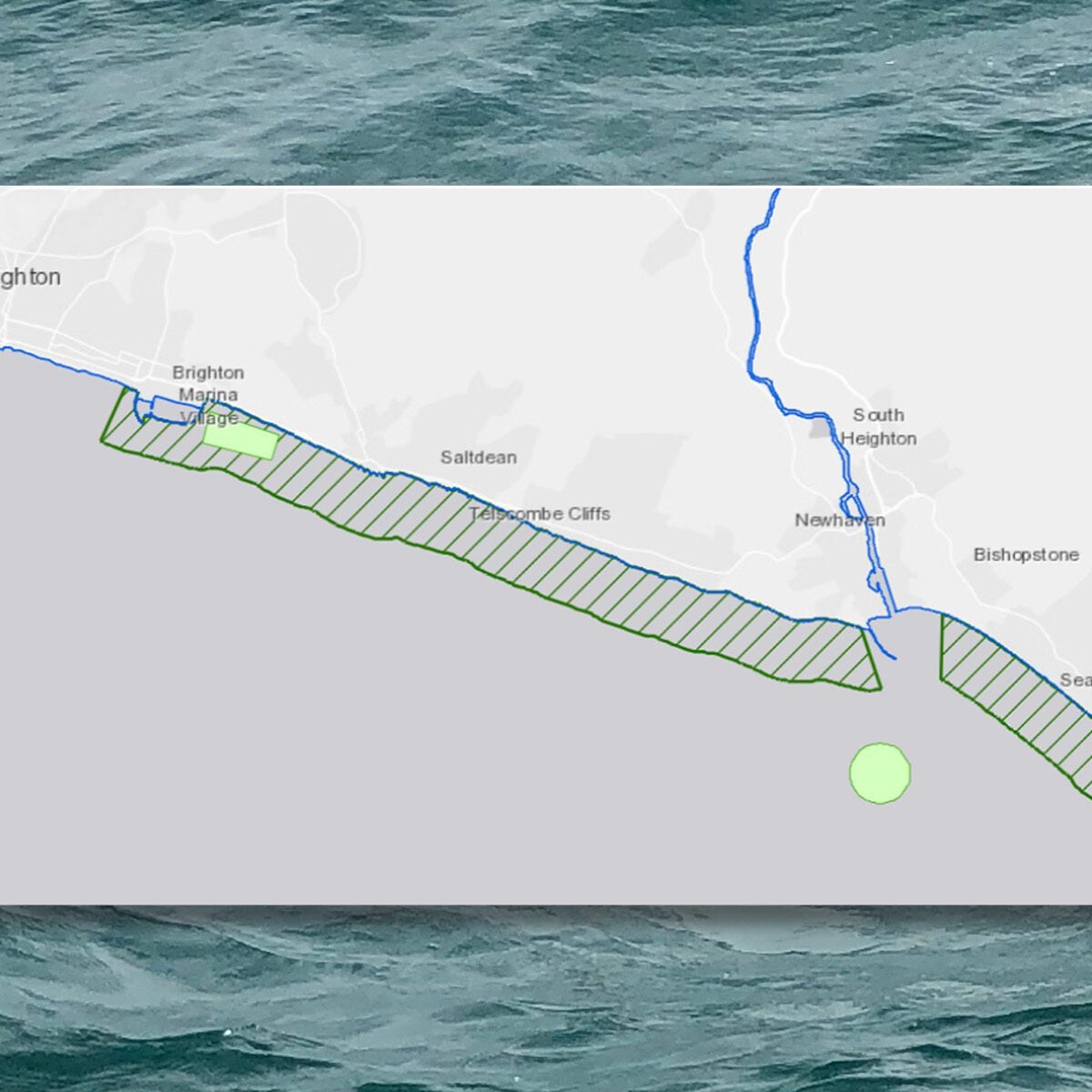
From here you can discover the specific initiatives that we’re involved in – so someone who arrives wanting to know about rewilding can discover the story of Butcherlands, our plans for Beavers, and the Sussex Kelp Recovery Project.
We’re also aiming to support people to make new connections around their favourite places. So someone looking for information on a day out at Seaford Head should find good, up to date information on how to get there, and what to look out for – but maybe they’ll also find themselves learning how rare and precious chalk grassland is, where else it occurs in Sussex, and what kinds of conservation action can restore it.
What’s next?
As well as improving what’s already published, over the coming months you can expect:
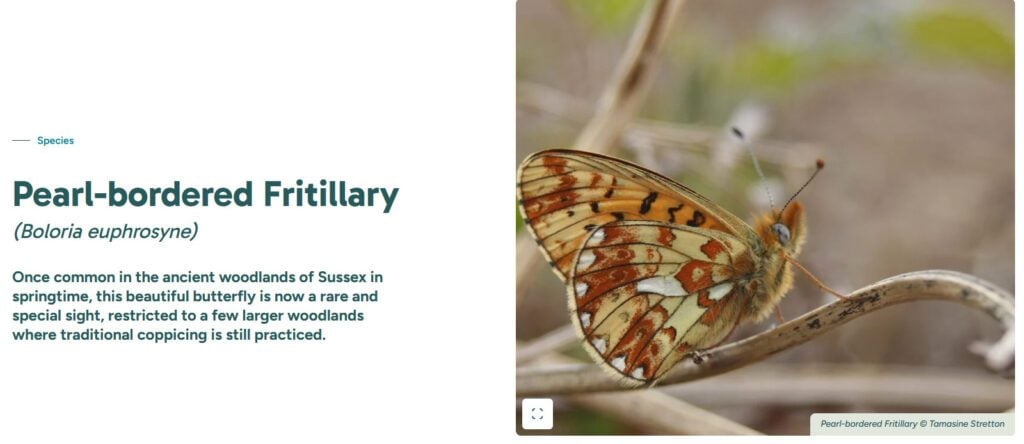
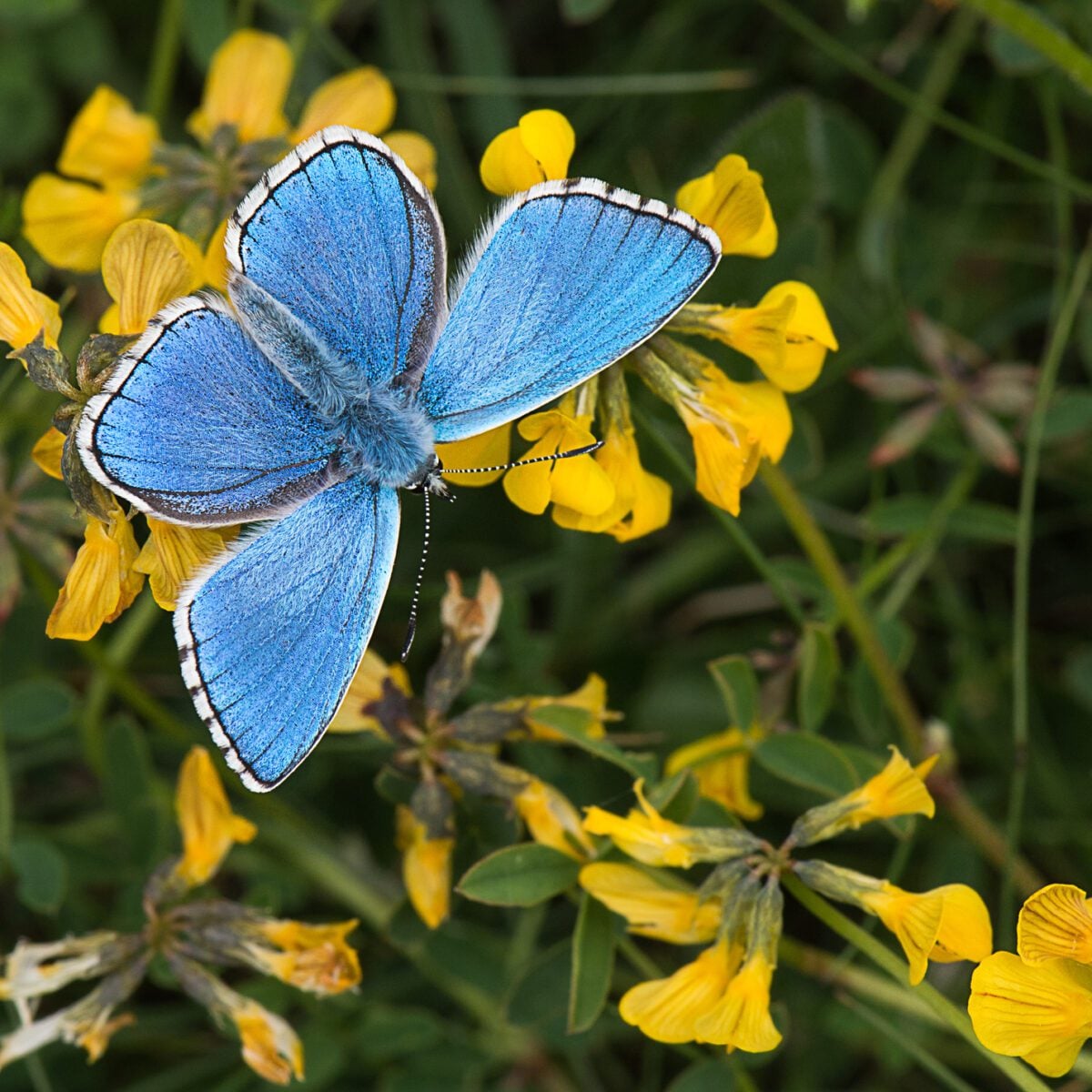
- lots of new Sussex-specific species pages (like this one for Pearl-bordered Fritillary), activity ideas (like Hunt for mermaid’s purses) and new stories of conservation action
- better interactive maps, showing key features of reserves
- more information on accessibility of events, resources and places
- a new improved account area, where members can update their details
There’s plenty more to do, but we hope that this first version will go some way towards building the movement for nature in Sussex that we need now.
What’s working for you? And what’s not? Please leave a comment below, or send us a message using this form.
Leave a Reply