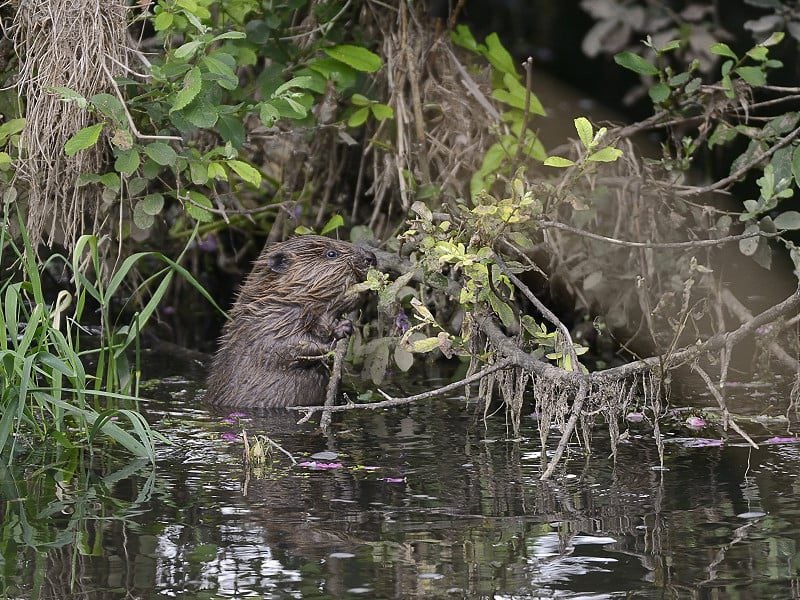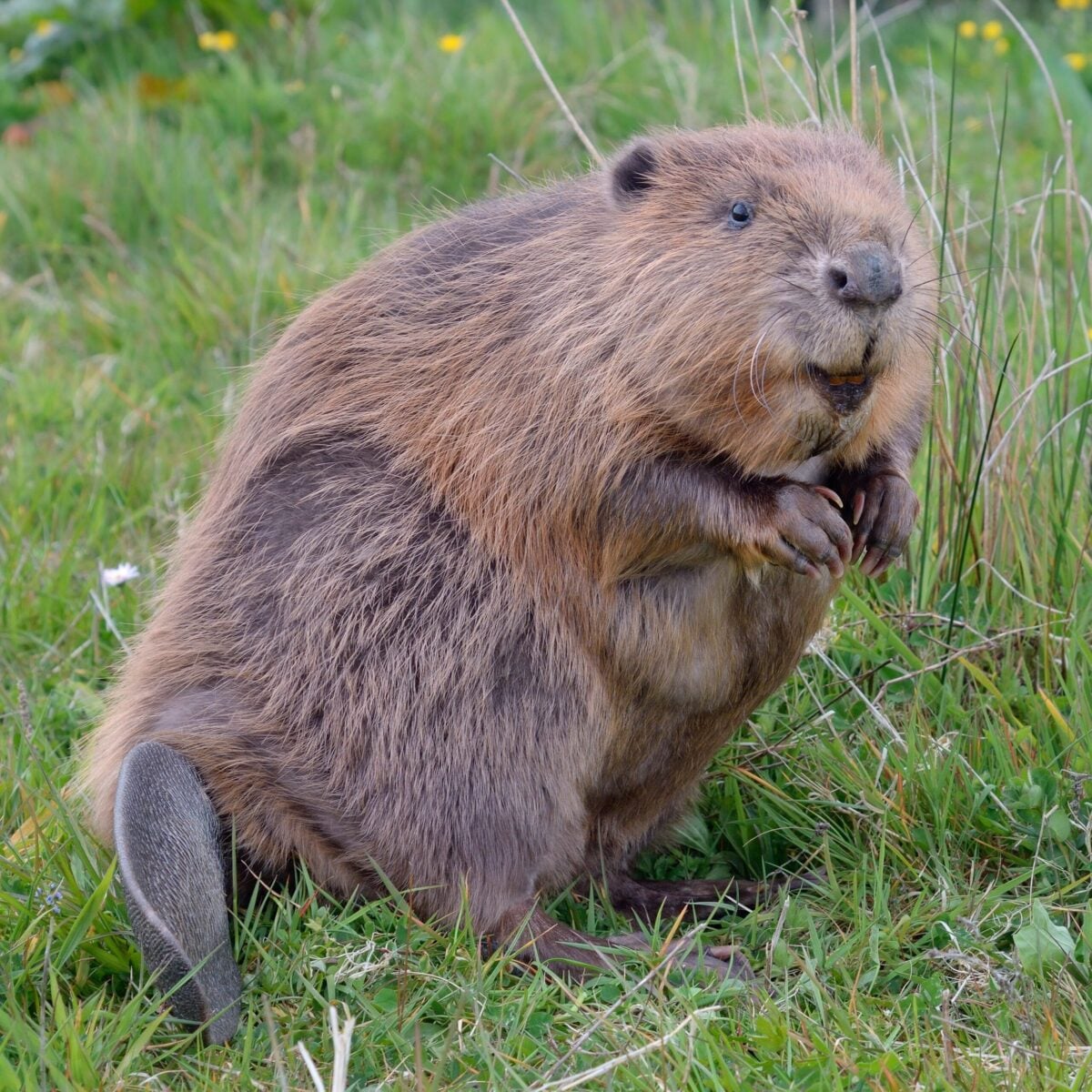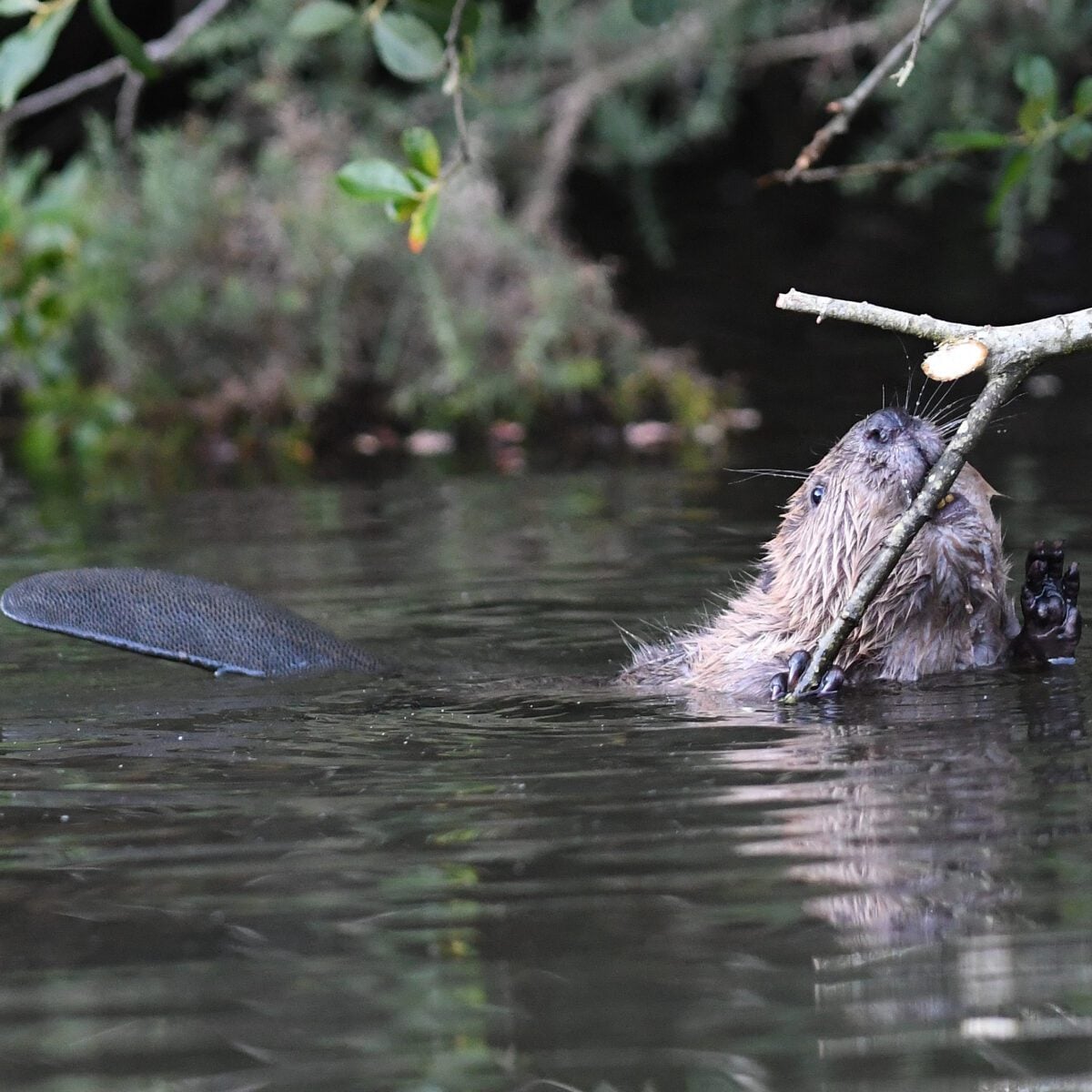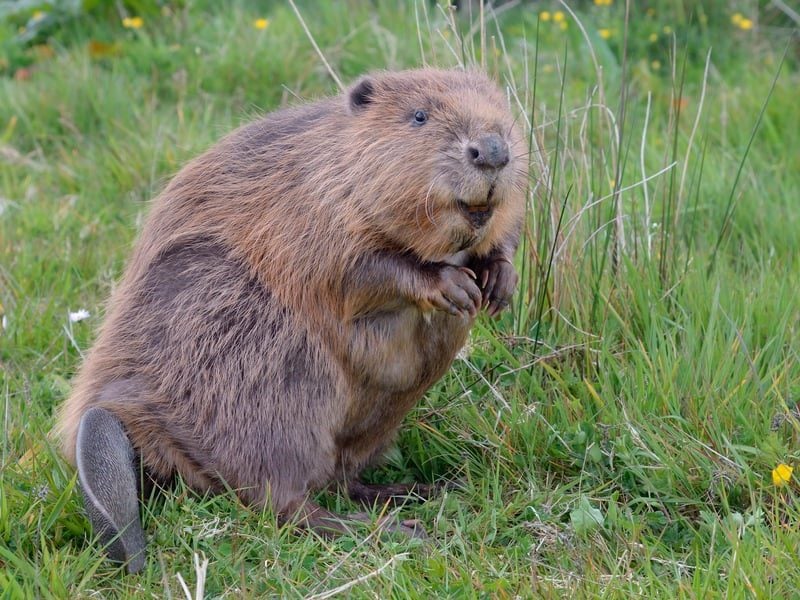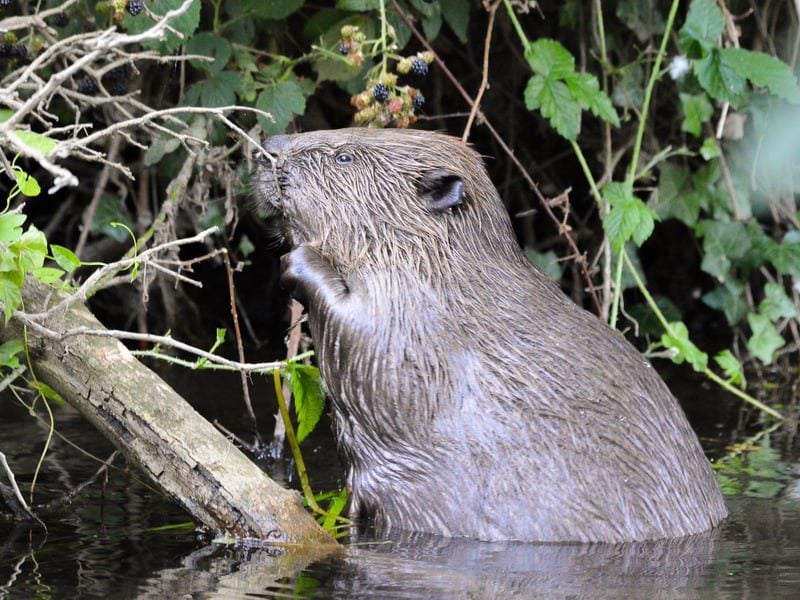
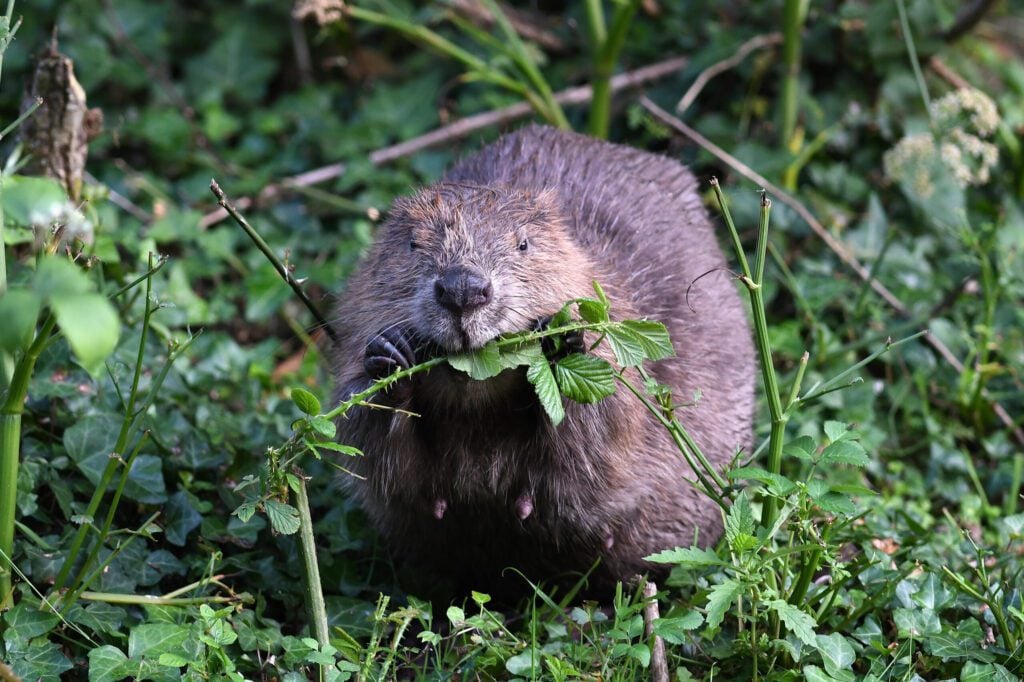
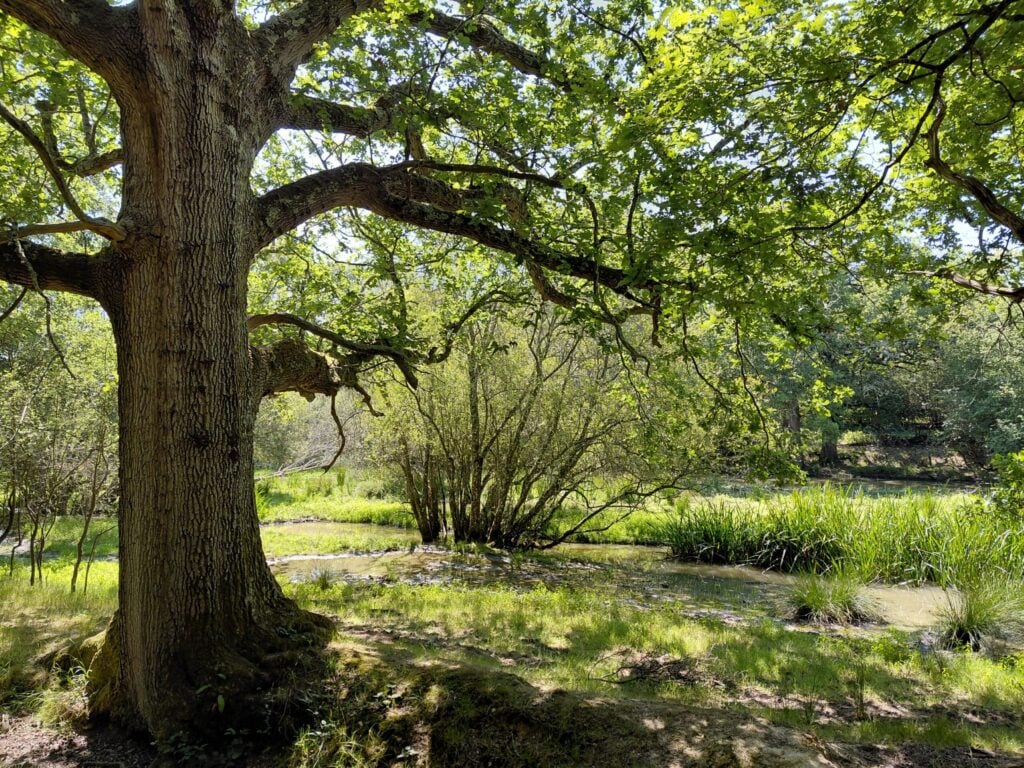
Beaver habitat at Knepp © Fran SouthgateOverview
Getting Sussex Beaver-ready
European Beavers are native to Britain, and there are historic records of their presence in Sussex.
They are one of nature’s greatest landscape architects, and their natural activities – such as gnawing vegetation, building leaky barriers, and creating ponds – have shaped our wetlands for thousands of years.
After an absence of hundreds of years, Beavers are being reintroduced to Sussex. They are a keystone species whose success helps many other species and habitats to thrive.
Background
Why is restoring Beavers important?
Beavers play an important role in helping nature, climate resilience and much more.
Beavers are a ‘keystone species’ – a species without which whole ecosystems collapse. They naturally create prime wetland habitat including rare wet meadows, coppice woodland and freshwater pools. This in turn leads to natural benefits, such as flood relief, drought resilience and water purification.
Beaver benefits
Holding back water
By creating wetlands, Beavers help to reduce flooding, lessen the impacts of drought and support climate resilience.
Habitats for wildlife
Beaver-made pools and ponds support frogs, newts, fish and many other creatures.
Water quality
Beaver wetlands can filter pollution and improving both water quality and water supply
Carbon storage
Complex wetlands can store carbon and reduce the emissions that are driving climate change.
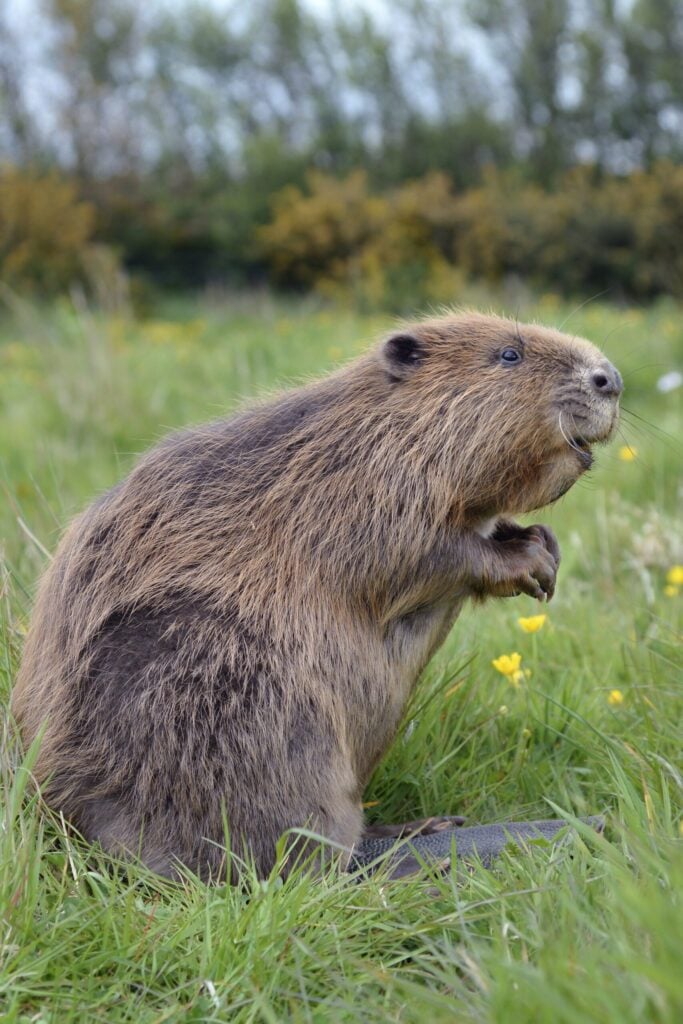
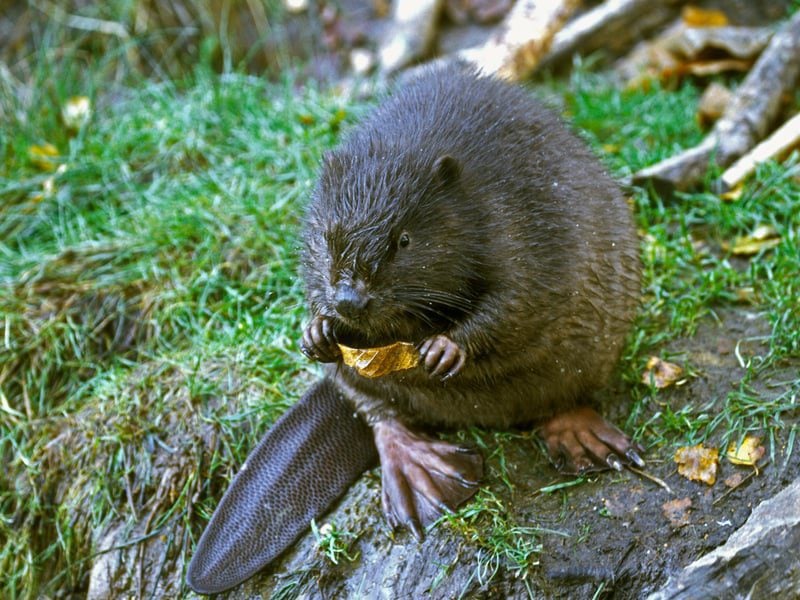
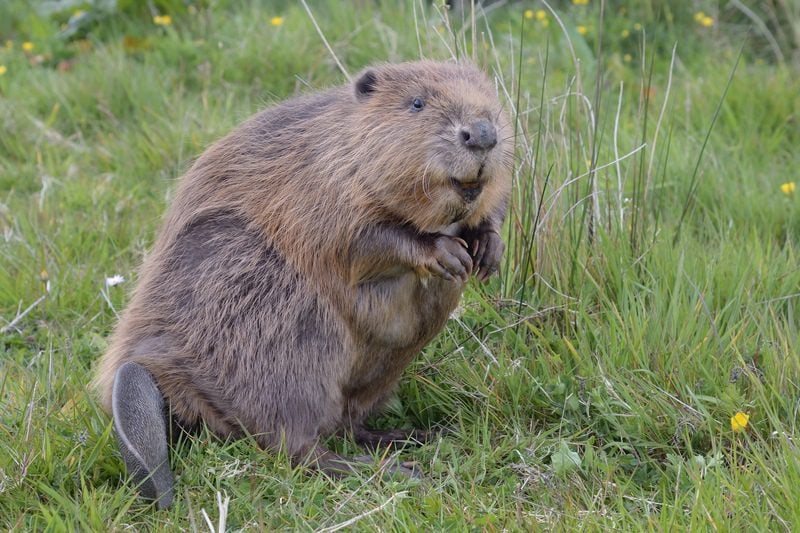
Beaver © Nick Upton and Cornwall Wildlife Trust
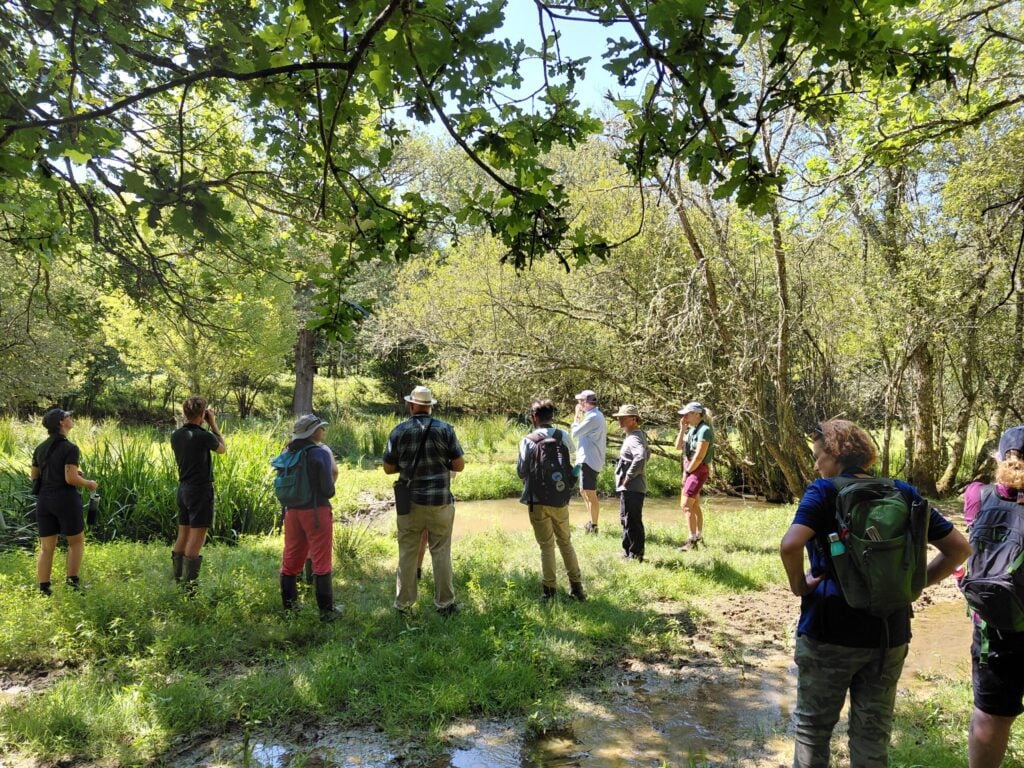
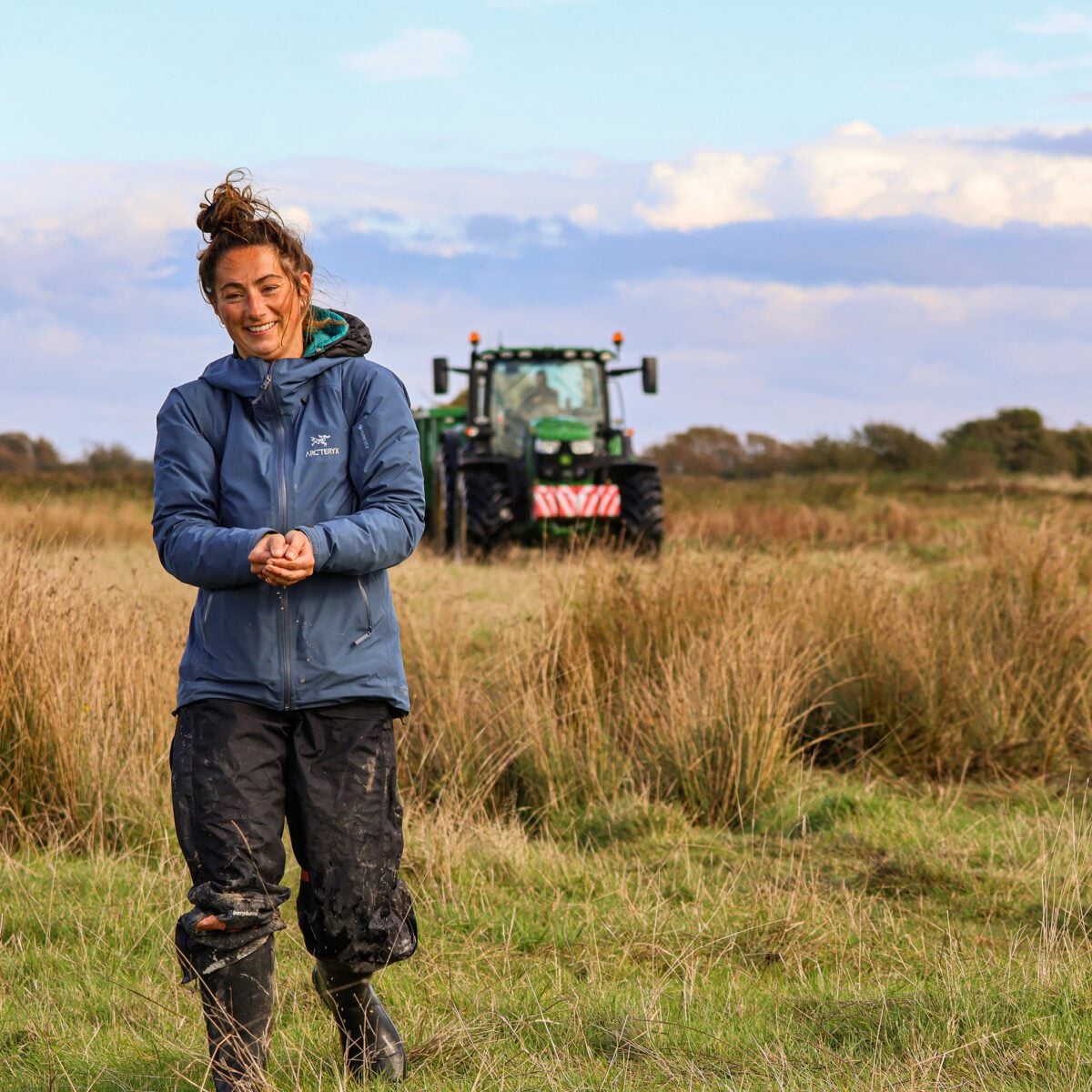
Tour of Beaver habitat © Fran SouthgateLiving alongside Beavers
Beavers and people sharing landscapes
Bringing Beavers back to Sussex will start to show us what healthy river landscapes look like. They will be returning to a cultural landscape that has forgotten how to co-exist with them. This brings benefits and challenges for farmers, land managers and communities in our lowland catchments.
If you live in the Wilder Ouse or Wilder Horsham District project areas, or you are adjacent to one of our wetland Nature Reserves, we can provide advice and support on becoming ‘Beaver-ready’. The High Weald National Landscape, and South Downs National Park may also have grants and support available.
With Beavers returning to Sussex after centuries, this is a fantastic opportunity to bring people along on the journey back to ‘beaverscapes’. We will be working with schools and communities who are learning to live with Beavers again, through a programme of engagement, education, training, and Beaver experiences.
Film
What’s it like living alongside Beavers?
Follow farmer Chris Jones and the Cornwall Wildlife Trust team as they travel to Bavaria, Germany to meet farmers and local residents living alongside Beavers fifty years after they were reintroduced there.
Voices from the community
Why Beavers matter
This is an historic opportunity for Sussex Wildlife Trust to see beavers restored and the benefits this will bring for people as well as nature.
Only as Beavers shape our water, our ecology and our lives once again will … a chorus we never knew was missing will be sung once again.

Beavers are one of nature’s most powerful restoration allies. Bringing beavers back to the wild in Sussex is about restoring this wonderful missing native species and allowing nature’s own processes to work again.
Wouldn’t it be amazing, if children born today, grew up in a world where they lived alongside beavers, instead of a world where beavers were extinct?
The beaver is not just a missing species it is a missing driver for nature. All species don’t just live in their environment they do something for it – but beavers are the true masters. Their activities create and maintain whole ecosystems. Conservationists go to great lengths to create these habitats – beavers do it as part of their everyday life! We should welcome their return.

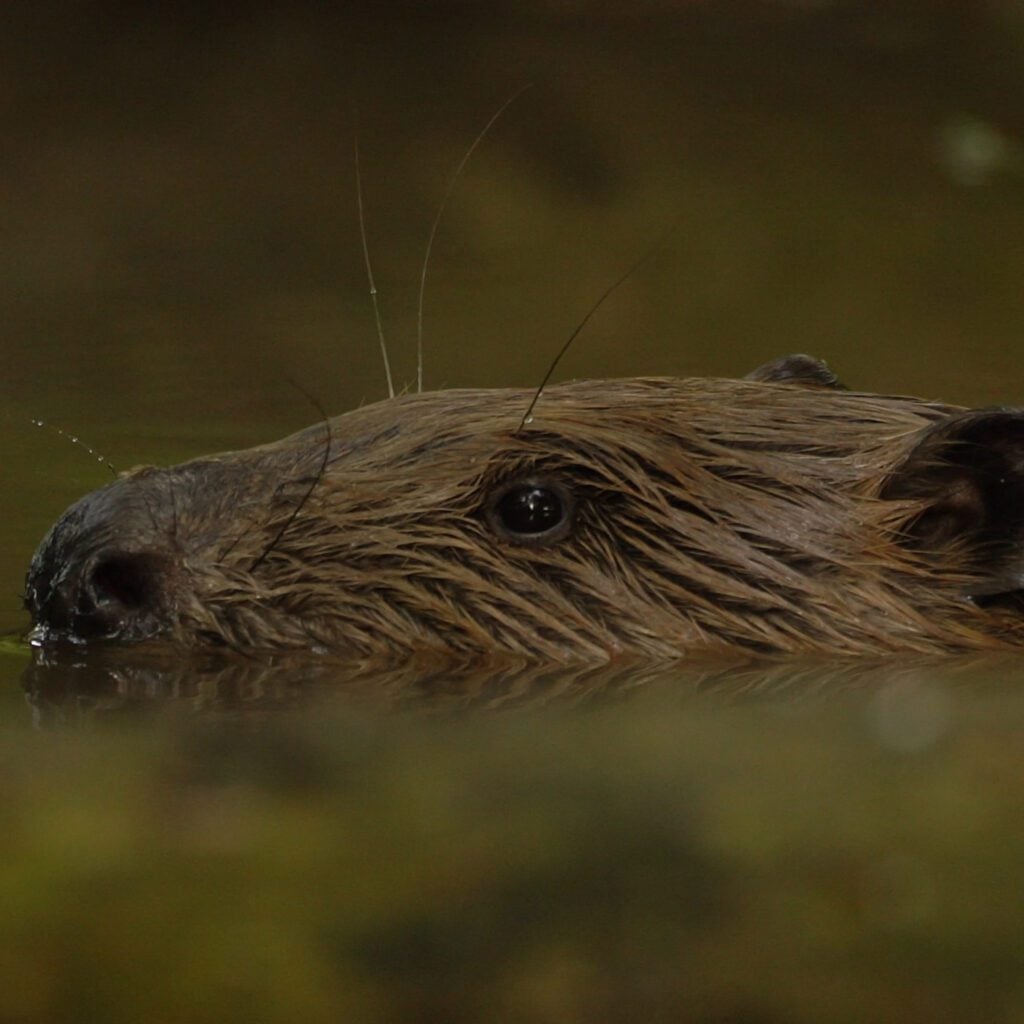
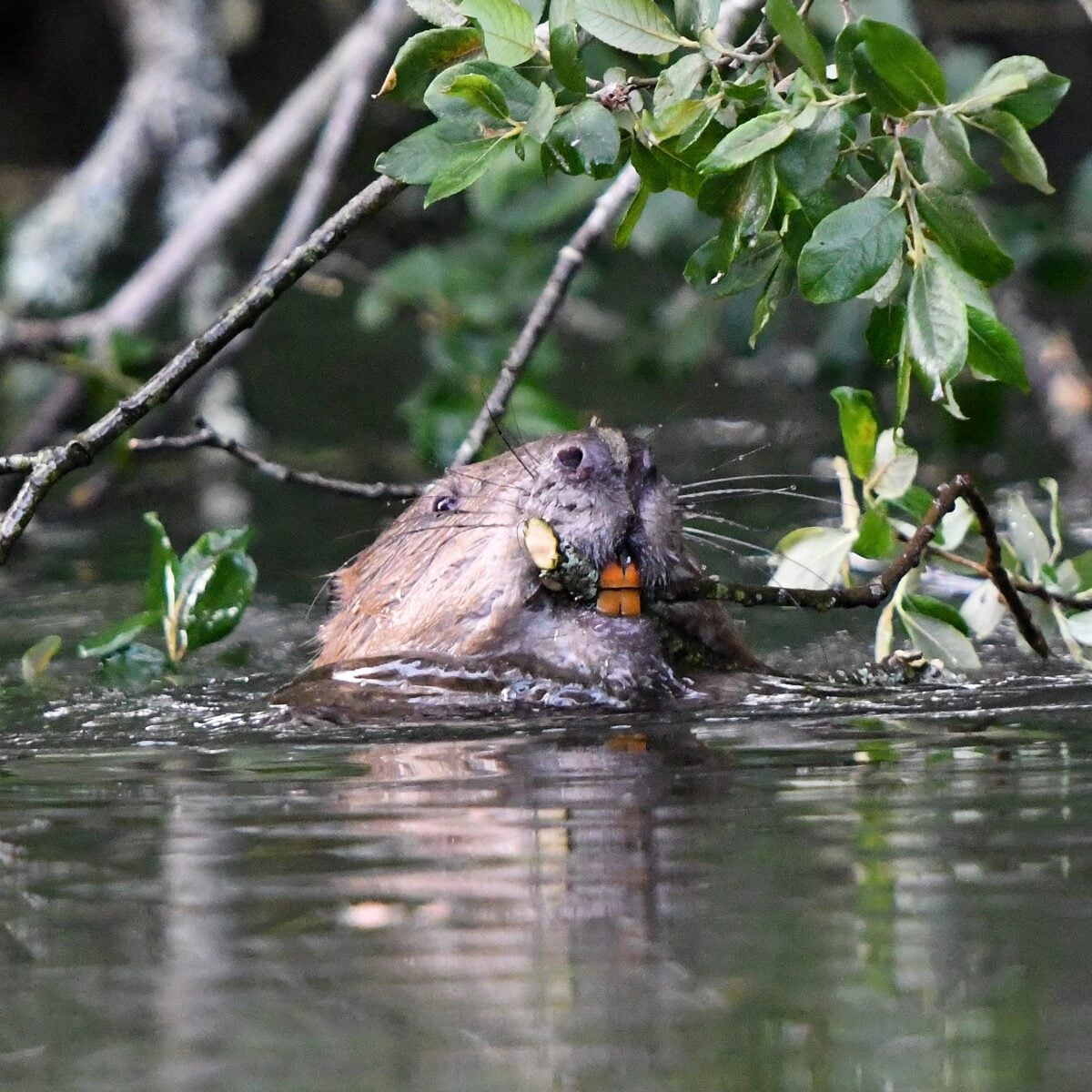
Beaver swimming © Russell SavoryWhere in Sussex?
Where are Beavers living in Sussex so far?
Beavers have been introduced under licence to several enclosures in Sussex since 2020.
Beavers are currently living on a quiet sub-catchment of the Adur river, a tributary of the Ouse river, and on land owned by the National Trust in the Wey catchment. There are reports of additional beavers exploring parts of the Adur.
Film
Beavers and fish
Can beaver-engineered ecosystems and migratory fish thrive together?
This Beaver Trust documentary explores the delicate balance between Beaver restoration and the conservation of migratory fish populations.
The Sussex Beaver Advisory Group (SxBAG)
A collective of organisations, community stakeholders, regulators, and charities with representatives from over 25 different groups. This essential strategic body oversees work on free-living Beaver work in the county, collaborating to support successful coexistence between Beavers and people and coordinating local Beaver groups in Sussex.
Enables existing Beaver populations to live with high welfare standards
Supports and advises communities learning to live with Beavers
Supports and advises those considering licences for free-living Beavers
Plans, evidences and monitors the restoration of Beavers to our rivers
Provides formal oversight, co-ordination and guidance for current and proposed Beaver recovery projects in Sussex
Provides advice on effective long-term Beaver management
Provides advice on UK legislation, licensing and policy
Local Beaver groups
The Trust’s role
Sussex Wildlife Trust and Beavers
Sussex Wildlife Trust has made a commitment to restore Beavers to at least one of our reserves by 2030.
We have assessed the suitability of all our reserves for Beavers, and are working closely with local Beaver groups on Beaver licences in relevant catchments. We hope to announce some good Beaver news over the next few years.
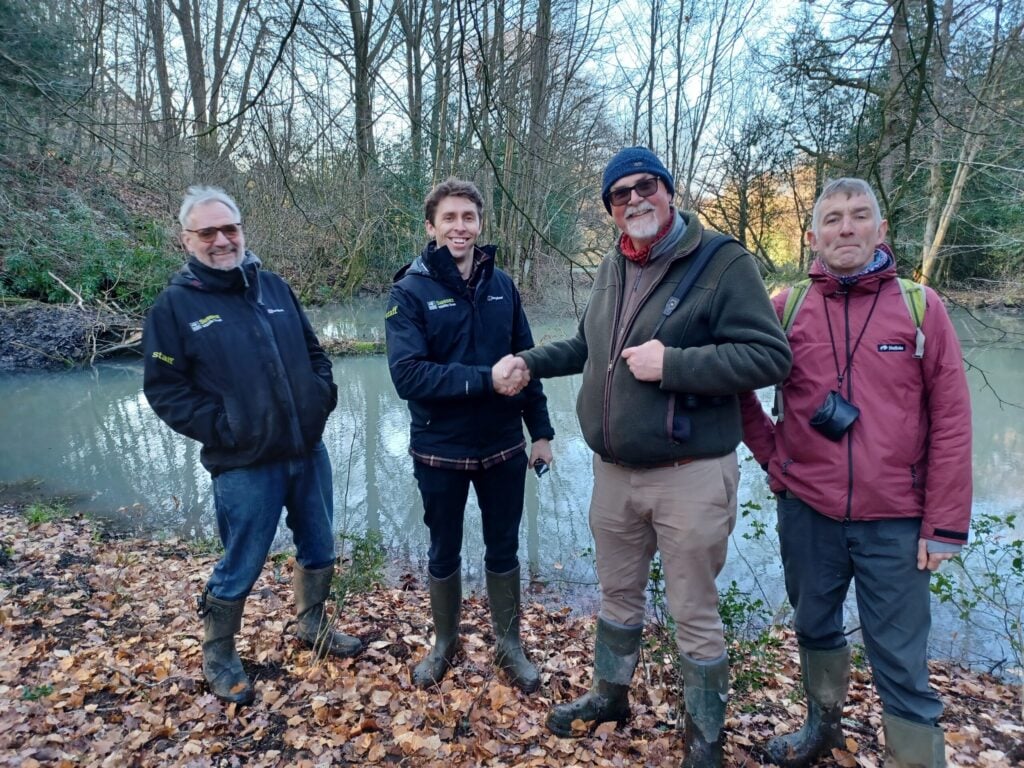
Team visit to Beaver enclosure © Emma Chaplin
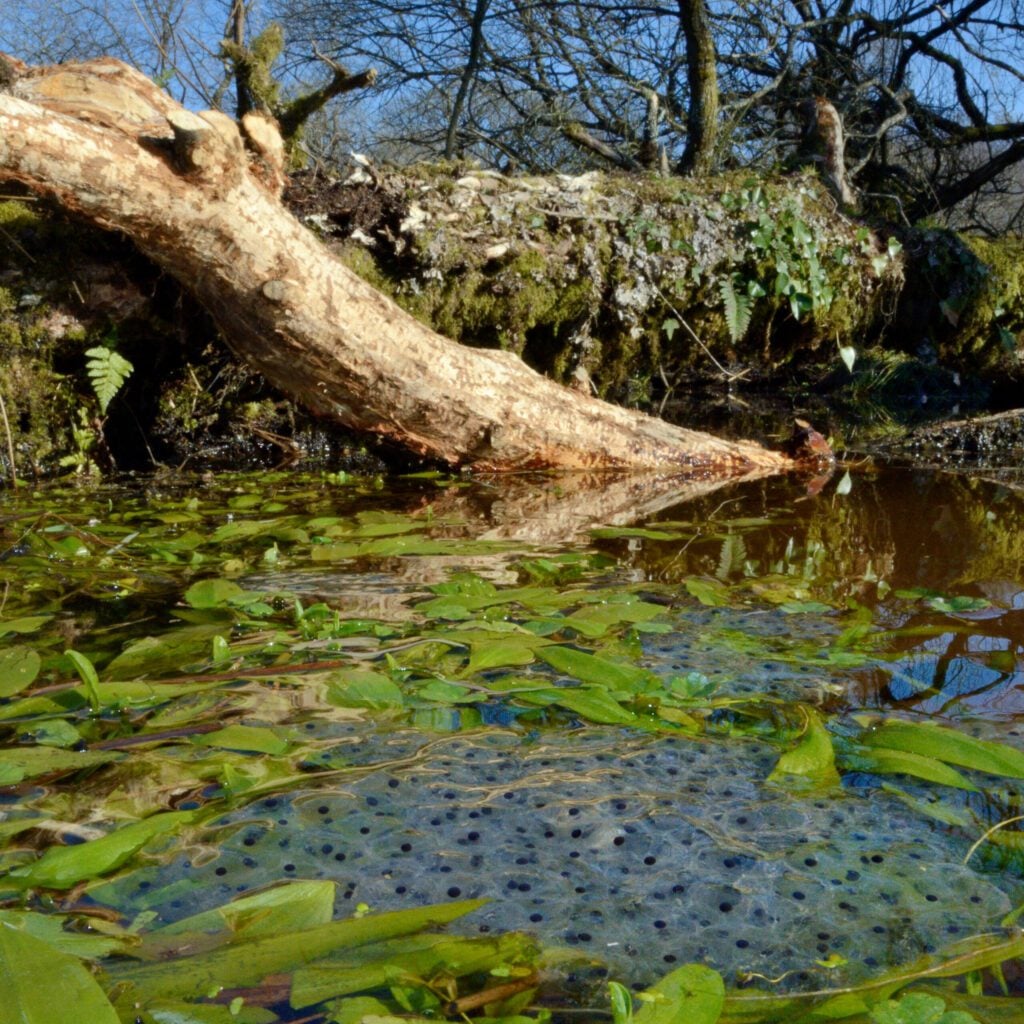
Frog spawn in Beaver pond © Nick Upton Legal requirements
Beaver Protection and Licensing
In 2022, Beavers became a UK protected species. A licence is now required to release Beavers in England, and it is illegal to harm or disturb a Beaver or its habitat.
Downloads
Stories about our work with Beavers
FAQs
Are there any free-living Beaver licences granted for Sussex?
As of May 2026, Knepp Wildland has been invited to submit a full licence application for free living beavers in the Adur river catchment (West Sussex). It is unlikely that a full licence application will be approved before spring 2027. Knepp also hold a licence to release beavers into a fenced enclosure on their estate.
Sussex Wildlife Trust submitted further evidence to Natural England for their Expression of Interest in a multi catchment licence for free-living Beavers. We hope that we will be granted permission to proceed to a full licence application, with a view to SWT coordinating and overseeing Beaver recovery across Sussex. We do not anticipate this happening before 2028.
I think I’ve seen signs of Beaver in the wild. What should I do?
If you think you’ve seen signs of Beaver outside an enclosure, please submit your records via iRecord or via the Mammal Society’s Mammal Mapper App.
- If you see a Beaver outside the Knepp enclosure on the River Adur, call 01403 741234
- If you see a Beaver outside the National Trust enclosure near the South Downs, call 01428 652359
- If you see a Beaver anywhere else in Sussex, please let Sussex Wildlife Trust at enquiries@sussexwt.org.uk or 01273 492630, or on one of our social media platforms
- Please note the time, date and location (what 3 words or grid reference) of where you saw Beavers, or their field signs. If you can send a photo, that also helps.
For the government’s position on recording signs of Beaver, see the advice published by DEFRA.
Where do the Sussex Beavers come from?
The Beavers living in Sussex have so far been sourced from conflict areas in Scotland. Under the Scottish Natural Heritage Beaver Mitigation Scheme some landowners qualify for lethal control licenses. As an alternative, trapping and relocation can be offered so that animals do not need to be euthanised.
Sussex Beaver projects can also provide homes for Beavers which need to be translocated from Beaver enclosures which have become too crowded.
All Beavers are live trapped by experienced ecologists and held for a short time for full health screening, before being transported to their new homes.
In some cases, Beavers may migrate from other catchments into Sussex, in which case this is largely now classed as natural migration. Occasionally Beavers also escape from their enclosures, and for welfare reasons they can only be trapped and returned to the enclosure once breeding season is over.
There is also a recognised activity called ‘beaver bombing’, where Beavers are illegally released into an area without a licence. Thus far Sussex has no proven cases of this happening.
Are Beavers native to the UK and Sussex?
- Eurasian Beavers (Castor fiber) occur naturally across Europe and much of Asia
- Beavers are a native species to Britain. They arrived around 13,000 years ago and were lost from our wetlands a few hundred years ago
- Eurasian beavers were hunted to extinction in the UK for their fur, meat and castoreum (a yellowish substance from beaver castor sacs, used historically in perfume, food, and traditional medicine).
- All Beavers which have been released into Sussex so far have been sourced from UK-born Beavers
- There is good archaeological evidence of Beaver presence in Sussex
- There is a larger, North American species of Beaver (Castor canadensis) which is not native to Britain.
How are we helping to make Sussex ‘Beaver-ready’?
- The Sussex Local Nature Recovery Strategy (LNRS) has highlighted beavers as a key species. We will work with the LNRS to identify key areas where beaver recovery can have the greatest benefits for people and wildlife.
- We are making catchments ‘Beaver-ready’ by creating Beaver buffers around rivers and streams, planting trees, creating ponds, installing leaky dams for natural flood management and consulting with landowners etc. Our Wilder projects (Wilder Ouse, Wilder Horsham, Wilder Wealden) and other partnerships are all working to make Sussex beaver ready and climate resilient.
- We are working with Lead Local Flood Authorities and the Environment Agency to make beaver recovery as flood friendly as possible.
- The Sussex Beaver Advisory Group is gathering evidence about the viability of the restoration of Beavers to Sussex catchments.
- Living with beavers is new to most people in Sussex. There will be widespread public consultation prior to beaver reintroduction, as part of the licence process
- If you would like to talk to Sussex Wildlife Trust about Beavers, please contact us enquiries@sussexwt.org.uk or 01273 492630
Why reintroduce Beavers?
- Beavers are a “keystone species” which play an important role in restoring British wetland ecosystems. They naturally create resilient networks of prime wetland habitat, which in turn produces natural capital benefits such as flood relief and benefit a wide range of species including amphibians, fish and bats
- Beavers instinctively engineer watercourses to create deeper water so they can escape from predators and explore their territories. Where there is no existing deep water, they will create pools using small dams
- Multiple trials, including the Scottish Beaver Trial and the River Otter Beaver Trial have demonstrated the huge improvements to wildlife, water quality, flood reduction, sediment reduction and more brought about by Beaver activity
- Important habitats created by Beavers are missing from Britain, including beaver meadows, beaver dams and flooded wet woodland.
- Beavers can play a key role in increasing woodland, wetland, open water and riparian vegetation and wildlife diversity
- Estimates suggest that at least 80% of our wetlands in Sussex have been destroyed, and much of the remaining 20% is heavily damaged and/or managed.
- Wetlands are some of the most important habitats for supporting wildlife, and as such, their restoration is crucial to the restoration of a healthy living landscape.
What happens if we need to manage Beaver activity?
- The management of any Beaver activity must follow National guidelines on Beaver Management
- Anyone undertaking Beaver management must have a Class Licence for the activity they wish to carry out.
- It is unlikely that Beaver populations will be at high densities across Sussex catchments for some years. The need for Beaver management will therefore be limited to a few key areas.
- There are a series of steps that can be taken which can help to manage Beaver presence and mitigate any potential negative impacts they may have. Our Sussex landscapes are also naturally self-limiting, as there are only certain types of (wet) land that Beavers will colonise. Some of the simplest methods of management intervention for Beavers include :-
- Placing wire netting or sand paint around trees to prevent Beaver browsing or coppicing
- Creating Beaver Buffers around rivers and streams, which give space both for Beavers and for wildlife, flooding and more.
- Modifying or removing dams less than 2 weeks old (licensed individuals)
- Modifying or removing a Beaver day rest (licensed individuals)
- For welfare reasons, because of territoriality, it is not ok to leave lots of Beavers in enclosures once obvious evidence of overpopulation begins to show. This will be managed by translocating Beavers out of enclosures to other sites (in or out of County) under licence.
For genetic reasons, translocations may occur in or out of an existing Beaver population in order to reduce the chance of in-breeding.
How do Beavers reduce flooding and drought?
- Beavers can have a number of positive effects on Natural Flood Management, making rivers less prone to flash floods, reducing flooding by holding water in ‘the right place’ in river headwaters, and enabling the slower release of water in drier periods.
- The University of Exeter studied the impacts of Beavers on water flows and hydrology on the River Otter. The results are remarkable and show that there is an overall net gain in positive Natural Flood Management when Beavers are present.
- It is important to differentiate between the storage of water by Beavers in river headwaters, and the impact of Beavers on low lying land. In some lowland areas, culverts and drainage systems, some of which are critical to reducing flood risk, need to be kept clear of Beaver infrastructure and dams.
- There are agricultural or developed areas in floodplains where Beavers may need to be actively discouraged from damming in case this causes unwanted flooding.
- The majority of negative flood impacts with Beavers can be mitigated by giving space to water or installing devices to divert water away from a problem area.
- In the event of an emergency relating to flooding, please contact the EA 24hr Floodline 0845 988 1188. Any emergency relating roads or other highways, call 0845 155 1004 or 0345 155 1004.
Can we see the Beavers?
- Sussex Beavers will need time to settle in, breed and establish their new territories. Minimal disturbance is critical at these times
- Beavers live in burrows dug into river and pond banks or large lodges built out of sticks and mud. They are mostly nocturnal (active at night). They can be seen emerging or returning to their lodges at dusk and dawn – times when they are actively feeding, grooming and patrolling their territories
- All visitors to Beaver sites are encouraged to follow the Countryside Code, to visit with professional guides, not to trespass, to keep dogs on leads and to avoid disturbing wildlife
- There will be occasional public visits to see Sussex Beaver sites. Some sites also run Beaver safari’s
- There may be Public Rights of Way running through Beaver enclosures. We ask you to remain on footpaths at all times to limit the stress placed on Beavers.
Are Beavers in Sussex captive or wild?
The current Beavers in Sussex are captive, and are living in enclosures.
Once a licence has been approved for free-living Beavers, Beavers will be living wild.
Can I volunteer to help Beavers?
- There are a number of different ways that volunteers can help us with Beaver work. These include :-
- Helping to monitor the animals themselves (dawn and dusk)
- Documenting Beaver field signs on sites or across river catchments
- Sorting through trail camera footage
- Documenting social media & YouTube footage
- Monitoring fence lines
- Monitoring other wildlife on Beaver sites
- Helping with fixed point and drone photography
- Fundraising for Beavers
- Becoming a Beaver advocate & helping people learn about Beavers
You can register as a volunteer for Sussex Wildlife Trust’s Beaver task force – please write in section 1A – ‘Beaver volunteer’ and state which of the tasks above you would most like to help with.
How should we behave around Beavers?
Beavers are nocturnal. If you know you are near a Beaver territory, please be as quiet and create a little disturbance as possible. Always keep your distance and view Beavers through binoculars. Never approach or disturb a Beaver lodge.
Please respect landowners and avoid disturbance to Beavers by sticking to public footpaths and by following the Countryside Code. We are keen to create sanctuary areas where Beavers can live and breed undisturbed, and where there are no footpaths, so please avoid trespassing.
Please keep dogs on leads. Although Beavers are not aggressive, if attacked by a dog in their territory, particularly if they have young, they will fight back – and they have big teeth!
Beavers are now a protected species in the UK and it is therefore an offence to:
- deliberately disturb a Beaver – this includes any action likely to impair their ability to survive, breed or rear their young
- deliberately injure, capture or kill a Beaver
- damage or destroy the breeding site or resting place of a Beaver
It is also an offence to:
- possess, control or transport a Beaver
- sell or exchange a Beaver
- offer a Beaver for sale or exchange
This applies whether the Beaver is alive or dead and includes Beaver parts and derivatives.
Do Beavers carry diseases such as Bovine Tuberculosis?
Any Beavers reintroduced to Sussex are health checked to make sure they do not carry any infectious parasites or diseases. Beavers are only released if they are fit for release both from a disease and a welfare perspective.
Beavers are all certified healthy and free of any significant diseases, including the tapeworm Echinococcus and Bovine Tuberculosis (bTB) before release
There is no evidence from Europe to suggest that Eurasian Beavers carry bTB. As most mammals can be infected by bTB it is theoretically possible for Beavers to become infected if they are exposed in English landscapes. Scotland – where a number of Sussex Beavers are being sourced from – is currently bTB free. DEFRA has agreed that Scottish Beavers therefore do not need to be tested for bTB.
How will we ensure the health and welfare of the Beavers we reintroduce?
· Beavers will be sourced from wild living populations – UK-born animals from Scotland, and other wild or fenced populations where translocation is needed to preserve Beaver welfare and genetic integrity.
· All trapping, translocation and screening processes are undertaken by a team of experts, including wildlife vets.
· The project partners include Beaver experts from the Beaver Trust who advise us on how to ensure that the Beavers remain healthy.
· We have provided professional vets with details of Beaver healthcare, and these vets can be called in in case of concerns for Beaver welfare.
· If necessary we will limit human access to key Beaver sites to avoid distress to the animals, particularly when breeding.
· Some Beavers that we are translocating to Sussex would otherwise have been persecuted or shot by landowners in their region of origin.
· Beaver licence holders (those with licences for release) are legally required to take responsibility for Beaver welfare under their licence conditions.
· Beaver numbers and the resources available to them will be monitored to ensure animal wellbeing continues to be sustained.
How quickly to Beavers breed?
· Beavers breed once a year, and have an average of two or three kits (babies)
· Beavers breed at two or three years old
· Beaver kits are vulnerable to predation by foxes, birds of prey and possibly otters – so not all kits survive
· When first released, adult Beavers initially colonise relatively rapidly over large distances (if not limited by fenced enclosures)
· Once territories are established, population numbers rise more slowly
· Beavers live in strict family groups, with only the dominant pair breeding
· At high densities, territorial behaviour regulates Beaver populations. This is unlikely to occur for quite a number of years in Sussex as Beaver populations are at low densities.
· Some Beaver youngsters may choose to stay at home and help their parents rather than breed, when populations are at higher densities
· Beavers have territorial battles, in which they will sometimes kill their rivals
· If Beaver territories ever become saturated, we may need to re-home older offspring
Do Beavers eat fish?
· Beavers are entirely vegetarian (herbivorous) and don’t eat fish. Their presence has been shown to be very positive for fish numbers, biomass and species.
· The natural wetlands that Beavers create help to restore fish habitat.
· Concern is expressed by some about the ability of Atlantic Salmon and Sea Trout to get over dams. Science suggests that the long term benefits generally outweigh any localised short term impacts. Indeed, Sea Trout have already been found in one of the Sussex Beaver enclosures.
· Woody material is a natural part of river systems and fish have migrated through these obstructions for millennia, including when Beavers were last widespread in Britain, centuries ago
· Human-made obstructions have a far greater impact on migrating fish populations.
· We work with others to improve fish habitat and fish passage across Sussex.
What do Beavers eat?
· Beavers coppice trees to create dams. Sometimes this is perceived as eating. Many of the trees Beavers cut for damming, are species like willow which will grow and re-root where they are ‘planted’ by the beaver
· In summer, Beavers graze mostly on riverside plants and grasses. In winter they feed mostly on tree bark and shoots
· Beavers like to eat willow and aspen trees, and to a lesser extent, alder. They will take fruit trees (particularly apple) and poplar trees if these are close to watercourses, and will leave the water to find these trees.
· Beavers tend not to move far from fresh water so impacts are often very close to the riverbank, generally within 30m
· Most native trees will naturally re-sprout when cut (coppicing). However in some instances browsing by deer and livestock, or flooding will prevent trees from re-growing
· Special trees can easily be protected from Beaver activity, using wire netting or a mixture of latex paint and sand.
Do Beavers prefer certain tree species?
· Beavers have a definite preference for certain trees. Preferred tree species include alder, aspen, apple, birch, cherry, cottonwood, poplar and willow. Aspen/poplar and apple are their favourite
· If the supply of their preferred trees is low they will harvest oaks and some maples
· Conifers such as pines and hemlocks are their least favourite
· Sometime they will girdle (remove the bark around the entire base) conifers for an unknown reason. One possibility is to obtain important dietary nutrients.
Do Beavers harvest more trees at certain times of year?
· There tends to be a large initial cut when Beavers first arrive in their new enclosure, which can be alarming for some people to see
· As Beavers settle in for the first few months you may notice trees being cut as they build shelters and dams. Most of this is coppicing from which trees will readily regrow
· You may notice Beavers cutting down more trees in late autumn. This is because they are stockpiling a food cache for the winter
· Beavers do not hibernate. They plan ahead and store a cache of edible sticks underwater near their lodge in order to be able to eat if their ponds freeze. Once a pond is frozen over and they can no longer access new trees, they will swim out of their lodge, grab an underwater stick, and bring it back to the comfort of their lodge to eat the bark
· Remember that tree coppicing can look bare in winter, but that it will promote lush regrowth in the spring – a way of Beavers helping to regenerate their own food supply.
How far from water do Beavers cut trees?
· Beavers are well adapted to water and evolved over millennia to use water as a means of moving around, and as a defence from predators
· While surprisingly fast over short distances, Beavers do not like to travel too far from the water to cut down a tree
· Most trees that Beavers cut down are within 30 metres of a watercourse
· If Beavers deplete the supply of their preferred food trees close to a pond’s edge they may raise the height of a dam to bring the pond closer to more distant trees, or create a series of further dams to access other areas for foraging
· Beavers also dig mini canals from the pond in the direction of the trees they wish to harvest. Once a tree is toppled they are able to cut off and transport the smaller branches safely to the pond using their mini canal,
What does the Sussex Beaver Advisory Group do?
Sussex Beaver Advisory Group (SxBAG) was formed in 2025, from the original Sussex Beaver Partnership (2018). Around 25 stakeholder groups send representatives to regular meetings, which keep them updated about Beavers in Sussex.
It is important that each stakeholder can involve their organisations in making pragmatic discussions about Beavers. Beaver management and issues change over time, and organisations need to be responsive and informed about what is happening.
In 2025, the UK Government announced that it is possible to apply for a licence to restore free living beavers to river catchments, and that this process would need to be overseen by Beaver management bodies. SxBAG members took a collective decision to enable a unified approach to Beaver recovery, by formally becoming a Beaver management body.
All members of the Sussex Beaver Advisory Group have signed up to a common Vision and Purpose. These are :
Vision
To provide strategic decision-making on beaver recovery in Sussex.
Aims
· For the purposes of NE licence applications, to be the recognised Beaver Advisory Group / Management body within Sussex
· To advise on current UK legislation and policy e.g. Reintroductions and other Conservation Translocations: Code and Guidance for England
· To provide formal oversight, coordination and guidance for current and proposed Beaver recovery projects / project Steering groups in Sussex
· To provide advice on effective long-term beaver management and funding for wild populations in Sussex
SxBAG will co-ordinate and provide advice to stakeholders relating to Beavers and their management across river catchments in Sussex.
Their role will be to support and advise on Beaver interactions with human infrastructure, which impact on livelihoods and communities (for example, Highways, Public Rights of Way, Drinking and Wastewater Treatment Works).
The group provides a network whereby constituent partners can share learning, best practice and resources and co-ordinate communications links to stakeholders and the wider community.
SxBAG envisages a two-phase role for the group, contingent on: –
a) Phase 1 preceding an EOI decision on licence applications, and
b) Phase 2 following a decision on EOI proceeding to licence application
The Sussex Beaver Advisory Group is a voluntary conglomerate of stakeholders. We have no legal powers to either permit, or refuse permission for Beaver re-introductions, i.e., on private land. Only Natural England (Government body) has this decision making power.