
By Matt Phelps
Species Recovery Officer
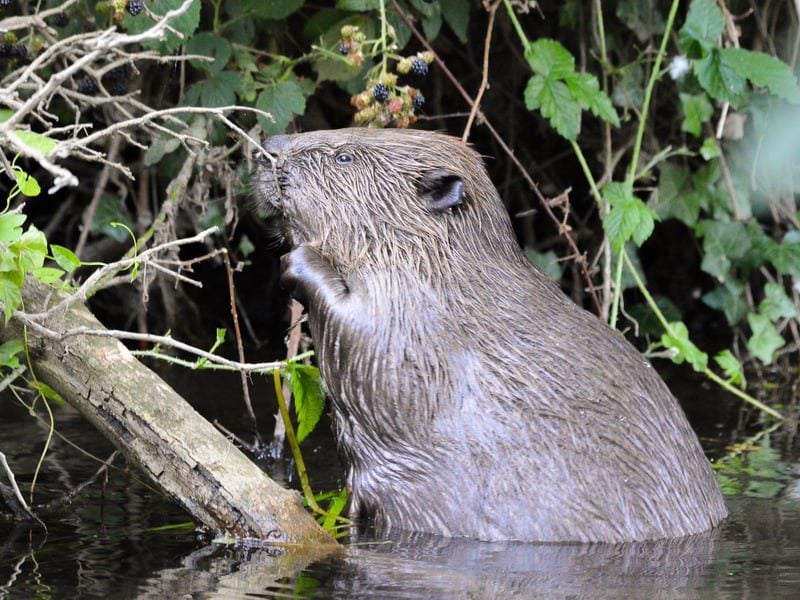
Today (29th August) The Wildlife Trusts have published A Vision for the Return of Beavers to England and Wales. This landmark publication sets out the urgent need for clarity from governments on the future for this species in England and Wales.
Although now formally recognised by Defra and the UK Government as a protected native species, currently Beavers in England and Wales can only legally be released into single, fenced enclosures, of which there are two in Sussex.
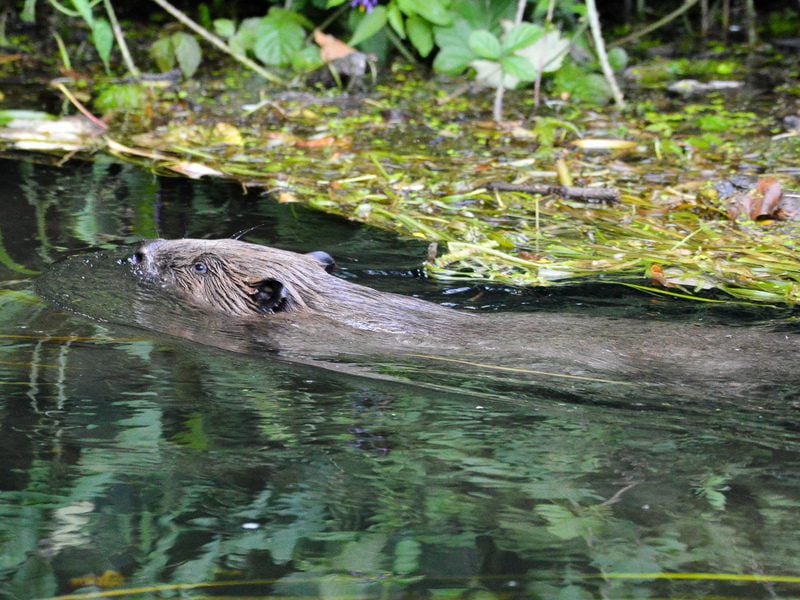
Sussex Wildlife Trust recognises the crucial role that Beavers can play in restoring the natural life support systems that people and wildlife rely on – helping with natural flood management, wildlife recovery, water resources, improving water quality, and much more. The Eurasian Beaver is widely heralded as a ‘keystone species’ – one without which whole ecosystems collapse. Beavers are a great example of how some ecosystem engineer species create their own bespoke habitat niches, such as Beaver meadows and Beaver pools. Beavers instinctively manage their natural environment meaning that we don’t need to, and beavers do it so much better than we could. The natural instincts of Beavers play an integral part in buffering our landscapes from flooding, pollution and drought, and in creating thriving wetland habitats for a whole range of other wildlife. Wetlands are some of the most biodiverse landscapes on the planet and act as fantastic buffers against the effects of climate change. Bringing wild beavers back to Sussex will start to show us what healthy, wildlife-rich and climate-resilient wetlands truly look like.
While Beavers can happily live in a diverse range of river systems, they are also returning to a cultural landscape which has forgotten how to co-exist with them. This brings both benefits and challenges in our lowland catchments. A key part of my role as Species Recovery Officer for Sussex Wildlife Trust is to help navigate some of the potential complexities of landscape-scale Beaver recovery. To this end we currently chair a Sussex Beaver Partnership, consisting of various stakeholders, and have plans to establish a Beaver management group in due course as we move towards potential wild releases in the years to come.
It has been a long time since Beavers have been part of our local landscapes, so we need to re-introduce people back to living alongside them too. If we want people and Beavers to co-exist, we need to work closely with local landowners and communities to help them understand beavers and their management. Sussex Wildlife Trust hopes that local people and future generations can once again get to know this native Sussex species as a familiar part of the natural world around them.
37 responses to “A vision for the return of Beavers”
Sussex both South of and North of the South Downs has experienced a ‘building frenzy’ for Decades. The joining up of all the towns South of the M25/M23-A24 – I’m thinking specifically ‘peri’ Gatwick/Crawley/Horsham/Billingshurst etc is leaving wild life in Island Pockets which around the world has shown to push things to extinction. I desperately want to see more diversity and the return of some long lost species. But without long corridors of connecting land (without massive roads and housing) I cant see how Beavers will be able to function. Enclosing them will be like putting them in a Zoo, and limit their ability to have the desired effect. The current political climate is HOUSES HOUSES HOUSES! and any calls for land to be just left alone for EVERYTHING else that has a stake is likely to fall on deaf ears – but good luck with your efforts.
Heart-warming to read so many enthusiastic and positive views towards accelerating the beaver reintroduction to Sussex. Good to also see some more pragmatic even negative comments as we all need to be aware that even household names like Ian Botham (cricketer) can be hard driven antagonists to seemingly heavenly initiatives like protecting the last few breeding Hen Harriers in Bowland, Lancs.
Likely initiatives like the Ouse rewilding from near Gatwick to the Sea at Newhaven plus the forever flooding Cuckmere around Alfriston should be breaking ground shortly with both
offering up real possibilities for multiple for beaver reintroductions and a chance to volunteer through Sussex Wildlife Trust and many other champions. Since both shouldn’t just reduce flooding and habitat loss and degradation but also help expunge some of the poisons caused by ignorant farming and water company dereliction of duty we need all to push hard to accelerate their progress through friends and social contacts because housing, housing, housing plus roads is forever higher up the political soapbox.
Great work. Thank you
We steward a 40acre nature diverse site and have a possible reintroduction space as have various existing water bodies and a small steam location, all of which are tributaries to river cuckmere. it is a protected area and can easily implement the fencing conditions. It would also be a great asset for flood prevention as hellingly south of us experiences a lot of flooding due to heavy downpours. Happy to have a conversation, thanks
Brilliantly put Matt as always. It is only some vague knowledge about “the damage that beavers can do” that stands between a positive attitude, by people like yourself engaging in communities, and a negative one. Keep up the good work!
Excellent article – I agree with all the points raised therein. Well done!
Plough on.
I understand it beavers can provide the answer to down-stream flooding.
Great article and great work. Look forward to seeing this coming to fruition. Thank you.
I support the reintroduction of beavers in Surey.
Brilliant piece of work, well done sussex wild life trust.After watching Spring watch clip about Beavers, there is no doubt, it would improve the quality of water besides other benefit to wild life and environment.
I would love to see beavers making a home in a river near me (Hailsham) the trouble is that developers have been given permision to build several thousand homes in th earea manuy of hwich are on the marshland flood plane. This of course limits the type of place that Beavers would love to build a dam and, in doing so prevent downstream floosing. If they build further up stream, on say the Cuckmere, the risk is that lodge building will cause flooding on farmland or even on housing near to the river upstream. If released into the wild in a natural fashion, i.e not pennned in, this will cause conflict with farmers and householders who would not get insurance. The trouble is NOT with Beavers but with the fact that there are too many people moving into the South East in general and all will need spaces for cars, better transport links and better community fascilities, Doctors surgeries, schools etc, all of which take up land.
It was interesting to read the negative comment from the farm in Northern Europe. I am a huge supporter of wildlife and farming. We must co-operate with farmers as they are key people in the management of our treasured landscape and its inhabitants. I support beaver re-introduction but issues like these need to be explored. Sometimes I feel, especially in the case of badgers the ‘cuteness’ of the species blinds non country people to the devastation that an TB carrying animal can cause, or the problems of over-population of species like deer who have no natural predators.