
Rye Harbour Nature Reserve is facing a combination of confirmed avian influenza (bird flu), suspected avian botulism and periods of blue-green algae. These are separate issues, but each affects wildlife, visitor access and how we manage the reserve.
What we’re doing
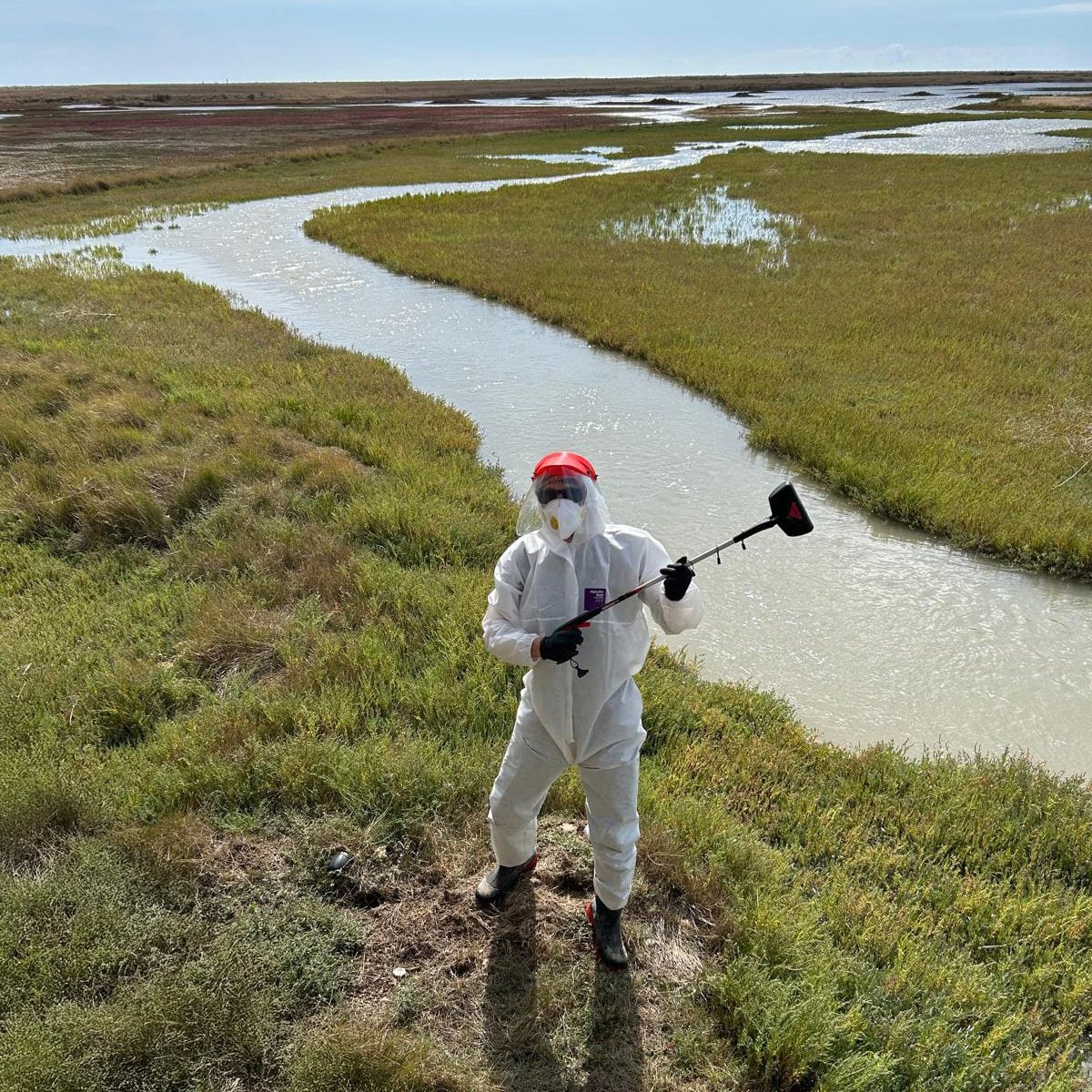
We are checking regularly for dead birds and testing the water. This tells us when it may be safe to reopen the areas around Castle Water where temporary access restrictions are in place.
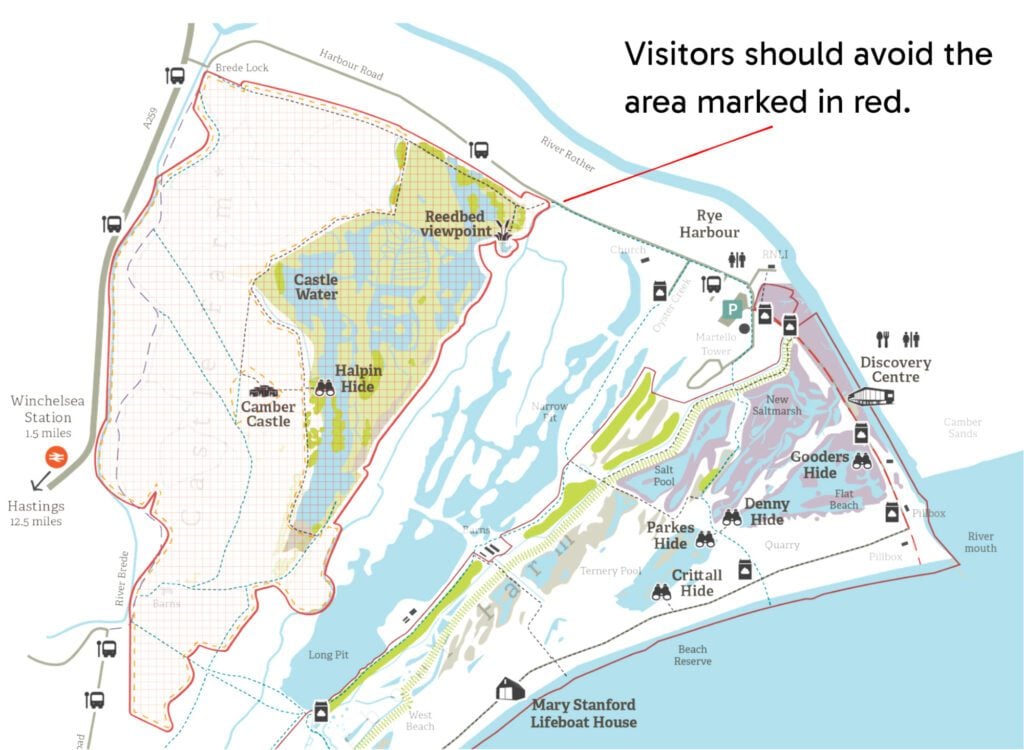 RHNR_aug26_map
When we will reopen?
We will reopen these restricted areas only when both of the following conditions are met:
- Oxygen levels in Castle Water are back to what we would normally expect at this time of year. Low oxygen is likely to have contributed to the recent problems.
- Bird deaths have returned to normal levels for a sustained period, showing the outbreak has eased.
These tests show when the risks to wildlife and people are low enough to reopen safely.
We have completed two full bird counts across the affected areas. These surveys have provided valuable information on the scale and distribution of mortality and helped us understand how conditions are changing.
A third count is planned and will give us the final data we need to assess the situation. We will review them alongside our water quality results and other evidence before deciding whether it is safe to reopen the restricted areas.
What you can do
- Please keep to all closures and follow the signs.
- Do not touch dead or sick birds. Report them to reserve staff.
- Keep dogs on leads and away from dead birds and the water. Blue-green algae can harm dogs and people.
- Wash your hands after your visit.
We appreciate the patience and understanding shown by visitors. Our priority is to protect wildlife and people, and to reopen only when the evidence shows it is safe.

Leave a Reply