Take action
Become a member
Memberships builds our community and gives us a predictable income, which lets us plan and sustain longer projects that can have a greater impact. The more members we have, the more we can do to protect the Sussex countryside and coast.
Make a donation
Membership builds our community and gives us a predictable income, which lets us plan and sustain longer projects that can have a greater impact. The more members we have, the more we can do to protect the Sussex countryside and coast.
Overview
Until recently, the Peregrine Falcon was only found in the north and west of the UK. Yet, over the last couple of decades, they have been spreading south.
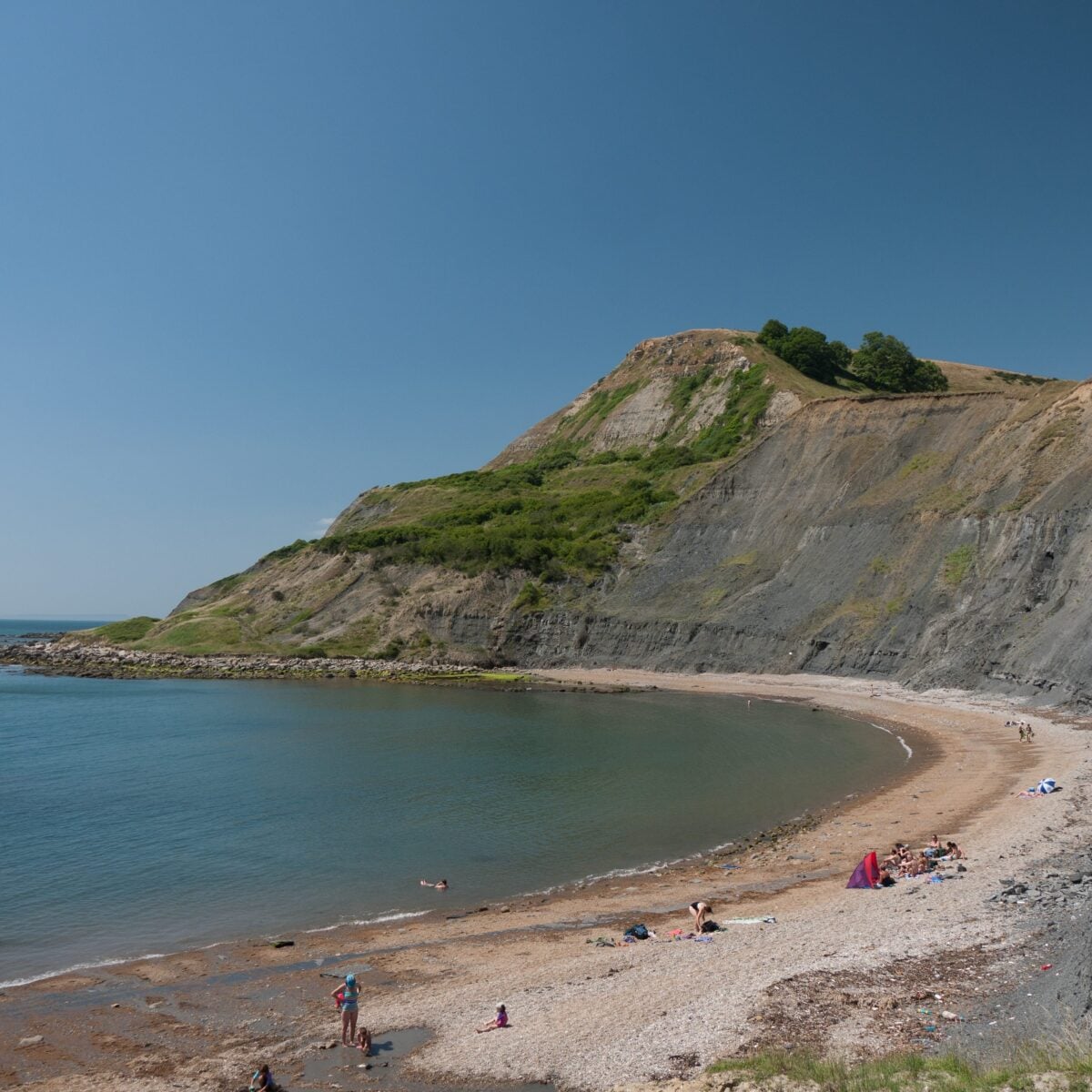
Peregrine Falcons can now be found in many locations across Sussex, whether on our chalk cliffs, or our buildings. Tall town and city structures replicate the precipitous cliff edges that it would naturally nest on.
Key Facts
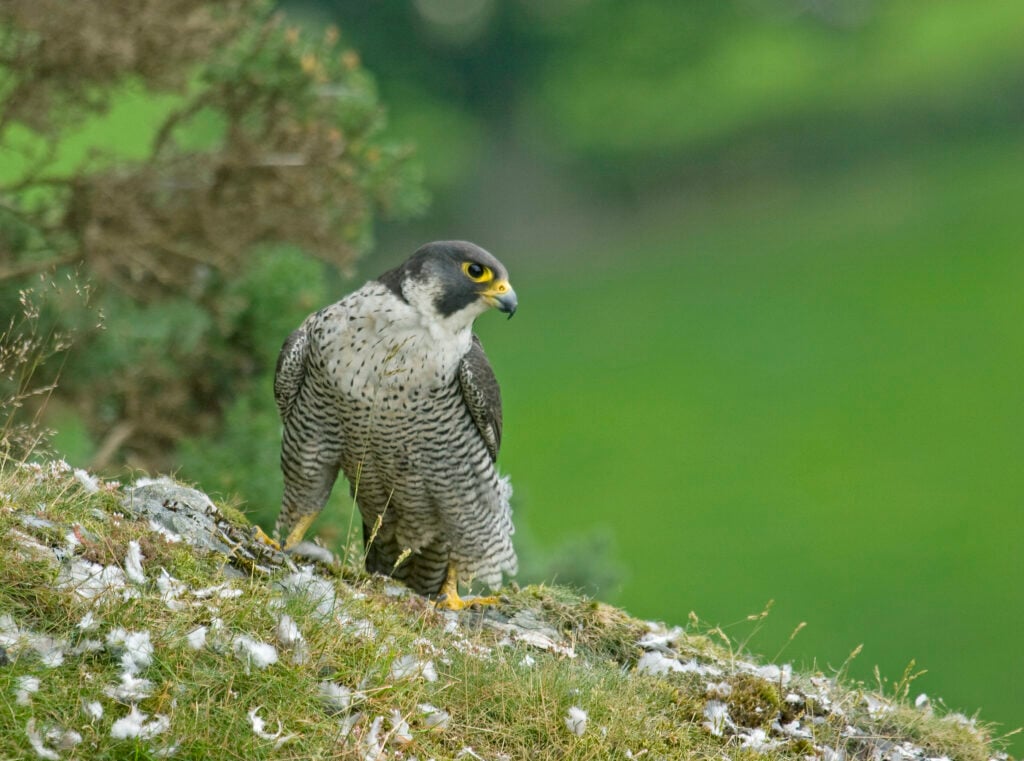
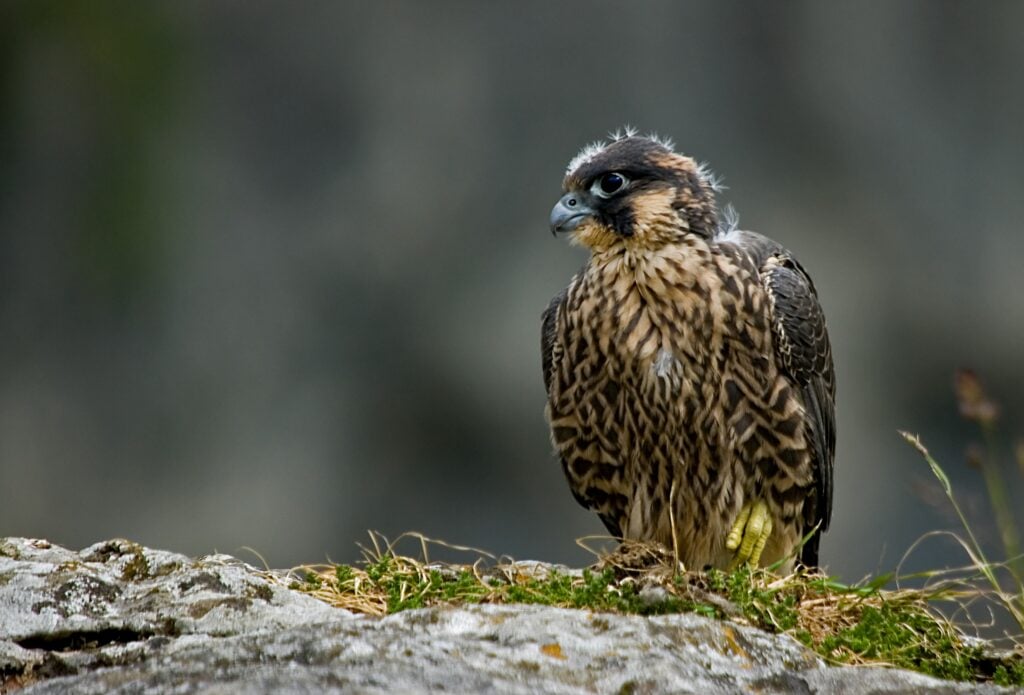
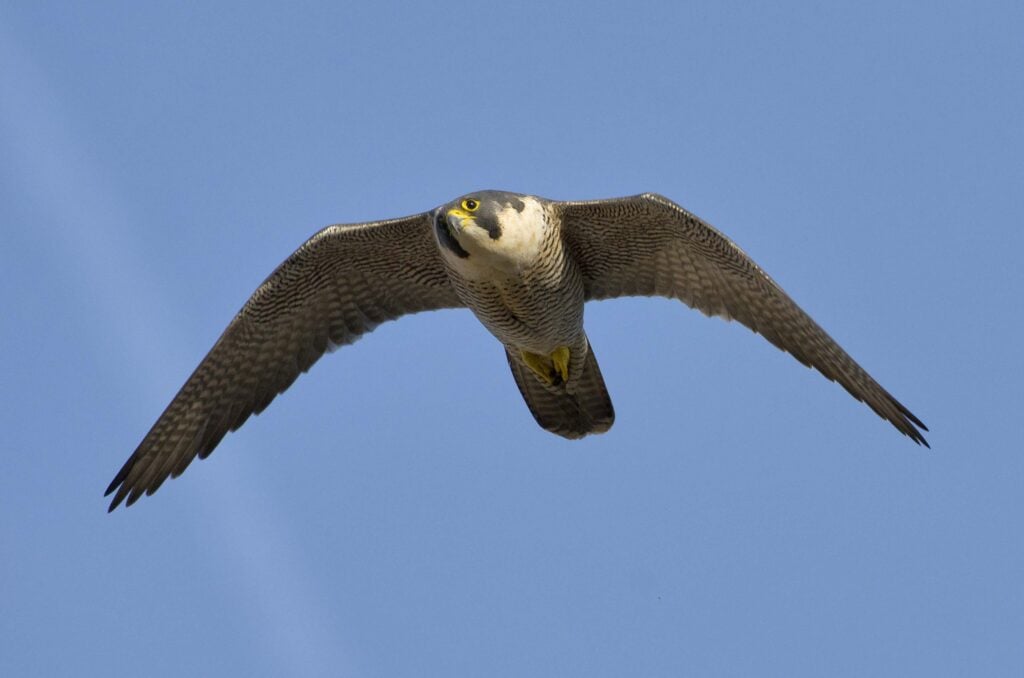
- The Peregrine is our biggest falcon; it is dark slate-grey above and white below, with black bars across its chest and belly. It has a white throat and cheeks, and a strong, black moustache and mask.
- Peregrines are among the fastest animals on the planet, reaching speeds of up to 200 miles per hour when ‘stooping’ – diving down on its prey from a great height. Prey is usually taken mid-air and consists mostly of birds like feral pigeons and collared doves.
- Length: 40-54cm Wingspan: 1.2m Weight: 670g-1.1kg Average lifespan: 6 years
Status
Classified in the UK as Green under the Birds of Conservation Concern 5: the Red List for Birds (2021). Protected in the UK under the Wildlife and Countryside Act, 1981.
Seasonality
All year round