Take action
Become a member
Memberships build our community and give us a predictable income, which lets us plan and sustain longer projects that can have a greater impact. The more members we have, the more we can do to protect the Sussex countryside and coast.
Make a donation
Nature in Sussex is struggling right now. Every pound counts when it comes to the critical work needed to help nature recover. No matter how big or small, your donation will help us make a difference together.
Overview
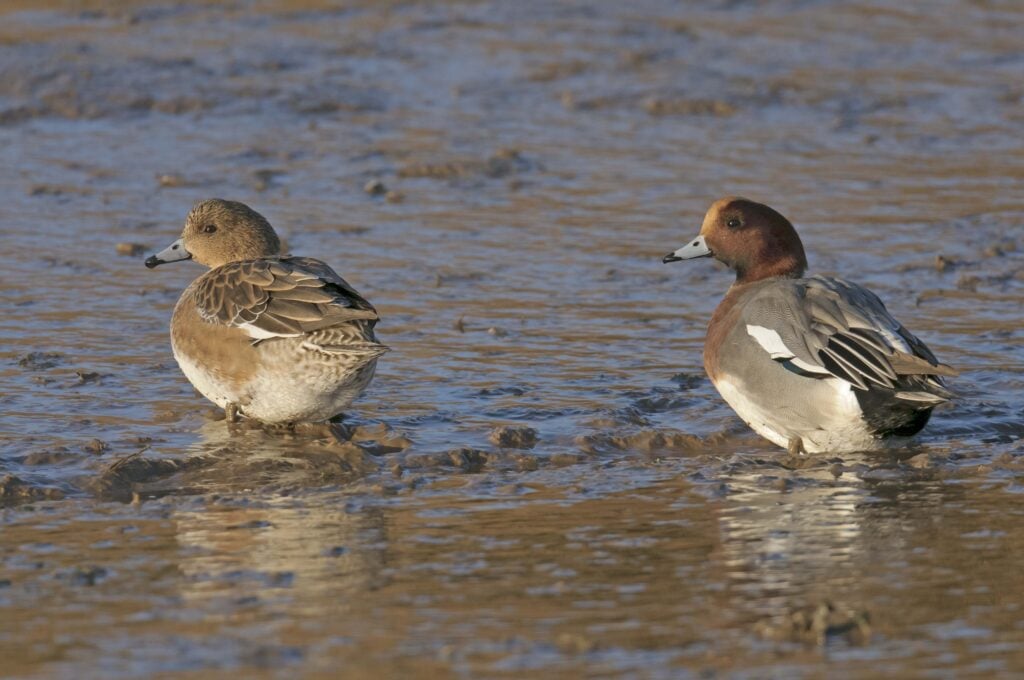
A common dabbling duck, Wigeon can be spotted dabbling in close-knit groups or flying in tight formations over wetlands.
The Wigeon is a winter visitor that gathers in large numbers, particularly on wet grasslands, floodplain meadows, flooded gravel pits and reservoirs with gently sloping edges where they can easily get out onto the grassy banks.
Key Facts
- The Wigeon is a medium-sized duck with a round head and short bill. Males are grey with a pink breast, orange head, yellow forehead and obvious white wing patches that can be seen when they fly. Females are similar to mallard females, but with rusty brown plumage and a pointed tail.
- Like other ducks, Wigeon will sometimes mate with other species to produce hybrid young. This includes the closely related American Wigeon, but also Mallards and Gadwalls.
- Length: 43-48cm Wingspan: 80cm Weight: 650-800g Average lifespan: 3 years
Status
Classified in the UK as Amber under the Birds of Conservation Concern 5: the Red List for Birds (2021). Protected in the UK under the Wildlife and Countryside Act, 1981.
Seasonality
All year round