Take action
Become a member
Memberships builds our community and gives us a predictable income, which lets us plan and sustain longer projects that can have a greater impact. The more members we have, the more we can do to protect the Sussex countryside and coast.
Make a donation
Membership builds our community and gives us a predictable income, which lets us plan and sustain longer projects that can have a greater impact. The more members we have, the more we can do to protect the Sussex countryside and coast.
Overview
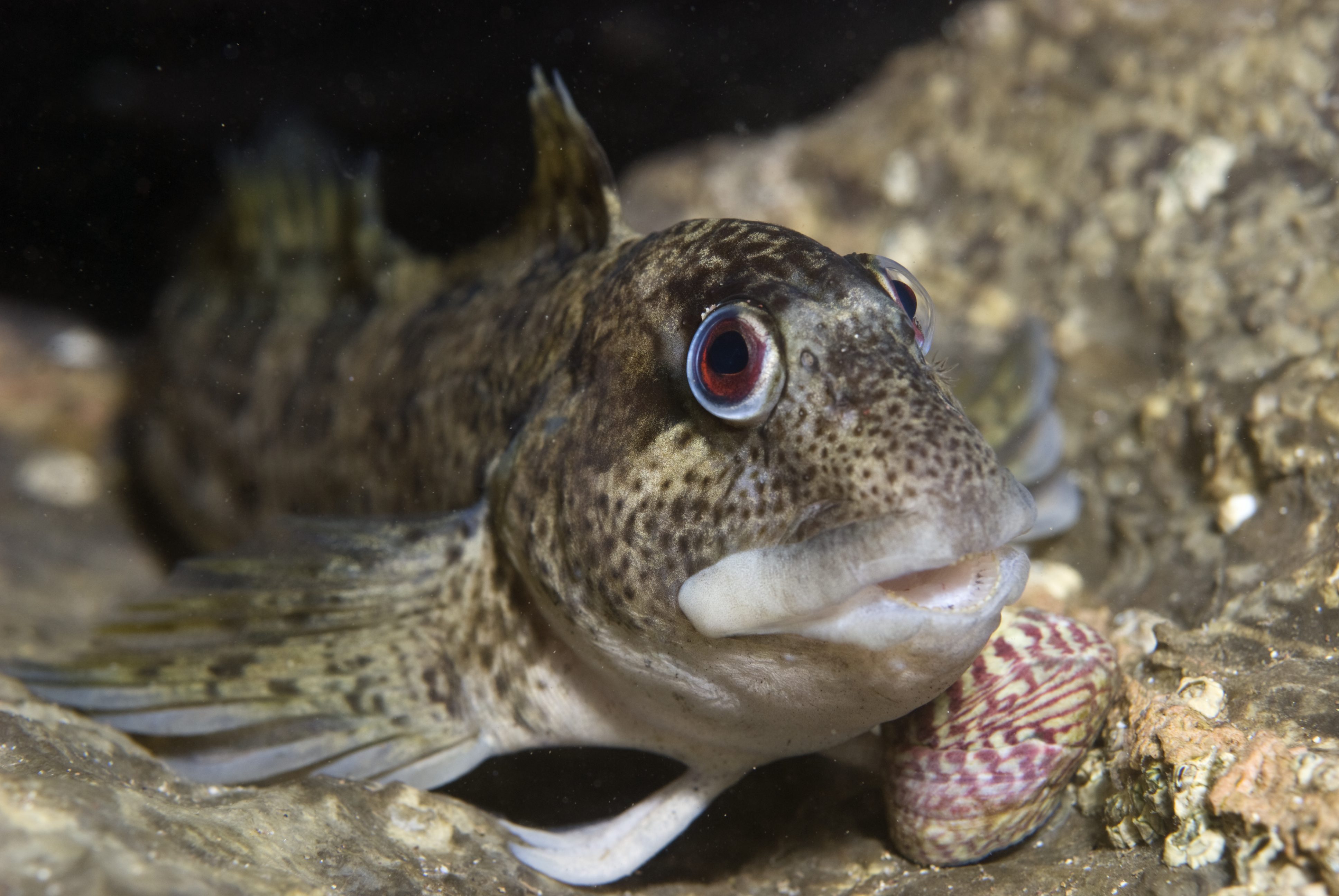
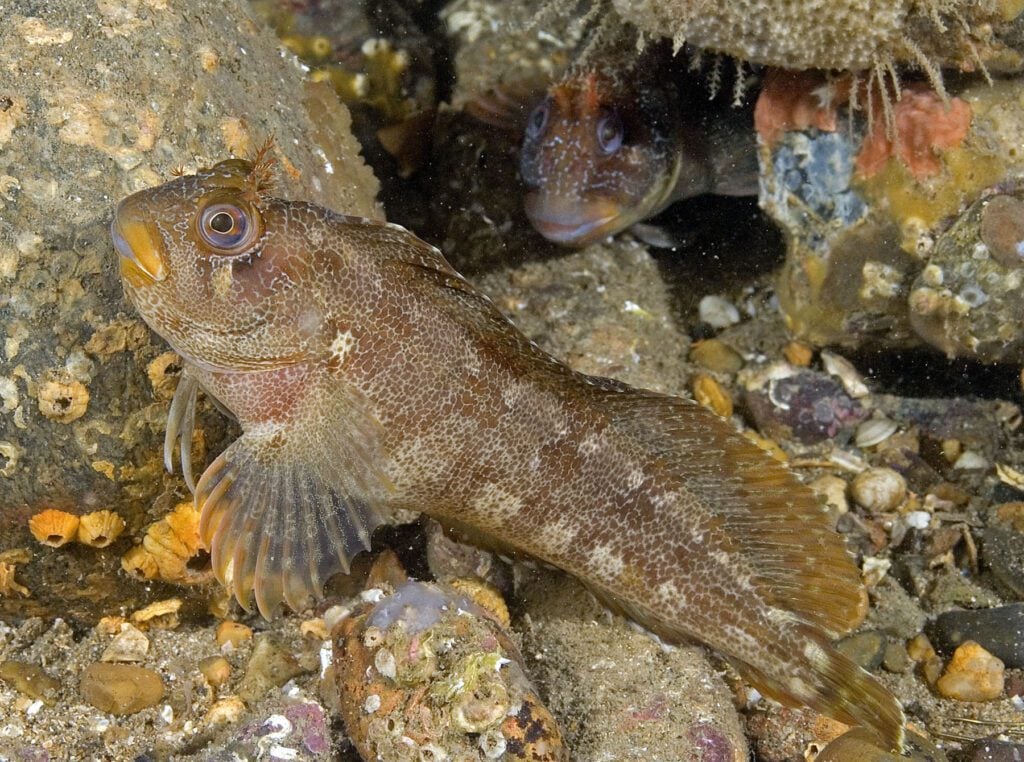
The Tompot Blenny is a medium-sized, elongated fish with a large head and big eyes. It has distinctive frilly tentacles on the top of its head – for which it has been given the nickname “the fish with antlers”!
They live in crevices in rocky reefs and are highly territorial – if you return to the same spot, you’ll see the same fish in its hidey-hole. They live in shallow seas, but small tompot blennies are occasionally spotted in rockpools. They have sharp teeth and feed on animals on the seabed like sea anemones.
Key Facts
- The largest British blenny. It is orangey-brown in colour, sometimes greenish, with mottled markings and several darker bars running down the body. It has two large branched tentacles on its head that look a bit like antlers.
- It is the male Tompot Blenny that guards the eggs. The males spring clean their crevices, removing any mud and unwanted barnacles that might have settled over the winter. The best crevices attract the best females and once the female has laid the precious eggs, the father will fertilise them and then guard them for over a month against hungry predators. During the breeding season, enlarged glands are visible on the males belly – these are used to release pheromones to attract females.
- Length: up to 30cm
Status
Common
Seasonality
All year round