Take action
Become a member
Memberships builds our community and gives us a predictable income, which lets us plan and sustain longer projects that can have a greater impact. The more members we have, the more we can do to protect the Sussex countryside and coast.
Make a donation
Membership builds our community and gives us a predictable income, which lets us plan and sustain longer projects that can have a greater impact. The more members we have, the more we can do to protect the Sussex countryside and coast.
Overview
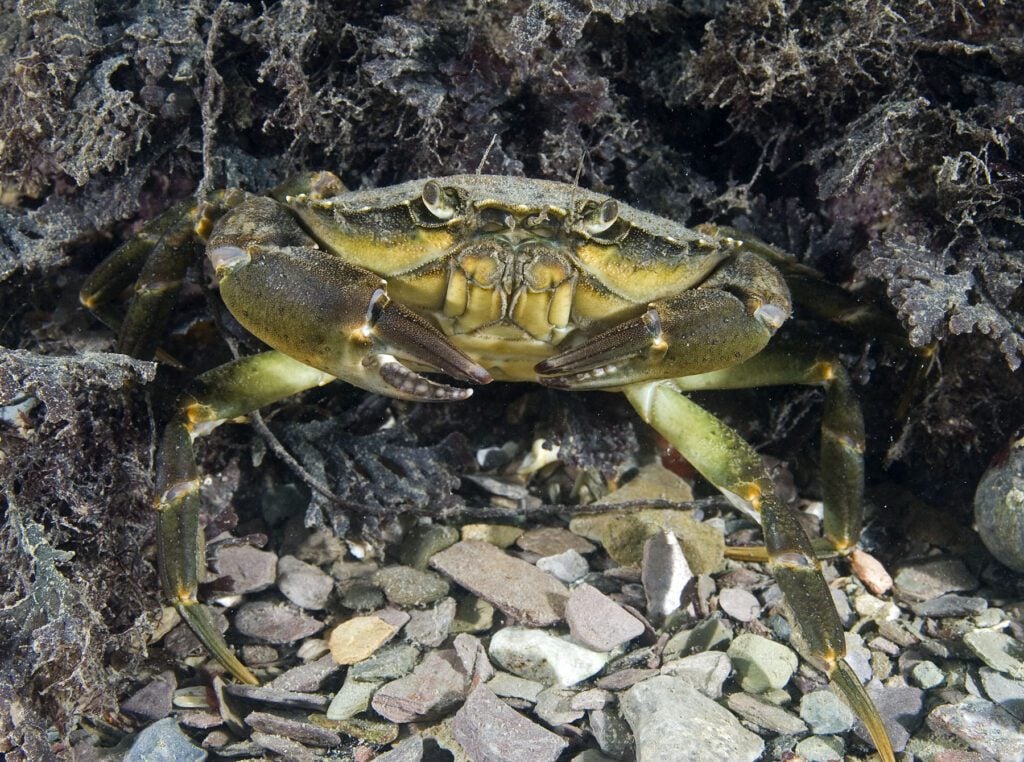
Normally a green-ish colour, Shore Crabs are easily found in rockpools or on the end of crab lines dangled into shallow waters. They aren’t exactly picky eaters and will feast on anything and everything they come across, including seaweed, mussels, barnacles and even smaller crabs.
Key Facts
- The most common crab on our beaches, normally green-ish in colour but can be orange or even red. Medium sized and can be identified by the pattern of spikes on its shell (carapace). They have five upturned spikes on each side of the carapace and three rounded lobes between the eyes. The different colourations are related to the crab’s age and whether it is breeding season.
- If you spot a crab with an orange mass on its stomach – they are eggs! Females carry the fertilised eggs with them to protect them from predators. A female with eggs is known as “berried”.
- The Shore Crab sometimes falls victim to one of nature’s weirdest parasites. The Crab Hacker Barnacle lands on the Shore Crab and castrates it, before using it as a host to carry the barnacle’s eggs instead! You can tell a parasitised Shore Crab as they have a smooth pale mass on their underside.
- Although a native species here, the Shore Crab has become an invasive species in many other parts of the world, including Australia, South Africa and California.
- Shell width: Up to 9cm
Status
Common
Seasonality
All year round