Take action
Become a member
Memberships build our community and give us a predictable income, which lets us plan and sustain longer projects that can have a greater impact. The more members we have, the more we can do to protect the Sussex countryside and coast.
Make a donation
Membership builds our community and gives us a predictable income, which lets us plan and sustain longer projects that can have a greater impact. The more members we have, the more we can do to protect the Sussex countryside and coast.
Overview
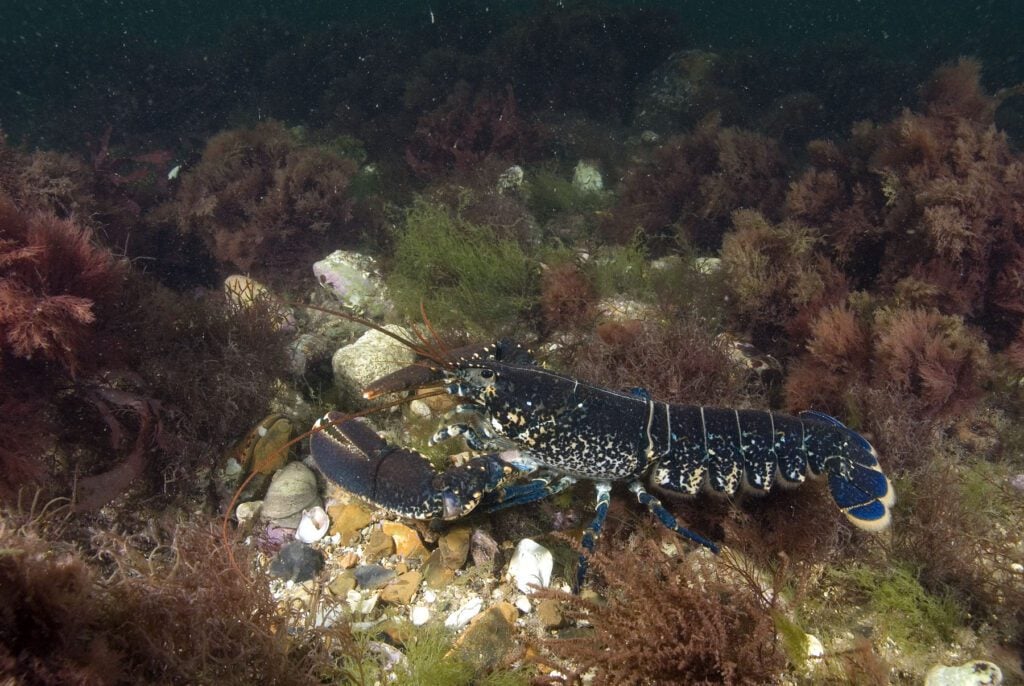
Lobsters are crustaceans and are related to crabs and barnacles, living in crevices and excavated hidey-holes amongst rocks beneath the low tide mark and out to depths of 60m. Hiding during the day and coming out to feed at night, Lobsters are scavengers, and will search out molluscs, sea urchins and other smaller crustaceans to eat.
Key Facts
- Lobsters grow by shedding their hard exoskeleton in a process known as moulting. During this process they are also able to grow back lost limbs! As a Lobster gets larger it moults less frequently with adults only moulting ever 1 or 2 years.
- Lobsters are actually blue! They only turn red when cooked. When the Lobster is alive, this red pigment is bound to a protein; but the heat of cooking breaks the bond, releasing the red pigment and turning the lobster bright red.
- If you spot a Lobster with thousands of tiny jelly balls on their legs, they’re her eggs! Female Lobsters carry their fertilised eggs around for up to 12 months to protect them from predators before they hatch – this is known as being “berried”.
- Lobsters pincers are different sizes, with one used for crushing and one for tearing.
- Average lifespan: up to 15 years
Status
Common, but vulnerable to local overexploitation
Seasonality
All year round