Take action
Become a member
Memberships builds our community and gives us a predictable income, which lets us plan and sustain longer projects that can have a greater impact. The more members we have, the more we can do to protect the Sussex countryside and coast.
Make a donation
Membership builds our community and gives us a predictable income, which lets us plan and sustain longer projects that can have a greater impact. The more members we have, the more we can do to protect the Sussex countryside and coast.
Overview
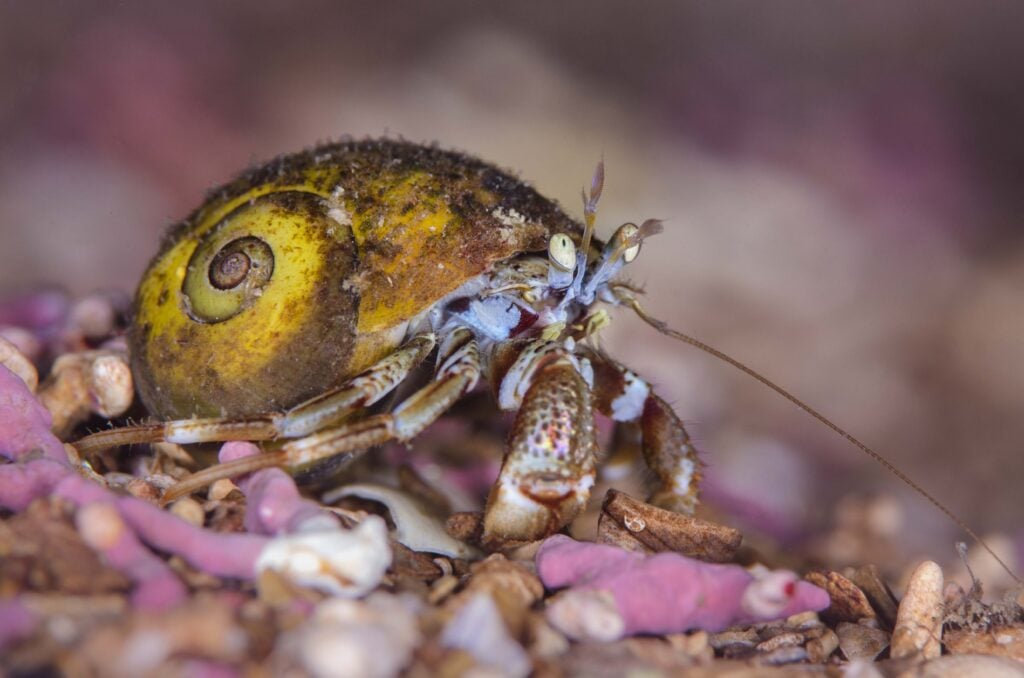
Hermit Crabs live inside empty sea snail shells, particularly those of whelks and periwinkles. They can be found on rocky shores and down to depths of 150m.
Hermit Crabs are opportunistic scavengers, feeding on anything they can find. They have tough pincers but a soft body which they coil up inside their borrowed shell, using their hooked tail to help them to grip on. As they grow, Hermit Crabs move into ever larger shells.
Key Facts
- The Common Hermit Crab is the largest of several species of very similar hermit crabs and is often found in rockpools. Their body is reddish brown and right-hand pincer is larger than left. They are often found in periwinkle or whelk shells.
- When two Hermit Crabs meet, one may attempt to steal the other’s shell by forcibly evicting the current owner. The aggressor will knock on the shell it wants, drawing out the owner and fighting it out until one emerges victorious.
- Length of body: 3.5cm
Status
Common
Seasonality
All year round