Take action
Become a member
Memberships builds our community and gives us a predictable income, which lets us plan and sustain longer projects that can have a greater impact. The more members we have, the more we can do to protect the Sussex countryside and coast.
Make a donation
Membership builds our community and gives us a predictable income, which lets us plan and sustain longer projects that can have a greater impact. The more members we have, the more we can do to protect the Sussex countryside and coast.
Overview
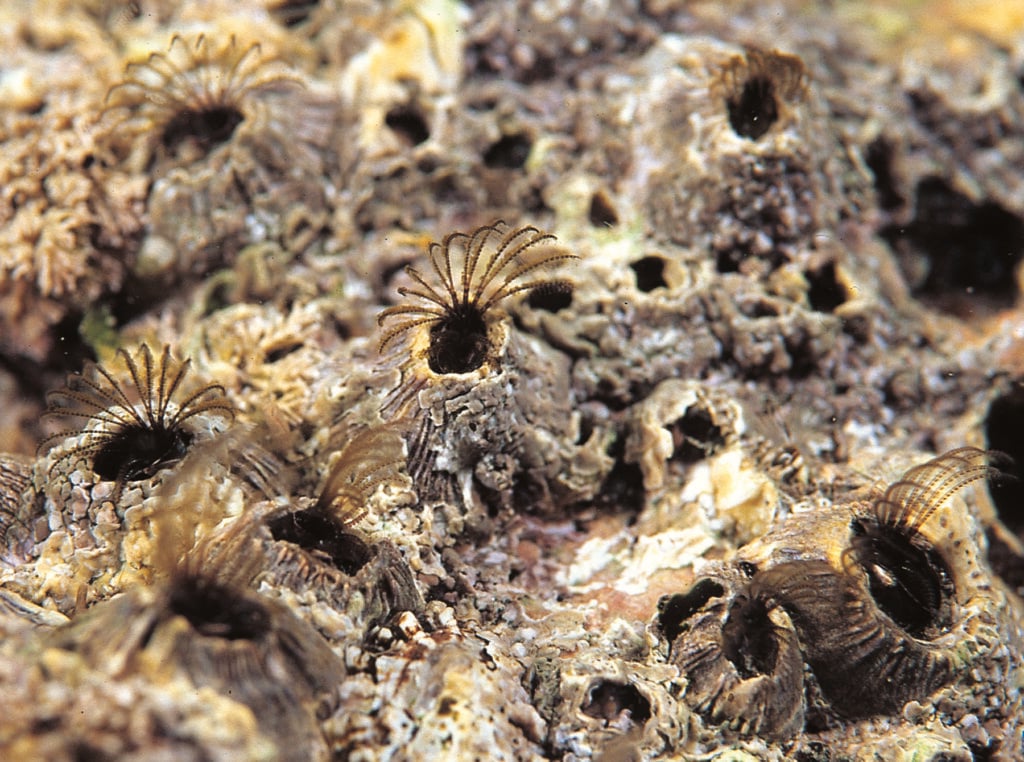
The most common barnacle found on our shores, the Acorn Barnacle lives attached to any hard substrate, including rocks, pier legs, old boats and even other animals! Their body is contained within the shell you see on the rocks, positioned upside down with their legs at the top. When the tide comes in, they open the plates of the shell and stick their legs out, using them to catch plankton and other detritus out of the water.
Key Facts
- One of several very similar species of barnacle, which can be hard to tell apart. The Acorn Barnacle is generally grey-white in colour, with a kite-shaped opening and 6 shell plates
- Although the Acorn Barnacle is a hermaphrodite and has both male and female reproductive organs, individual barnacles function as either a male or a female. During the breeding season, males extend their notoriously long penises out of their shells and seek out a nearby female. After fertilisation, the larvae develop within the barnacle’s body and are released into the water to feed on plankton and undergo moults until they are at the right stage to ‘settle down’!
- Length of shell: 2cm Average lifespan: up to 18 months
Status
Common
Seasonality
All year round