Take action
Become a member
Memberships build our community and give us a predictable income, which lets us plan and sustain longer projects that can have a greater impact. The more members we have, the more we can do to protect the Sussex countryside and coast.
Make a donation
Nature in Sussex is struggling right now. Every pound counts when it comes to the critical work needed to help nature recover. No matter how big or small, your donation will help us make a difference together.
Overview
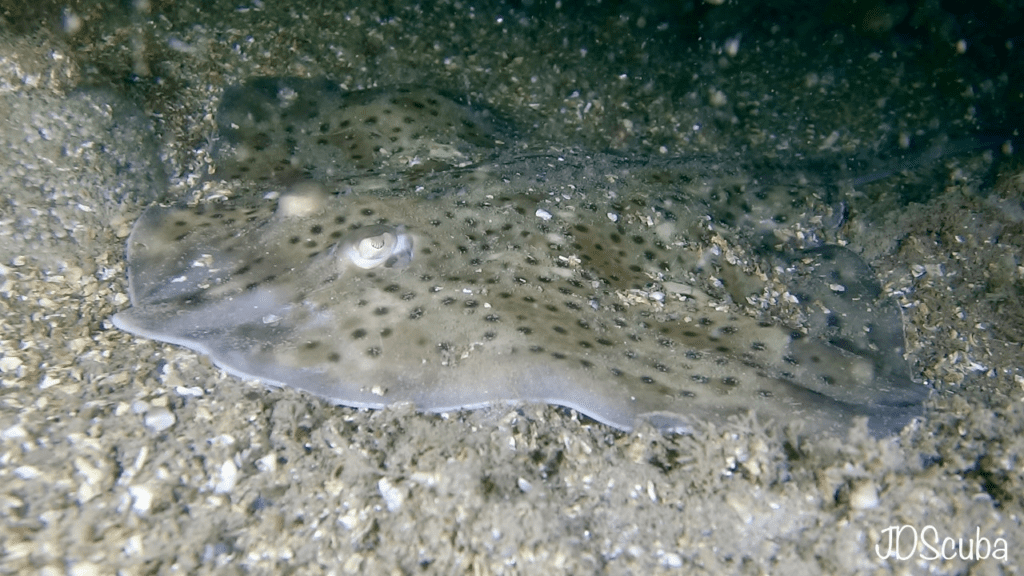
The Spotted Ray has a varied diet of crustaceans, worms and fish. The young often live in shallow areas near the coastline, known as nursery grounds, but adults are typically found further offshore.
Although commonly called the Spotted Ray, they are actually a species of skate (sometimes known as the Spotted Skate). Skates and rays are closely related and look similar, but you can spot the difference by looking at the tail. Skates have a short tail with small fins and no stinging capabilities, whereas rays have a long whip-like tail.
Key Facts
- The Spotted Ray has numerous dark spots all over its back, except for on the edge of its wings, and sometimes an eyespot is present on each wing.
- The Spotted Ray has two holes on its back, right behind its eyes; these are called spiracles and help the ray to breathe when it is buried underneath the sand.
- Length: Up to 80 cm Weight: Up to 4.5 kg
Status
The Spotted Ray is listed as Least Concern by the IUCN Red List.
Seasonality
All year round