Take action
Become a member
Memberships builds our community and gives us a predictable income, which lets us plan and sustain longer projects that can have a greater impact. The more members we have, the more we can do to protect the Sussex countryside and coast.
Make a donation
Membership builds our community and gives us a predictable income, which lets us plan and sustain longer projects that can have a greater impact. The more members we have, the more we can do to protect the Sussex countryside and coast.
Overview
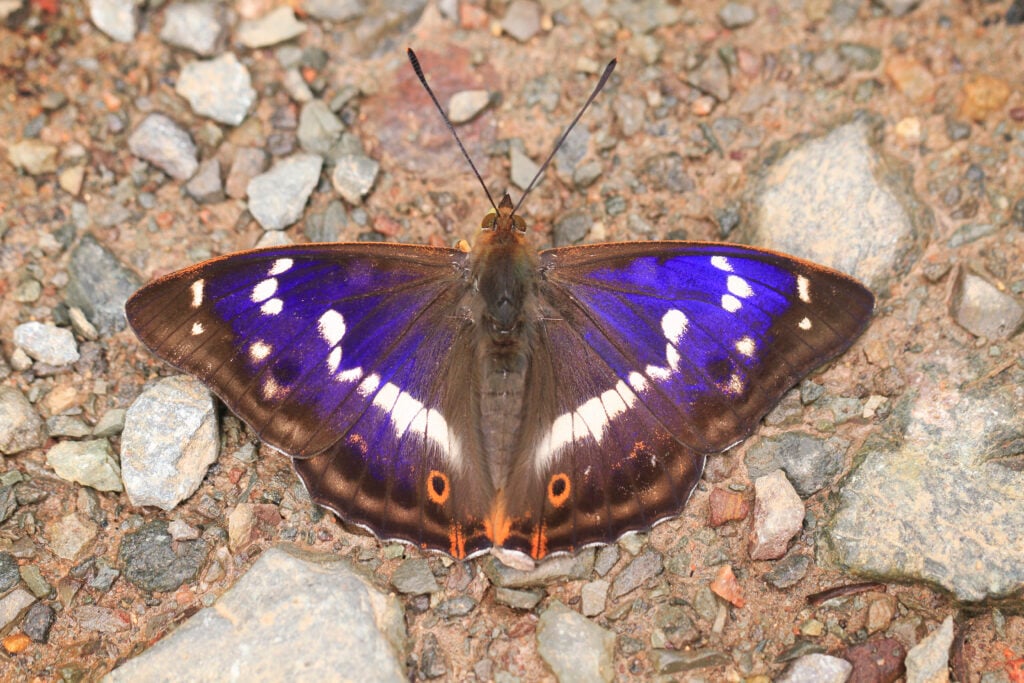
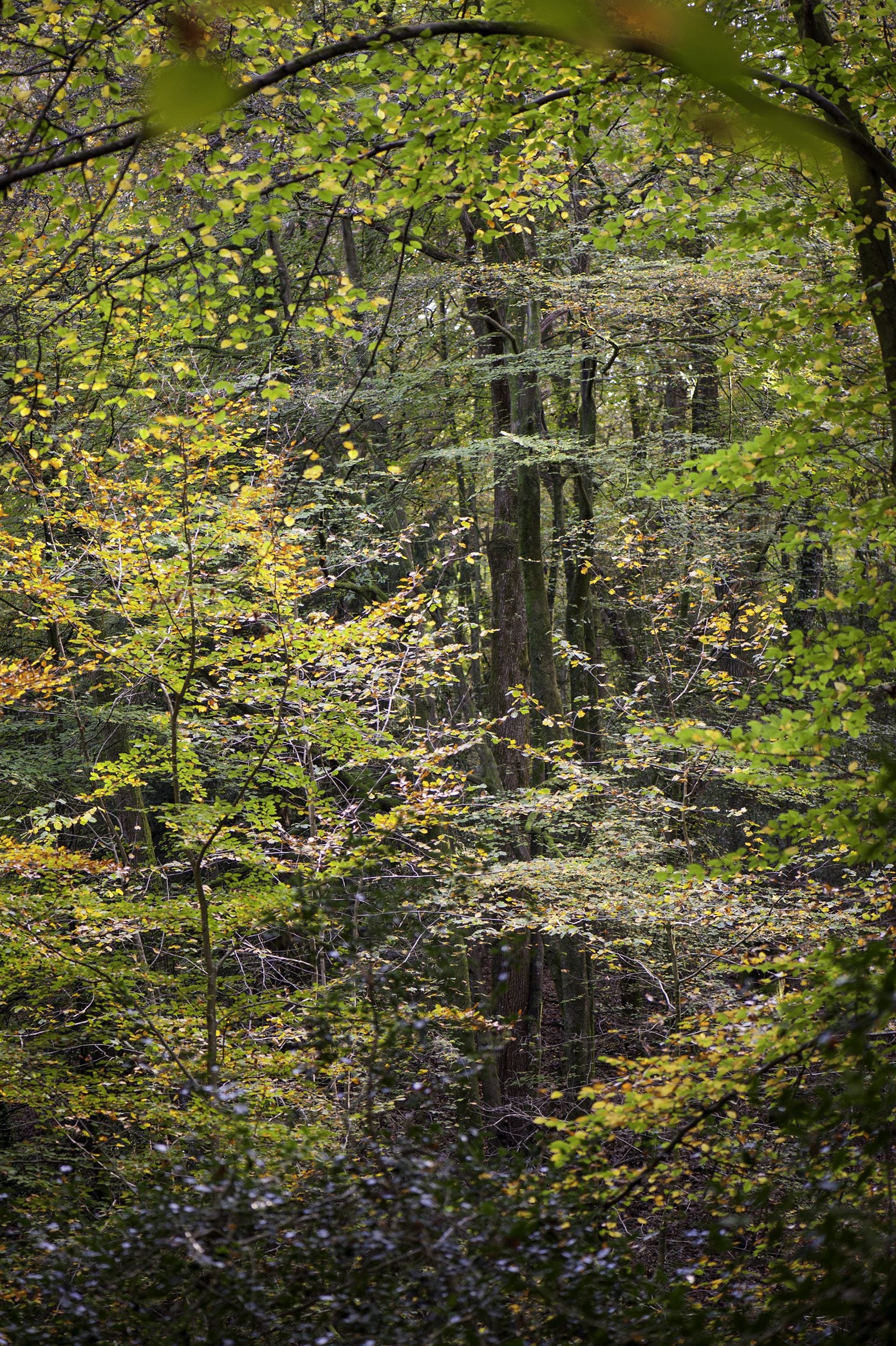
A strikingly beautiful butterfly, the Purple Emperor is only on the wing for a short period in late summer. A large butterfly of woodlands, it is well known for spending much of its time in the treetops feeding on aphid honeydew, so a pair of binoculars is handy if you want so spot this dazzling insect.
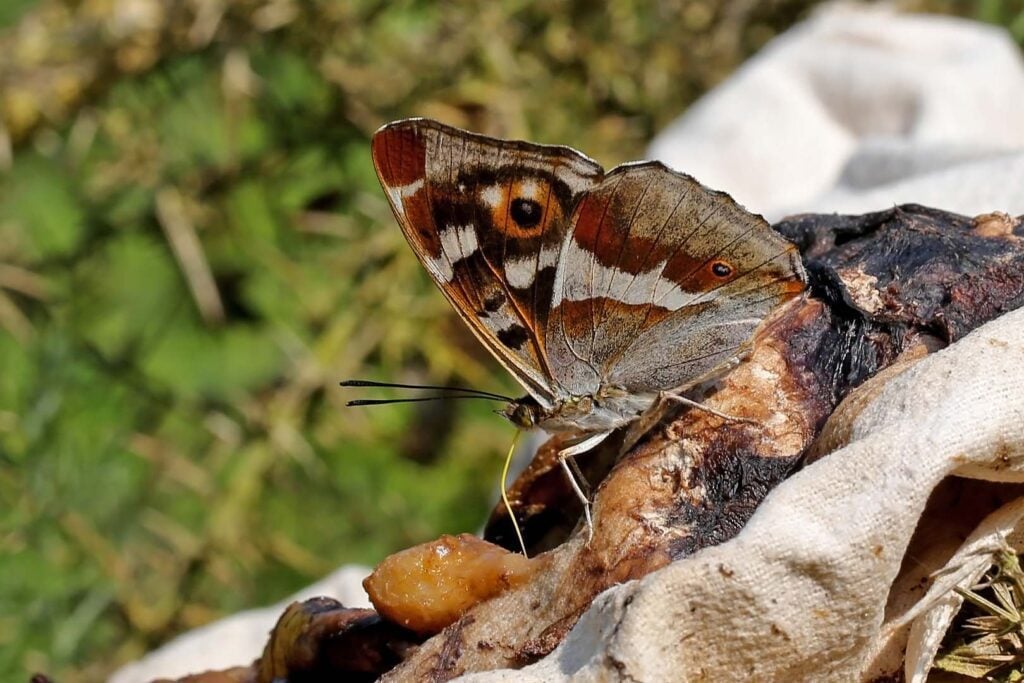
Males may be seen flying to the ground mid-morning to feed on salts and sugars in damp puddles, on animal droppings or road surfaces, or even on rotting carcases. The caterpillars feed on mainly on goat willow, although crack-willow and grey willow are also used.
Key Facts
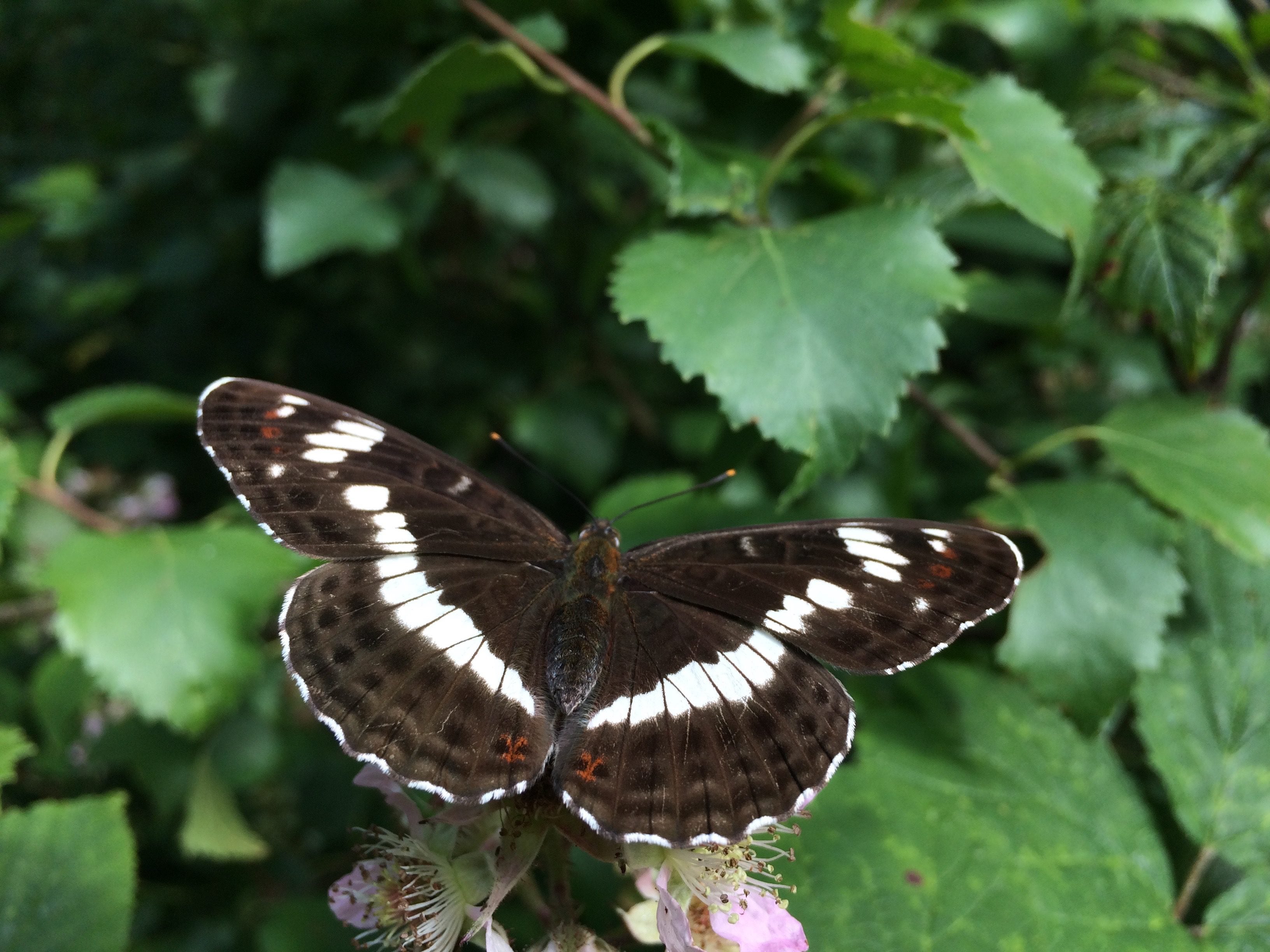
- The male Purple Emperor is an unmistakeable glossy purple above, with white bands across its wings and orange-ringed eyespots under the brown forewings. The female is brown and similar to the White Admiral in appearance, but also has orange-ringed eyespots under the forewings. Females are larger than males and both are larger than the more common white admiral.
- Male Purple Emperors are known to travel up to a kilometre from their feeding areas to gather in ‘master trees’ (usually Oak, but sometimes Beech or conifer are used) where they compete for females. These trees are often at a high point in the wood and will be used year after year.
- Wingspan: 7.0-9.2cm
Status
Protected in the UK under the Wildlife and Countryside Act, 1981.
Seasonality
June to August