

Take action
Become a member
Memberships build our community and give us a predictable income, which lets us plan and sustain longer projects that can have a greater impact. The more members we have, the more we can do to protect the Sussex countryside and coast.
Make a donation
Membership builds our community and gives us a predictable income, which lets us plan and sustain longer projects that can have a greater impact. The more members we have, the more we can do to protect the Sussex countryside and coast.
Overview
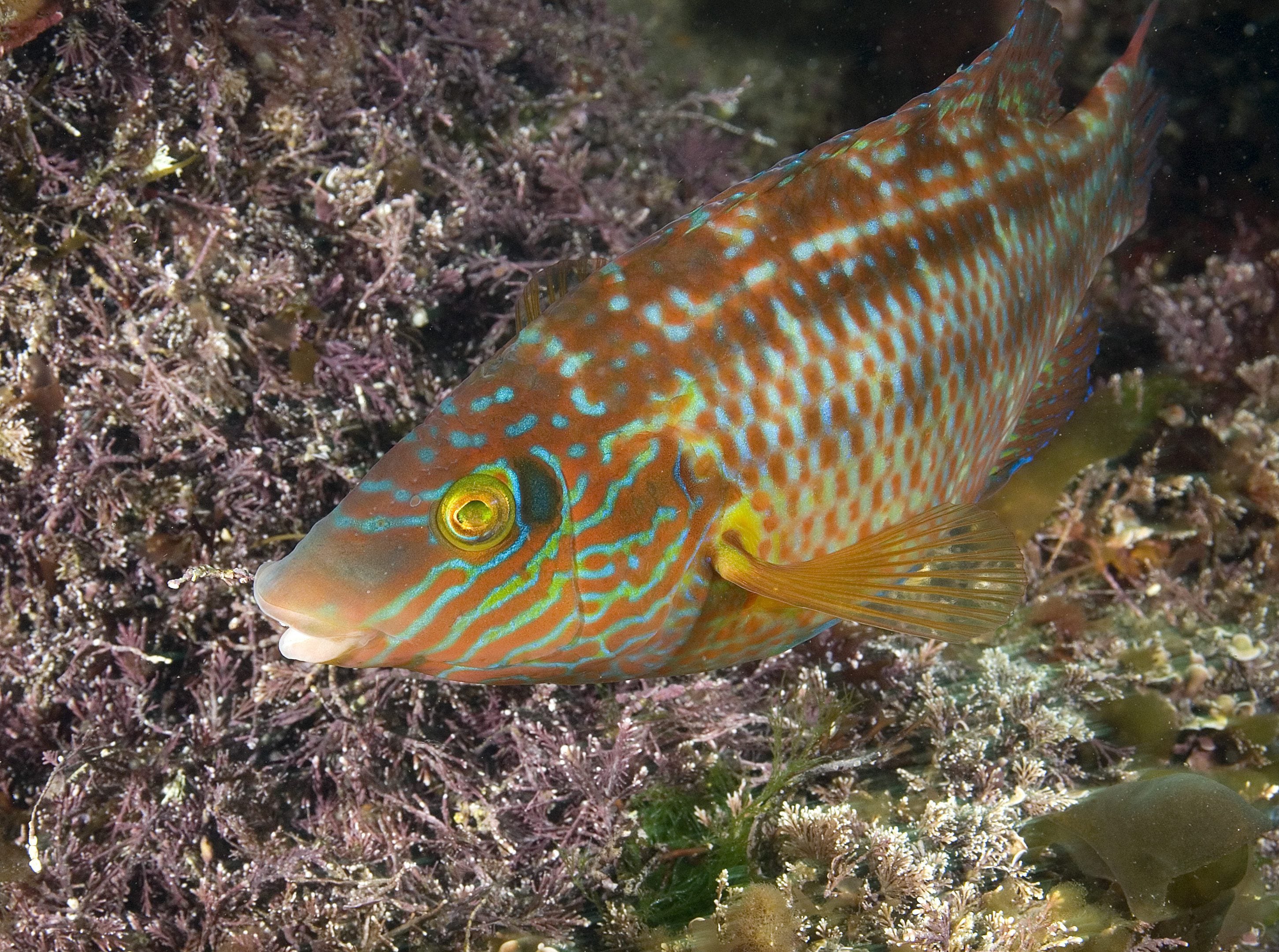
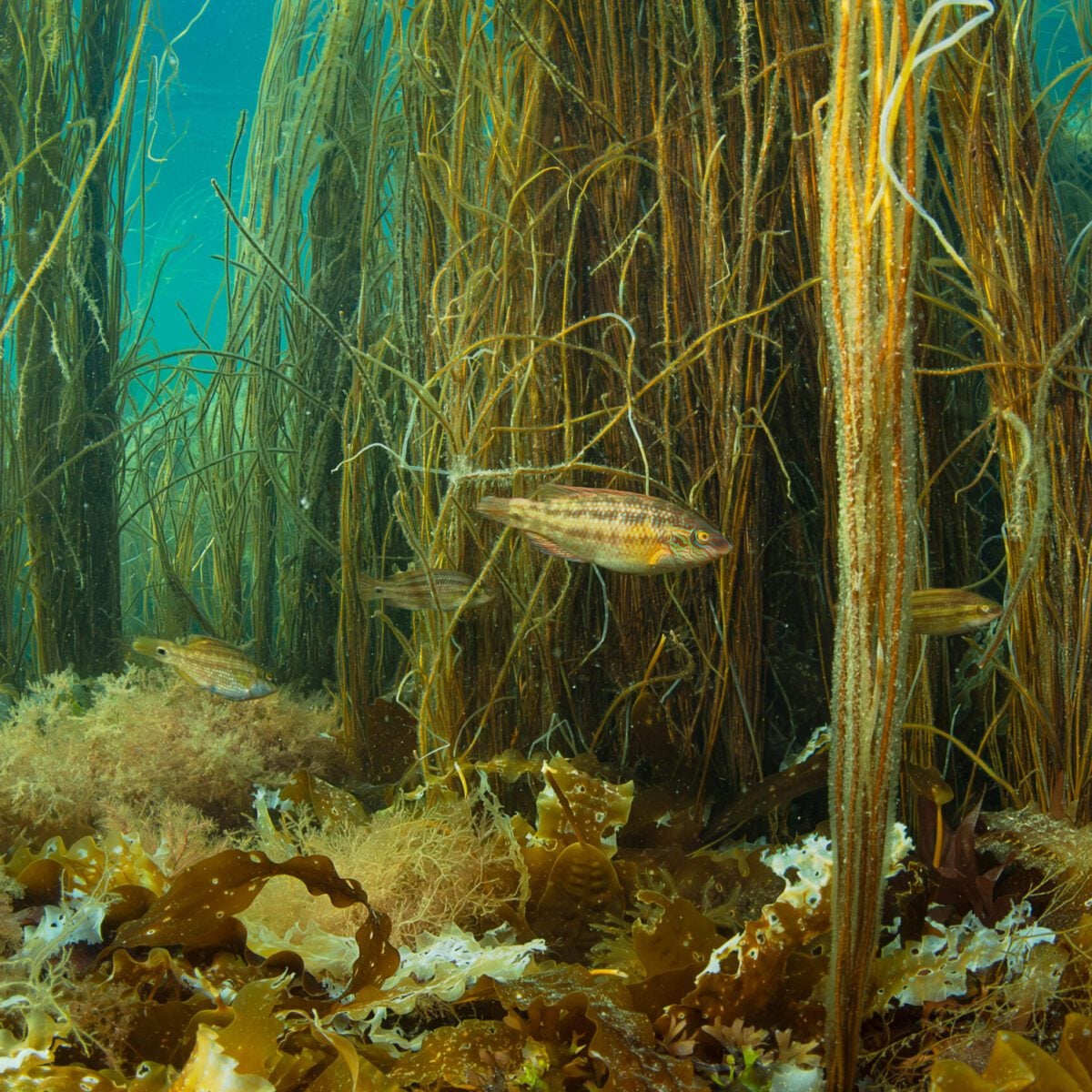
There are 4 types of wrasse common in UK seas, all of which are found in rocky areas around our coasts. They feed predominantly on molluscs, including limpets and mussels, and crustaceans, but will also eat small fish if the opportunity arises. They have powerful teeth and jaws which can be used to crush through shells!
Key Facts
- Cuckoo Wrasse are a large, slender fish. Their colourful markings make them unmistakeable. The female is orangey-pink with black and white spots on her back and the male has electric blue markings on his head and back.
- Cuckoo Wrasse start life as females! They are protogynous hermaphrodites, meaning they can change to males when there is a need. There is normally a single dominant male on the reef and if he dies, the most senior female will change sex and become the top male!
- Length: Up to 35cm
Status
Listed as of Least Concern on the IUCN Red List.
Seasonality
All year round