Take action
Become a member
Memberships builds our community and gives us a predictable income, which lets us plan and sustain longer projects that can have a greater impact. The more members we have, the more we can do to protect the Sussex countryside and coast.
Make a donation
Membership builds our community and gives us a predictable income, which lets us plan and sustain longer projects that can have a greater impact. The more members we have, the more we can do to protect the Sussex countryside and coast.
Overview
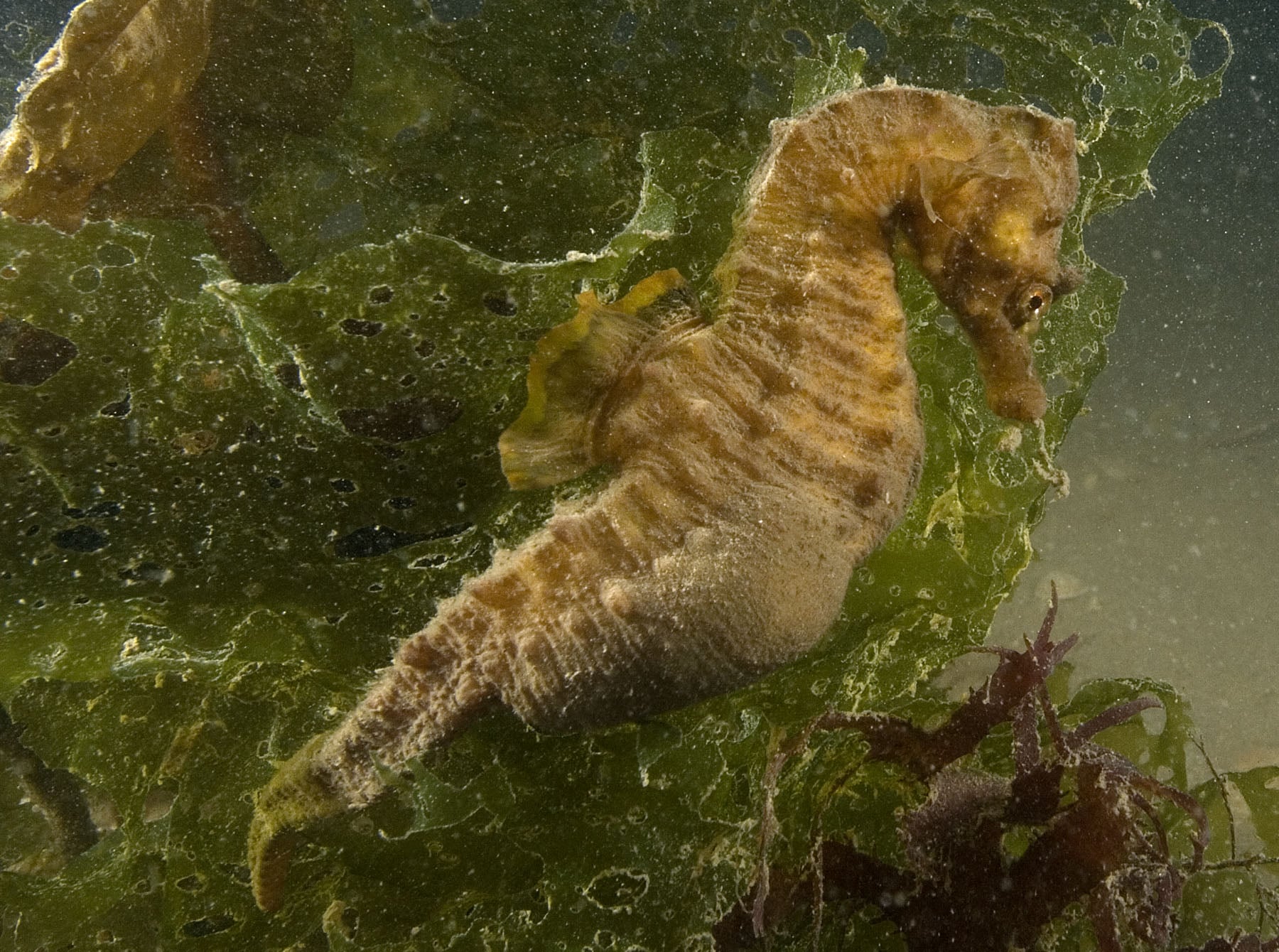
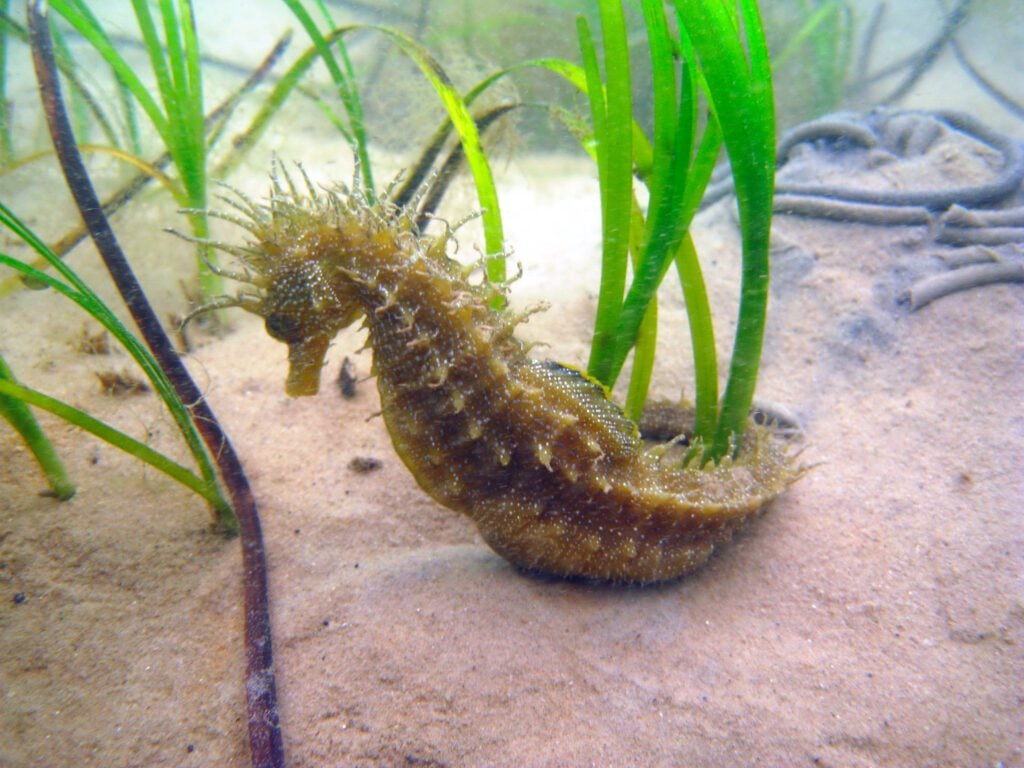
Also known as the Spiny Seahorse, the Long-snouted Seahorse is recognisable by the fleshy mane on its neck and back. They live in shallow coastal waters and are pretty poor swimmers, relying on their prehensile tail to cling onto seaweed and seagrass to stop themselves being swept away.
They don’t have teeth and simply suck up their favourite prey of small shrimp and plankton. Seahorses are known to practice monogamy, though we no longer think that they mate for life. Seahorses are a type of fish and are related to pipefish and sea dragons.
Key Facts
- As their name suggests, Long-snouted Seahorses have a longer snout than their short snouted seahorse cousins. Fleshy protuberances along its back give the impression of a horse’s mane and its alternative name of spiny seahorse. Its angular body, framed by tubercles is usually a greenish-yellow.
- Seahorses are the only animal with a true reversed pregnancy! The female transfers the eggs to the male who self fertilises them; he keeps them in his brood pouch, before giving birth to live young called fry.
- Length: 21cm
Status
The Long-snouted Seahorse is currently unlisted on the IUCN Red List due to deficient data (DD), but was previously listed as Vunerable (VU). In the UK, it is a Priority Species under the UK Post-2010 Biodiversity Framework and protected under the Wildlife and Countryside Act 1981. They are a Feature of Conservation Importance for which Marine Conservation Zones can be designated.
Seasonality
All year round