Take action
Become a member
Memberships build our community and give us a predictable income, which lets us plan and sustain longer projects that can have a greater impact. The more members we have, the more we can do to protect the Sussex countryside and coast.
Make a donation
Membership builds our community and gives us a predictable income, which lets us plan and sustain longer projects that can have a greater impact. The more members we have, the more we can do to protect the Sussex countryside and coast.
Overview
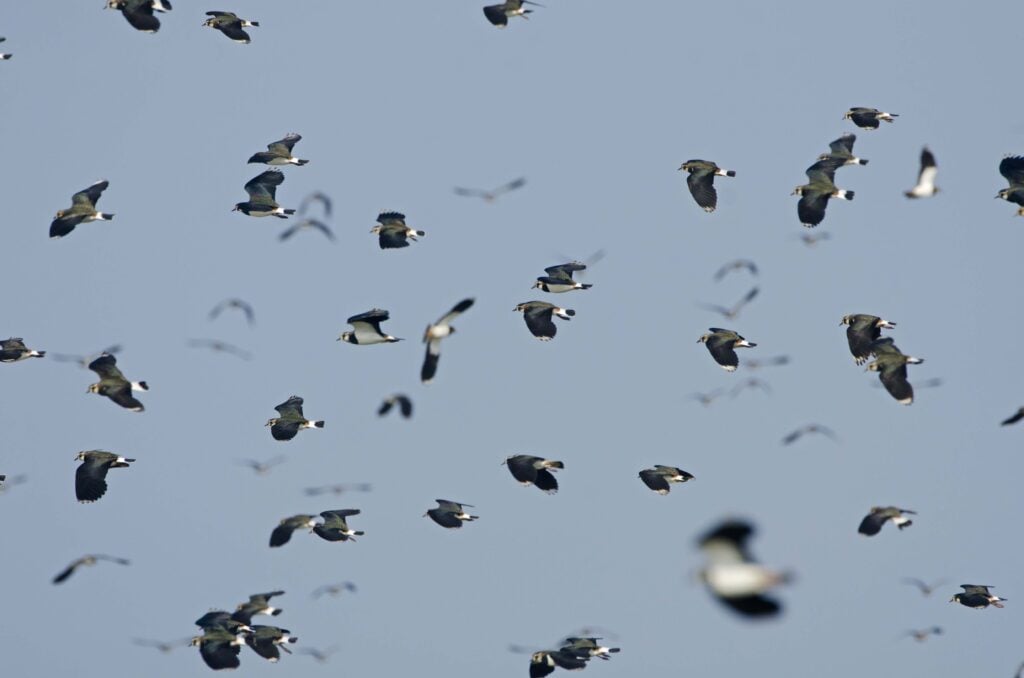
Familiar birds of farmlands and wetlands, lapwings can often be seen wheeling through winter skies in large, black and white flocks. As spring approaches, these flocks get smaller; some birds head back to their continental breeding grounds and others disperse to breed in the UK.
Males put on dramatic aerial displays, tumbling through the air, accompanied by their piercing ‘peewit’ call, which gives them their other, common name: peewit. Females can be spotted on their nests, which are simple scrapes in the mud or sand. By late spring, cute, fluffy Lapwing chicks can be seen venturing out to forage. If the nest is threatened at all, the parents will attacked or ‘mob’ the potential predators.
Key Facts
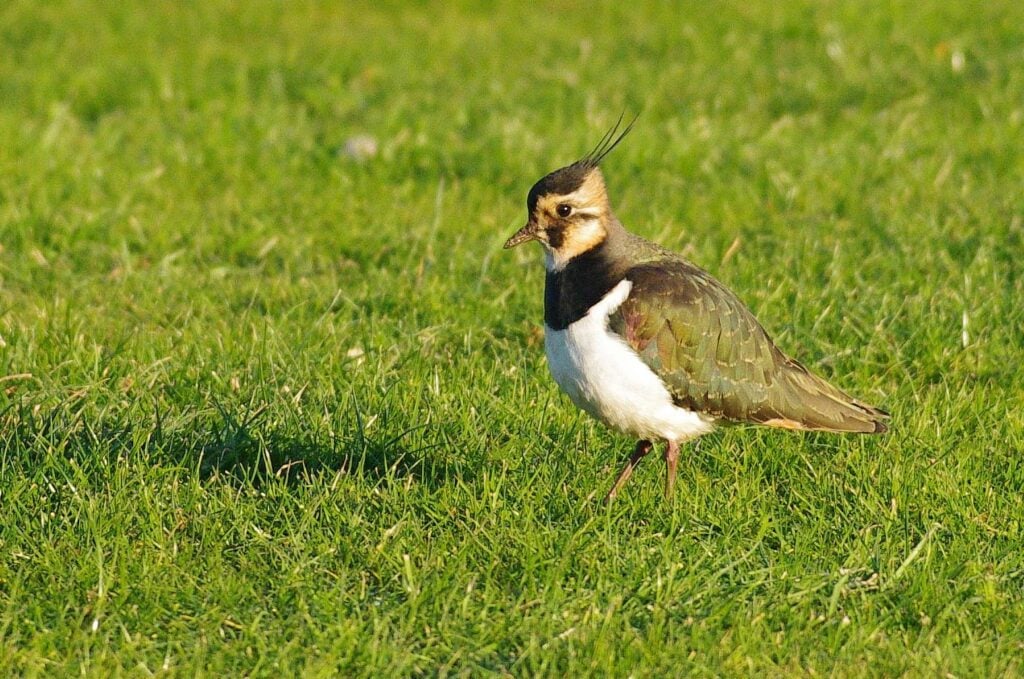
- Lapwings can be recognised by their long crests, black and white patterns, and very broad, round wingtips. From a distance, Lapwings look black and white, but up-close, the back has an iridescent green and purple sheen.
- As well as ‘Lapwing’ and ‘peewit’, this bird is also known locally as the ‘green plover’. Its Latin name, Vanellus, means ‘little fan’ and actually refers to its floppy, flapping flight. The name lapwing is thought to derive from an Old English term meaning ‘leap with a flicker in it’ because the dense winter flocks appear to flicker between white and black when the birds flap their wings.
- Length: 28-31cm. Wingspan: 84cm. Weight: 230g. Average lifespan: 4 years.
Status
Classified in the UK as Red under the Birds of Conservation Concern 5: the Red List for Birds (2021). Priority Species under the UK Post-2010 Biodiversity Framework. Listed as Near Threatened on the global IUCN Red List of Threatened Species.
Seasonality
All year round