Take action
Become a member
Memberships build our community and give us a predictable income, which lets us plan and sustain longer projects that can have a greater impact. The more members we have, the more we can do to protect the Sussex countryside and coast.
Make a donation
Membership builds our community and gives us a predictable income, which lets us plan and sustain longer projects that can have a greater impact. The more members we have, the more we can do to protect the Sussex countryside and coast.
Overview
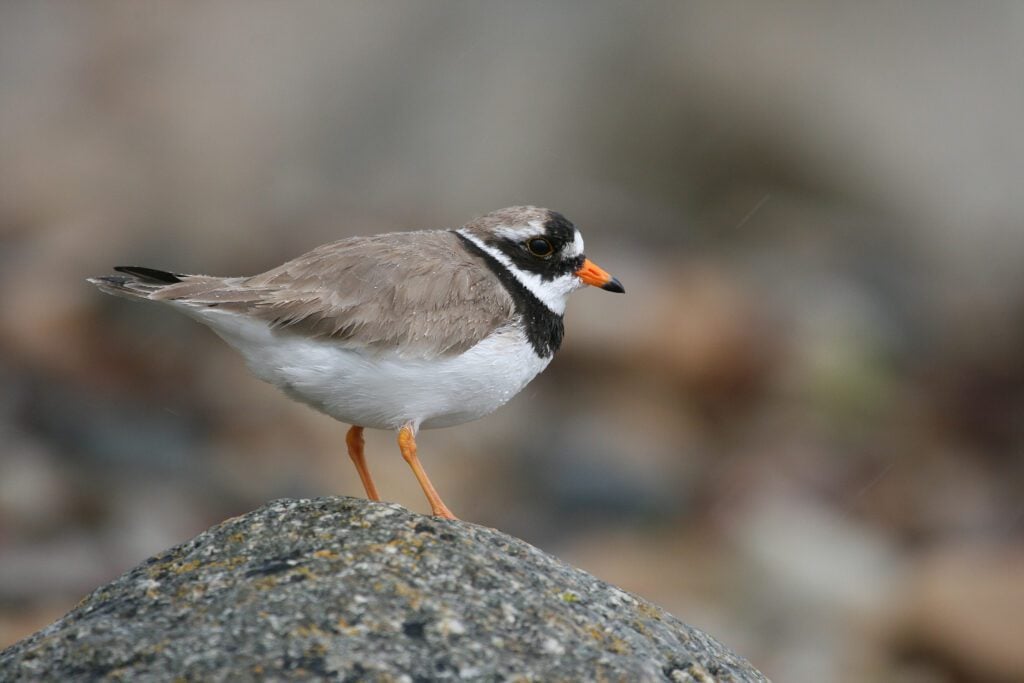
A small, rotund wader, the Ringed Plover nests on bare gravel, shingle and sand at the coast and around flooded gravel pits and reservoirs.
Unlike its relation, the Little Ringed Plover, it is a resident species in the UK, although it is joined by wintering birds from Europe. Like other plovers, it forages for invertebrates and crustaceans in a particular way: standing and watching, running forward, pecking, then standing still again. The Ringed Plover tempts underground prey to the surface by ‘foot-trembling’: tapping its feet fast on the ground to mimic raindrops.
Key Facts
- Larger and chunkier than the Little Ringed Plover, the Ringed Plover has an orange bill with a black tip, orange legs and no yellow ring around the eye. Sandy-brown above and white below, it has a black chest-band and black bridle markings on its head. When it flies, it displays a broad, white wing bar.
- Ringed Plovers that nest as far away as Greenland and Canada fly through the UK on migration.
- Length: 18-20cm Wingspan: 52cm Weight: 64g Average lifespan: 5 years
Status
Classified in the UK as Red under the Birds of Conservation Concern 5: the Red List for Birds (2021).
Seasonality
All year round