Take action
Become a member
Memberships build our community and give us a predictable income, which lets us plan and sustain longer projects that can have a greater impact. The more members we have, the more we can do to protect the Sussex countryside and coast.
Make a donation
Membership builds our community and gives us a predictable income, which lets us plan and sustain longer projects that can have a greater impact. The more members we have, the more we can do to protect the Sussex countryside and coast.
Overview
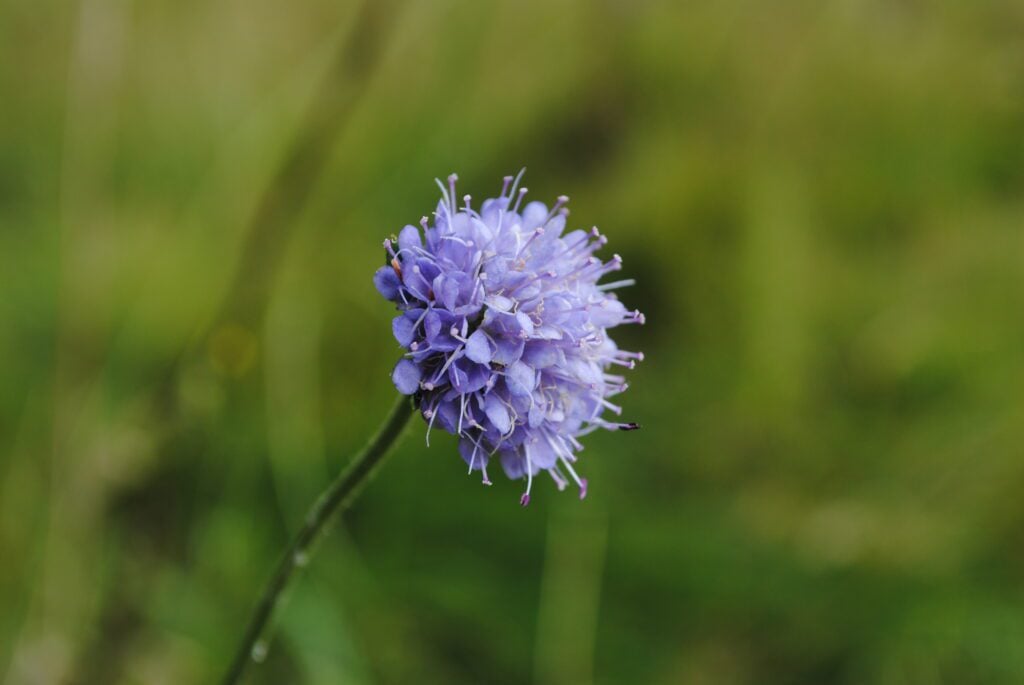
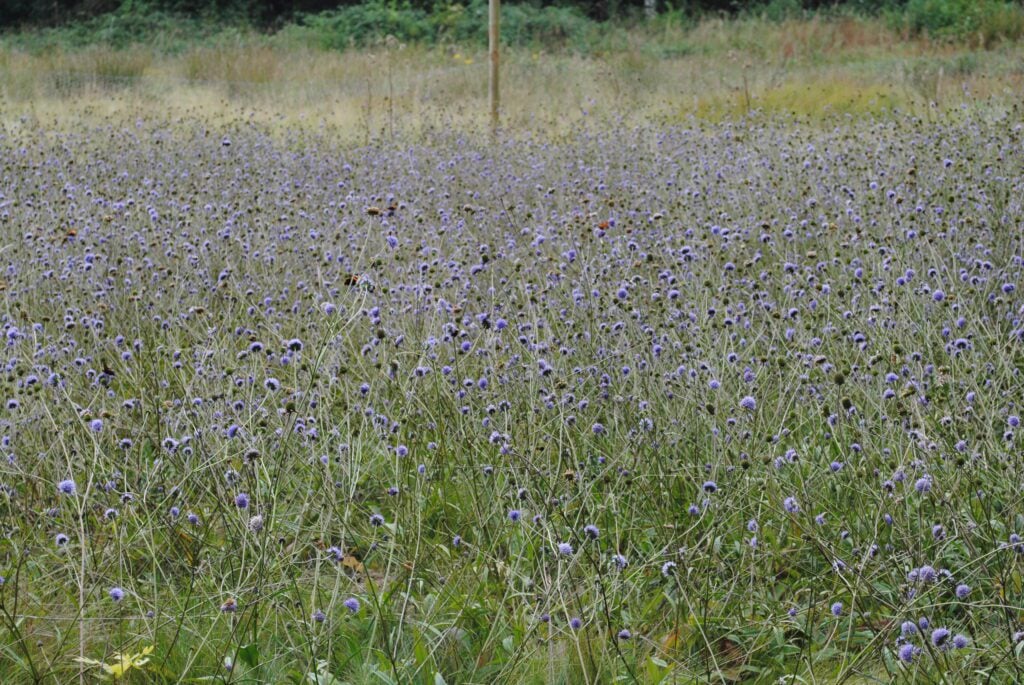
The rounded and nodding, purple-blue flower heads of Devil’s-bit Scabious can be found in damp meadows and marshes, and along woodland rides and riverbanks. It is in bloom between July and October, its pincushion-like flower heads attracting a wide variety of bees and insects.
Key Facts
- Devil’s-bit Scabious has flattened, rounded flower heads that range in colour from blue to pinky-purple. Its leaves are long and oval, and differ from those of Field Scabious, which are dark green, hairy and deeply lobed.
- It is the foodplant for the declining Marsh Fritillary butterfly, which is classified as a priority species under the UK Post-2010 Biodiversity Framework.
- Devil’s-bit Scabious gets its Latin name – ‘Scabere’, meaning to scratch – from its traditional use as a treatment for skin conditions, such as scabies and the sores of bubonic plague. Its common name arises from the fact that its roots look truncated, as if bitten off, legend has it, by the Devil.
- Height: up to 75cm
Status
Common.

Seasonality
July to October