Take action
Become a member
Memberships builds our community and gives us a predictable income, which lets us plan and sustain longer projects that can have a greater impact. The more members we have, the more we can do to protect the Sussex countryside and coast.
Make a donation
Membership builds our community and gives us a predictable income, which lets us plan and sustain longer projects that can have a greater impact. The more members we have, the more we can do to protect the Sussex countryside and coast.
Overview
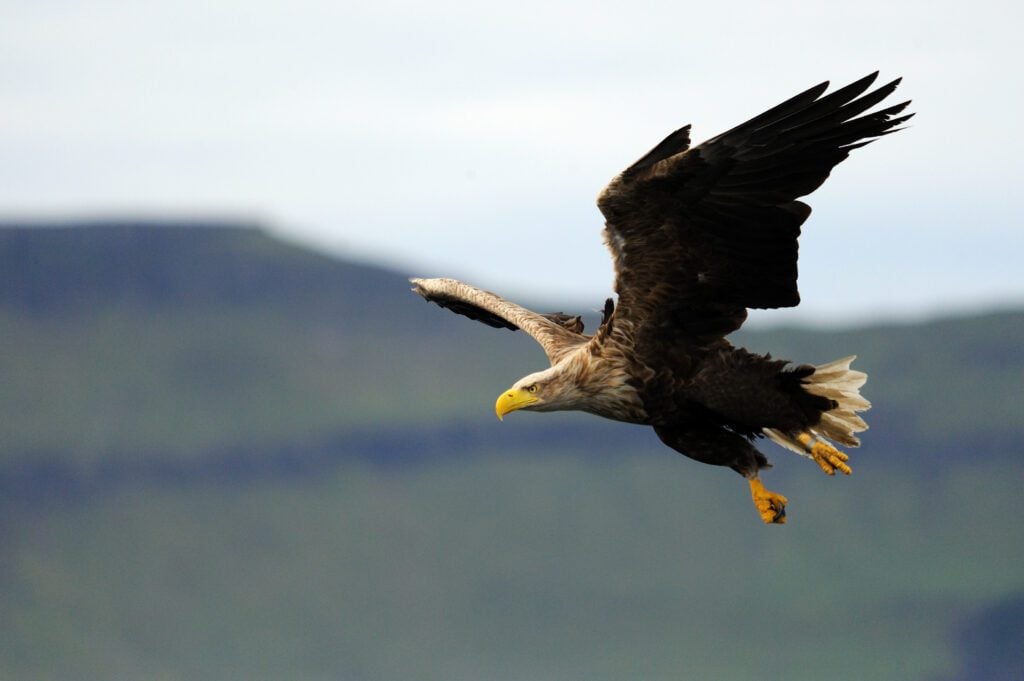
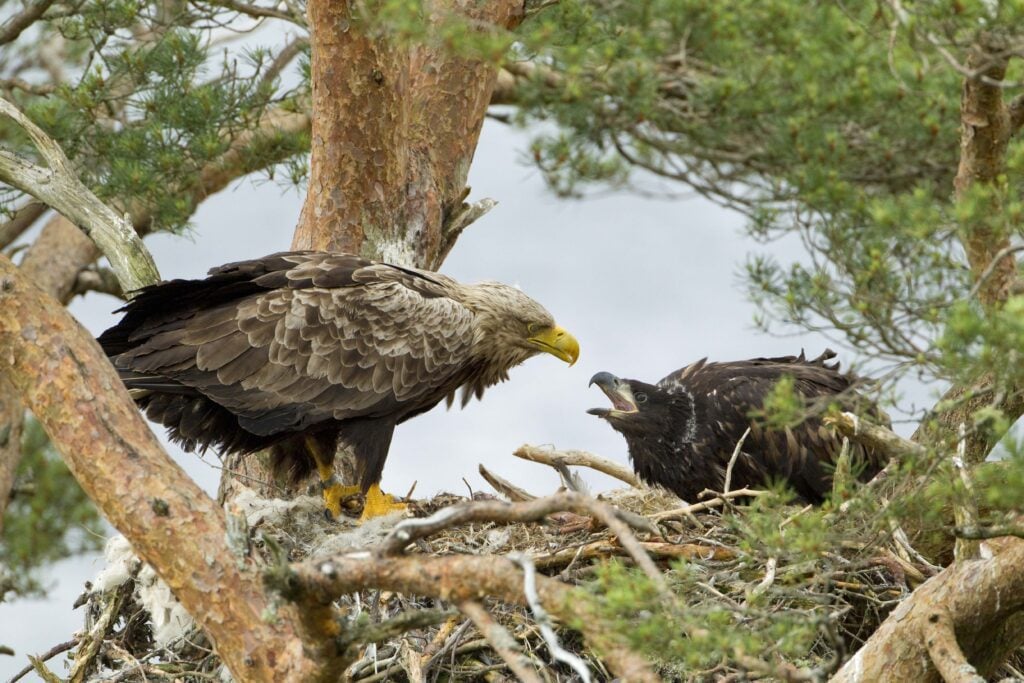
Our largest bird of prey, the White-tailed Eagle is sometimes known as the ‘Sea Eagle’, and preys on fish, mammals and small birds. It was persecuted to extinction in the UK, but reintroduced from Norway during the 1970s. Both parents tend to the one or two chicks that hatch each year.
Key Facts
- A massive and impressive bird of prey, the White-tailed Eagle has broader wings than the Golden Eagle. Adults have a white, wedge-shaped tail and a pale head with a huge yellow bill.
- A White-tailed Eagle’s territory may be up to 70 square kilometres! White-tailed Eagles mate for life and breed in the same territory each year. This territory may even be used by successive generations for many more years to come.
- Length: 80-90cm; Wingspan: 2.2m; Weight: 4.3-5.5kg; Average lifespan: 20-25 years
Status
Classified in the UK as Amber under the Birds of Conservation Concern 5: the Red List for Birds (2021). Protected in the UK under the Wildlife and Countryside Act, 1981.

Seasonality
All year round