Take action
Become a member
Memberships builds our community and gives us a predictable income, which lets us plan and sustain longer projects that can have a greater impact. The more members we have, the more we can do to protect the Sussex countryside and coast.
Make a donation
Membership builds our community and gives us a predictable income, which lets us plan and sustain longer projects that can have a greater impact. The more members we have, the more we can do to protect the Sussex countryside and coast.
Overview
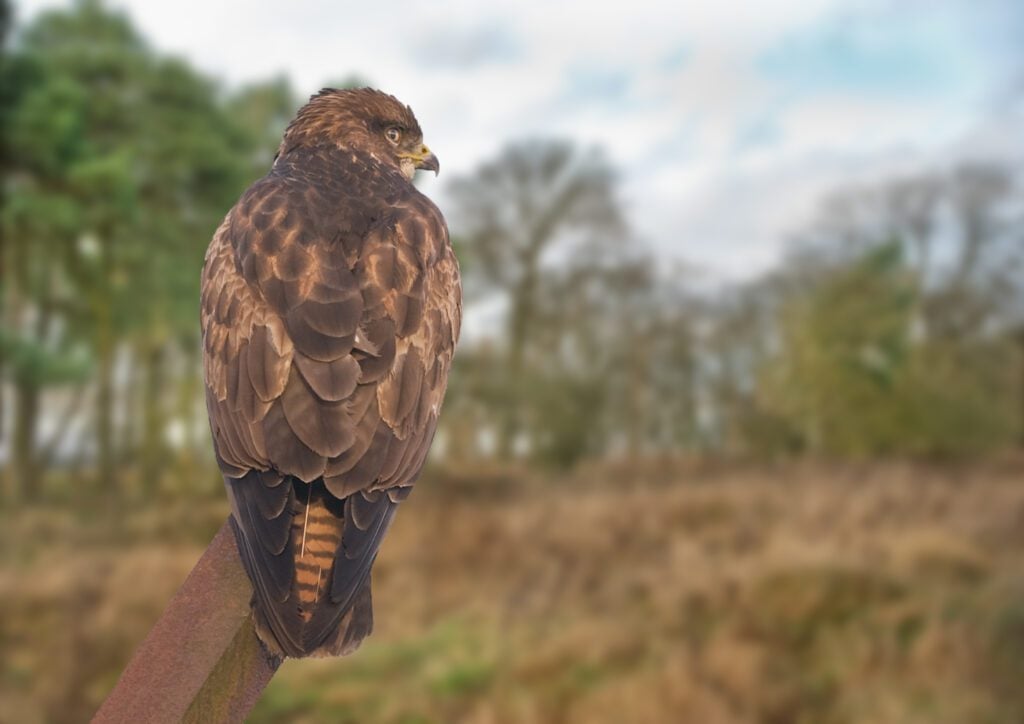
Until recently, the Buzzard was only found in the north and west of the UK due to severe population declines. Over the last couple of decades, however, it has been doing very well and can now be found in the south-east of England again.
Buzzards eat small birds, mammals and carrion, but will also eat large insects and earthworms when prey is in short supply.
Key Facts
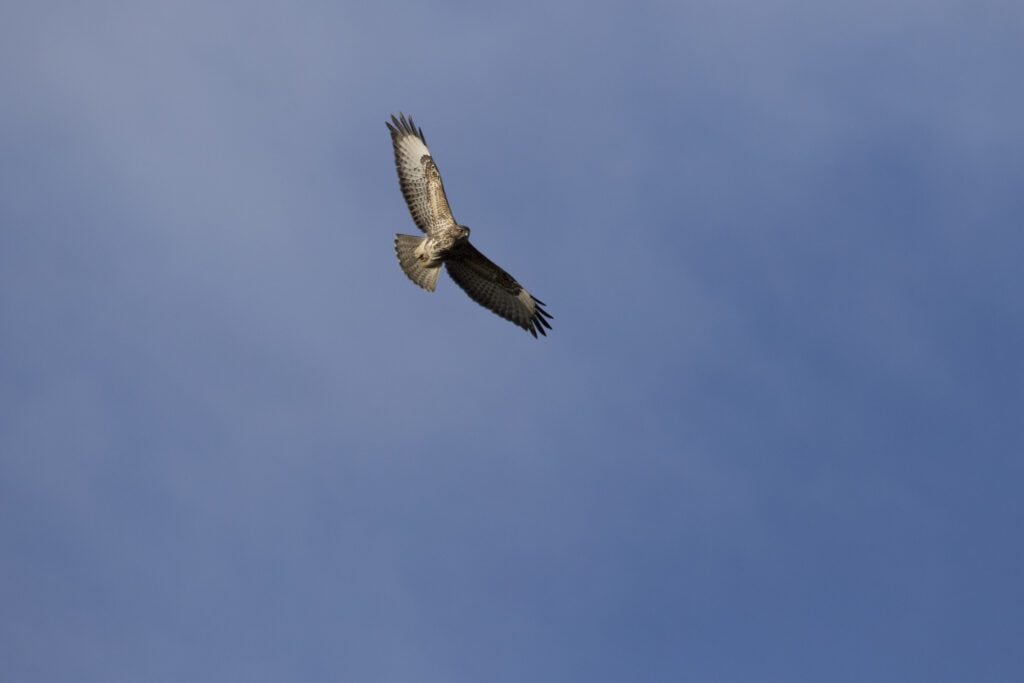
- Buzzards are the most frequently seen medium-sized birds of prey. They have broader wings and shorter tails than the harriers or Red Kite. Their plumage can vary from a uniform dark brown to much paler shades.
- In the spring, male Buzzards perform a ‘roller coaster’ display, soaring up high and then swooping down over and over again to attract a mate. Once paired, Buzzards construct their bulky nest in the fork of a large tree, often near to a wood. The female will lay between two and four eggs, which take just over a month to hatch.
- Length: 54cm Wingspan: 1.2m Weight: 780g-1kg Average lifespan: 12 years
Status
Classified in the UK as Green under the Birds of Conservation Concern 5: the Red List for Birds (2021).
Seasonality
All year round