Take action
Become a member
Memberships build our community and give us a predictable income, which lets us plan and sustain longer projects that can have a greater impact. The more members we have, the more we can do to protect the Sussex countryside and coast.
Make a donation
Membership builds our community and gives us a predictable income, which lets us plan and sustain longer projects that can have a greater impact. The more members we have, the more we can do to protect the Sussex countryside and coast.
Overview
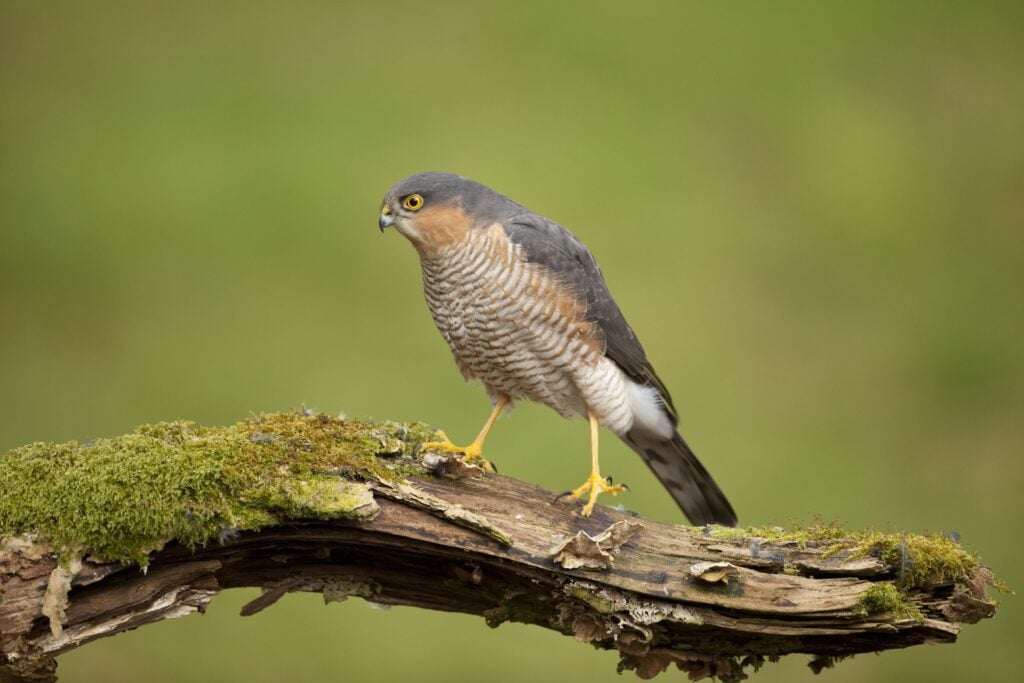
The Sparrowhawk is one of our smallest birds of prey, the male being somewhere between a blackbird and a collared dove in size. The female is larger, up to the size of a Feral Pigeon.
Sparrowhawks are excellent bird hunters, catching small species like finches, sparrows and tits; sometimes they ambush their prey from a perch, while other times they may fly low, suddenly changing direction to fool it.
Key Facts
- The Sparrowhawk has rounded wings and a relatively long, narrow tail. Males are small with a blue-grey back and white underparts showing reddish-orange barring. Females are much larger, with browner plumage above and grey bars below. They both have reddish cheeks.
- Female Sparrowhawks can be up to 25% larger than males – the biggest size difference in any bird. Its thought that smaller males are more agile when hunting their small-bird prey.
- Length: 33cm Wingspan: 62cm Weight: 150-260g Average lifespan: 4 years
Status
Classified in the UK as Amber under the Birds of Conservation Concern 5: the Red List for Birds (2021).

Seasonality
All year round