Take action
Become a member
Memberships build our community and give us a predictable income, which lets us plan and sustain longer projects that can have a greater impact. The more members we have, the more we can do to protect the Sussex countryside and coast.
Make a donation
Membership builds our community and gives us a predictable income, which lets us plan and sustain longer projects that can have a greater impact. The more members we have, the more we can do to protect the Sussex countryside and coast.
Overview
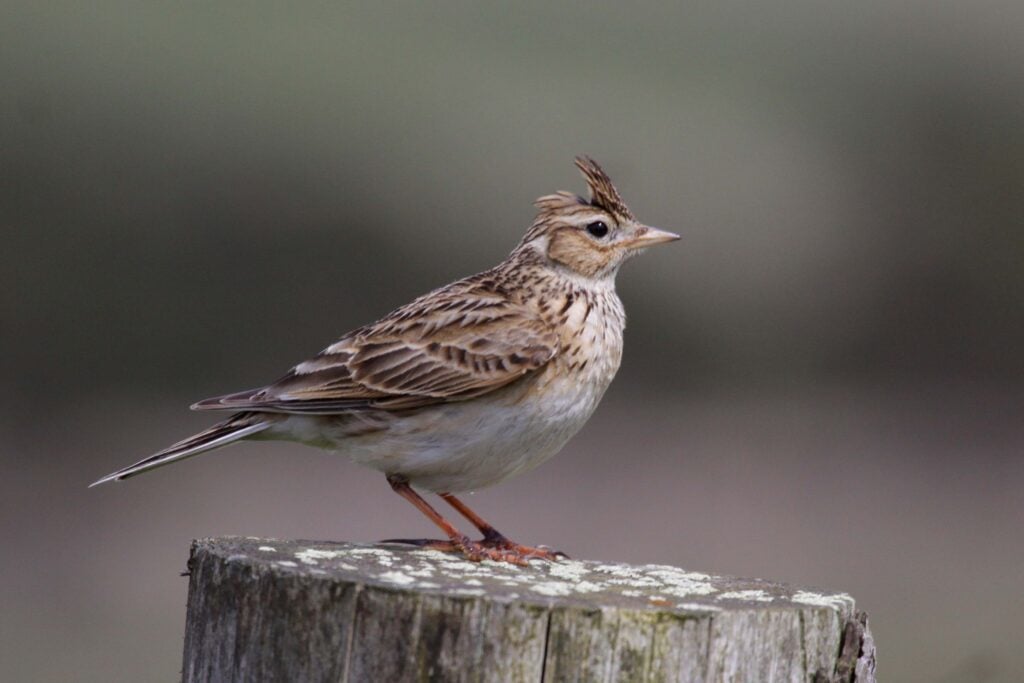
Male Skylarks can be spotted rising almost vertically from farmland, grassland, saltmarshes and moorland. They hover effortlessly, singing from a great height, before parachuting back down to earth. These long and complicated song-flights can last for up to an hour and the birds can reach 300m before descending.
They’ll also sing from perches, such as fence posts or large rocks. Despite their aerial activities, Skylarks nest on the ground, laying three to four eggs. Chicks become independent after only two weeks and parents can have up to four broods in a breeding season.
Key Facts
- If seen in song-flight, the Skylark is unmistakeable. A streaky brown bird, with a crest, it is larger than the similar Woodlark (a scarcer bird of heathland and woodland edges) and has a longer tail. It’s also much larger than the similar Meadow Pipit, which has a thinner bill and no crest.
- The song of the Skylark has been the subject of many works of literature and music from Chaucer to Shelley, Vaughan Williams to jazz.
- Length: 18cm. Wingspan: 33cm. Weight: 35-42g. Average lifespan: 2 years
Status
Classified in the UK as Red under the Birds of Conservation Concern 5: the Red List for Birds (2021).
Seasonality
All year round