Take action
Become a member
Memberships builds our community and gives us a predictable income, which lets us plan and sustain longer projects that can have a greater impact. The more members we have, the more we can do to protect the Sussex countryside and coast.
Make a donation
Membership builds our community and gives us a predictable income, which lets us plan and sustain longer projects that can have a greater impact. The more members we have, the more we can do to protect the Sussex countryside and coast.
Overview
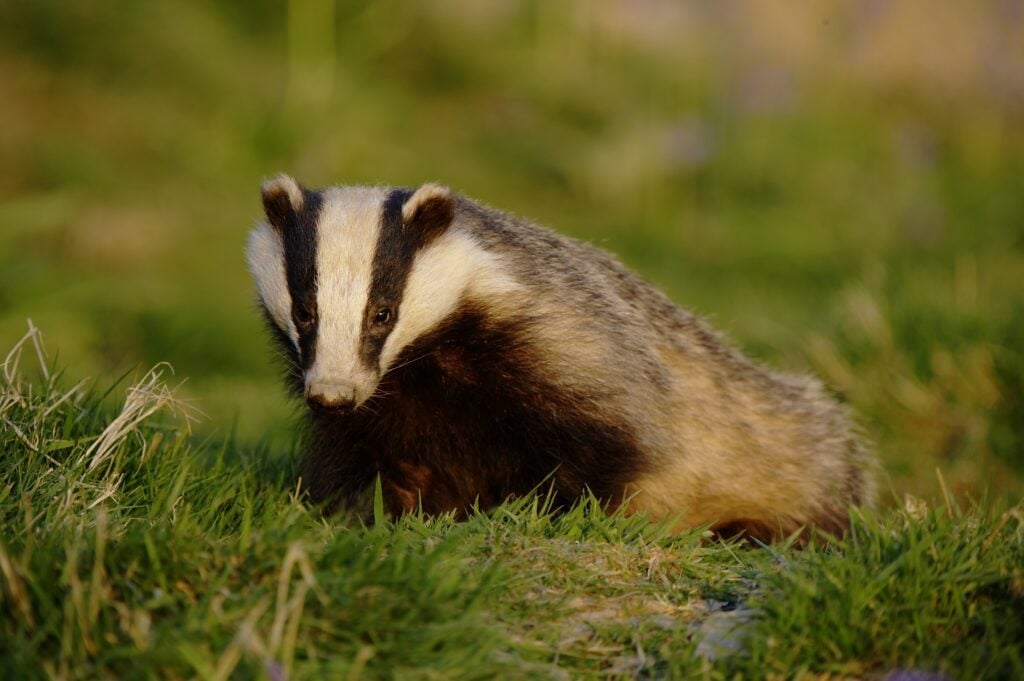
With an omnivorous appetite, and as a resident of woodland, farmland, and increasingly our urban gardens, the iconic yet elusive Badger is an adaptable animal. Despite this, the species is at risk from several threats, and they need our support.
Key facts
- An unmistakable animal, the Badger is large and grey, with a short, fluffy tail, black belly and paws, and a black-and-white striped face.
- Cubs are born in January or February but spend the first few months underground, only coming out in spring when it is a little warmer.
- You know if a sett is lived in as it is usually neat and tidy with clean doorways marked with piles of used bedding made up of dry grass and leaves. There will also be a particularly smelly pit nearby that the badgers use as a toilet.
- Although earthworms make up around 80% of their diet, Badgers are omnivorous, and will take advantage of what is available, including slugs, insects, berries, nuts, and less often small animals like mice and frogs.
Status
Protected in the UK under the Protection of Badgers Act, 1992, and the Wildlife and Countryside Act, 1981.
Seasonality
Badgers can be found in the UK all year round. Although Badgers don’t fully hibernate, they slow down in winter and are not as active, entering sporadic states of ‘torpor’ where they reduce their body temperature to match their surroundings during cold periods. In preparation for the colder months, they feed up as much as possible, to spend time underground.
Badgers mate at any time throughout the year but only have one litter in around February. This is because of delayed implantation – although an egg is fertilised after mating, the embryo will not start to grow until a hormonal change in the females is prompted by the shorter winter days.
How we can help Badgers
- Be mindful of Badgers when driving at night – as creatures of habit, Badgers follow set foraging routes, many of which are now intersected by busy roads, making evening outings dangerous
- Raise awareness of this incredible species – especially if you are lucky enough to have a Badger sett in your garden
- Reduce pesticide use in your garden or outdoor space – earthworms form a large part of a Badger’s diet, and healthy worms need healthy soil
- Keep your garden as wild as possible, even if just a section – this will enable Badgers to forage for insects, offer shelter, and maybe even provide space for them to dig a sett to live in