Take action
Become a member
Memberships builds our community and gives us a predictable income, which lets us plan and sustain longer projects that can have a greater impact. The more members we have, the more we can do to protect the Sussex countryside and coast.
Make a donation
Membership builds our community and gives us a predictable income, which lets us plan and sustain longer projects that can have a greater impact. The more members we have, the more we can do to protect the Sussex countryside and coast.
Overview
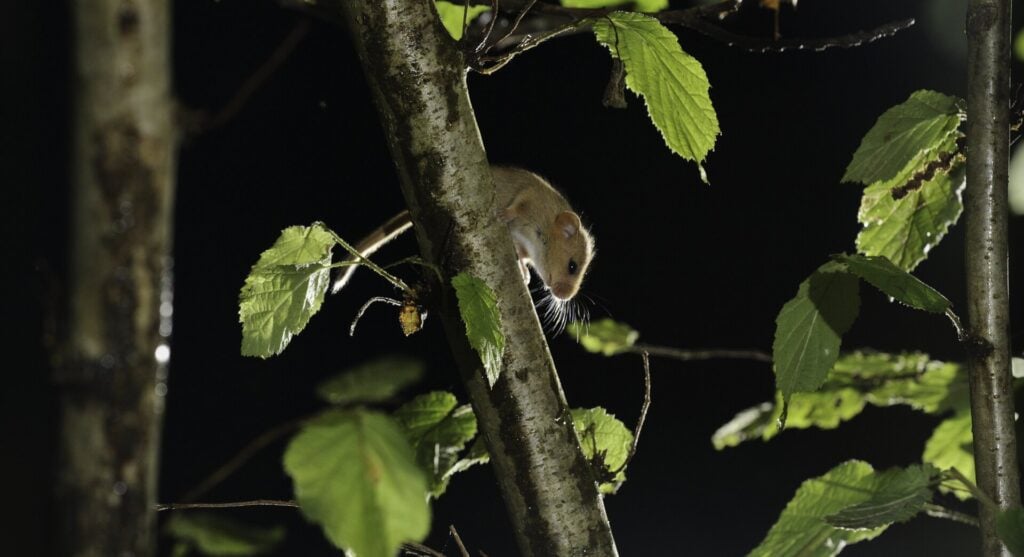
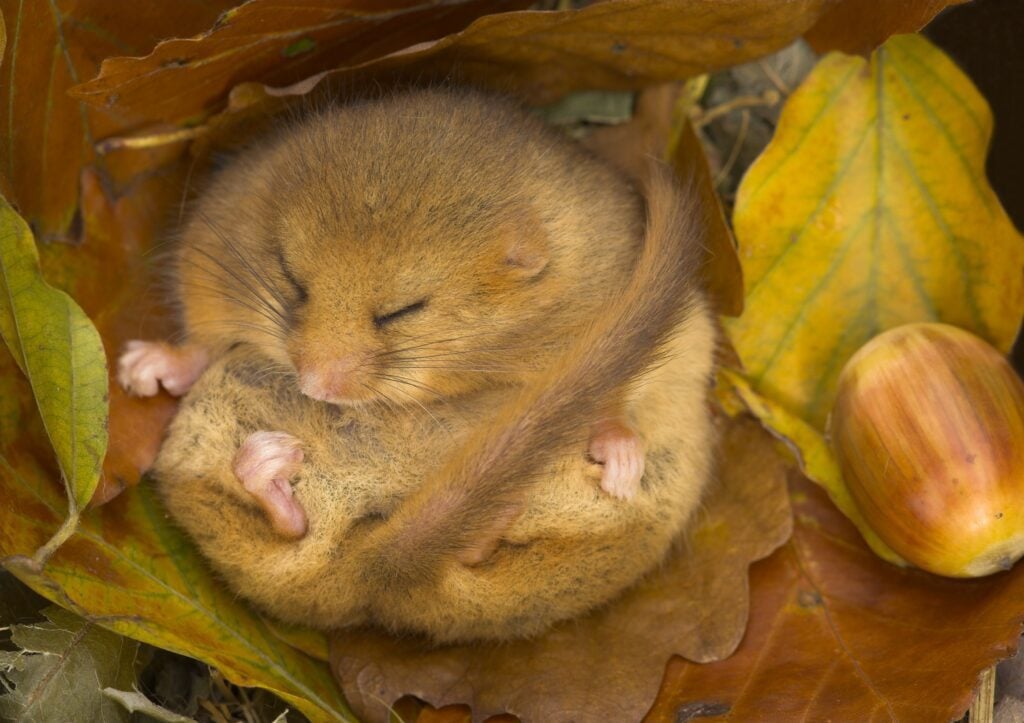
Hazel Dormice spend most of their day asleep. At night they come alive, climbing high into the trees on the hunt for a tasty snack. Their favourite foods are hazelnuts, berries and insects.
Hazel Dormice build nests out of grass and leaves ready for the female to give birth to up to seven young. In autumn, dormice start looking for the perfect spot to hibernate for winter. They often choose to sleep in logs or leaves at the base of trees or just beneath the ground where they can avoid the winter cold.
Key Facts
- The Hazel Dormouse has gingery-brown fur, large black eyes and a long, fluffy tail; it is much smaller than a squirrel.
- Hazel Dormice, like many of our other small animals, hibernate through the winter months in order to survive. If food is scarce outside of hibernation season, they can save energy by dropping their body temperature and going into a state of ‘torpor’. In fact, Hazel Dormice can spend nearly three-quarters of the year ‘asleep’ in some form!
- Length: 6-9cm. Tail: 5.7-6.8cm. Weight: 15-40g. Average lifespan: 5 years
Status
Protected in the UK under the Wildlife and Countryside Act, 1981. Priority Species under the UK Post-2010 Biodiversity Framework. Listed as a European Protected Species under Annex IV of the European Habitats Directive.

Seasonality
April to October