Take action
Become a member
Memberships builds our community and gives us a predictable income, which lets us plan and sustain longer projects that can have a greater impact. The more members we have, the more we can do to protect the Sussex countryside and coast.
Make a donation
Membership builds our community and gives us a predictable income, which lets us plan and sustain longer projects that can have a greater impact. The more members we have, the more we can do to protect the Sussex countryside and coast.
Overview
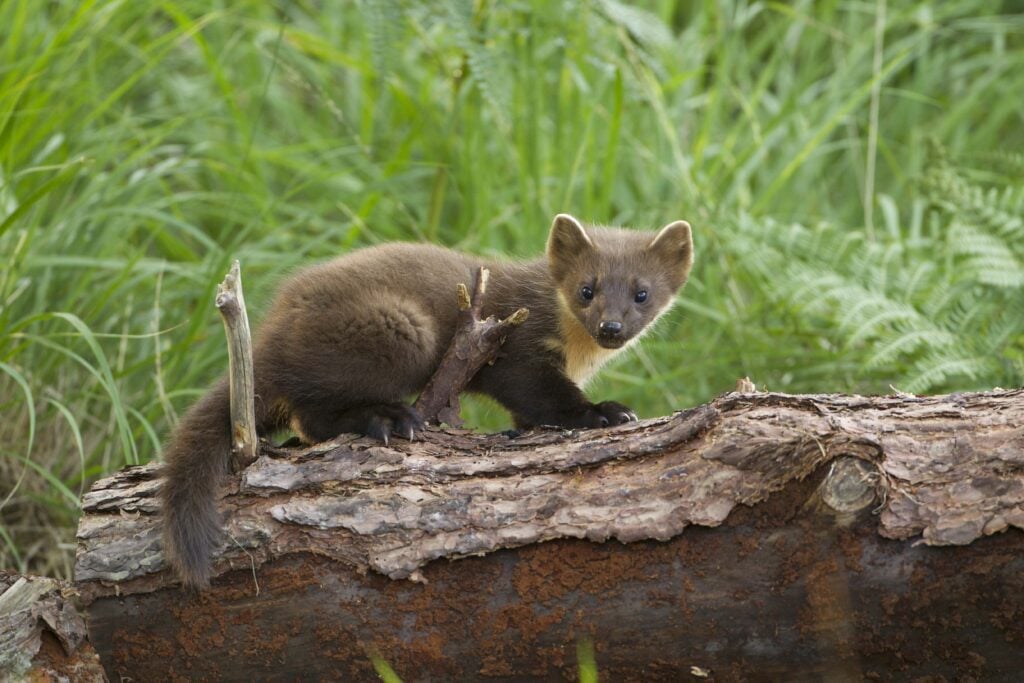
An elusive mustelid, the Pine Marten was once common across the UK. It declined due to persecution and habitat loss. Today it is mostly found in the north of the UK, though conservation work is helping it make a comeback in other areas.
The Pine Marten prefers woodland habitats, climbing very well and living in tree holes, old squirrel dreys or even old bird nests. It feeds on small rodents, birds, eggs, insects and fruits. During the summer mating season, they make shrill, cat-like calls. The following spring, the female will have a litter of between one to five kits, which are independent by autumn.
Key Facts
- Mostly chestnut-brown in colour, the Pine Marten has a characteristic pale yellow ‘bib’ on its chin and throat. Each Pine Marten has a uniquely shaped bib, allowing individuals to be identified by the pattern. The Pine Marten also has a long, bushy tail.
- Bilberries, Rowan berries and blackberries make up much of a Pine Marten’s summer diet, often resulting in its ‘scats’ (droppings) turning blue or red in colour. Pine Martens regularly leave their scats on forest trails or in prominent places like boulders to mark their territories. When they are fresh, scats may have a slimy appearance due to mucous binding them together. They may contain fur, feathers, bones or seeds.
- Length: 46-54cm Tail: 18-27cm Weight: 0.9-2.2kg Average lifespan: up to 8 years
Status
Protected in the UK under the Wildlife and Countryside Act, 1981. Priority Species under the UK Post-2010 Biodiversity Framework.
Seasonality
All year round