Take action
Become a member
Memberships builds our community and gives us a predictable income, which lets us plan and sustain longer projects that can have a greater impact. The more members we have, the more we can do to protect the Sussex countryside and coast.
Make a donation
Membership builds our community and gives us a predictable income, which lets us plan and sustain longer projects that can have a greater impact. The more members we have, the more we can do to protect the Sussex countryside and coast.
Overview
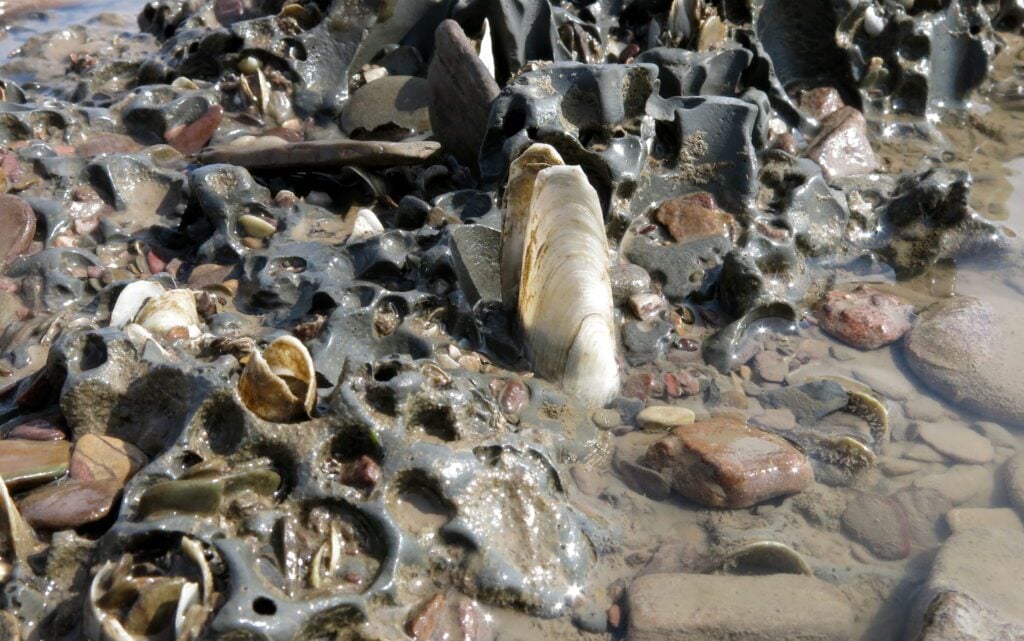
Piddocks are a strange group of clam-like shellfish that burrow into soft rocks such as clay and sandstone. They begin this process after settling as larvae and slowly enlarge and deepen the burrow as they grow. As such, they are essentially locked in and will live there for the rest of their lives.
Key Facts
- The Common Piddock’s shell is thin and brittle, covered with concentric ridges and radiating lines and is dull white or grey in colour. There are several species of similar looking Piddocks so if you are recording this as part of a recording scheme be sure to take clear, close-up photos to help verifiers confirm your sighting.
- The Common Piddock glows in the dark! Through bioluminescence, it glows blue-green around the edges. Amazingly, the protein that creates this glow has been extracted from Common Piddocks and used to help identify when people are getting ill – it gives off light when it encounters chemicals produced by white-blood cells to fight infections. This can help doctors prescribe treatments faster and fight infections before they even really take hold!
- From the protection of their burrows, Piddocks extend their siphon outwards to filter feed on organic matter from the water column. When the Piddock dies, the empty burrows provide an additional habitat and refuge for other marine species, including other molluscs, juvenile crabs and even small sea anemones. Piddocks long oval shells are distinctively wing shaped, giving piddocks their other name – Angelwings.
- Length: up to 12cm Average Lifespan: 8 years
Status
Common
Seasonality
All year round