Take action
Become a member
Memberships builds our community and gives us a predictable income, which lets us plan and sustain longer projects that can have a greater impact. The more members we have, the more we can do to protect the Sussex countryside and coast.
Make a donation
Membership builds our community and gives us a predictable income, which lets us plan and sustain longer projects that can have a greater impact. The more members we have, the more we can do to protect the Sussex countryside and coast.
Overview
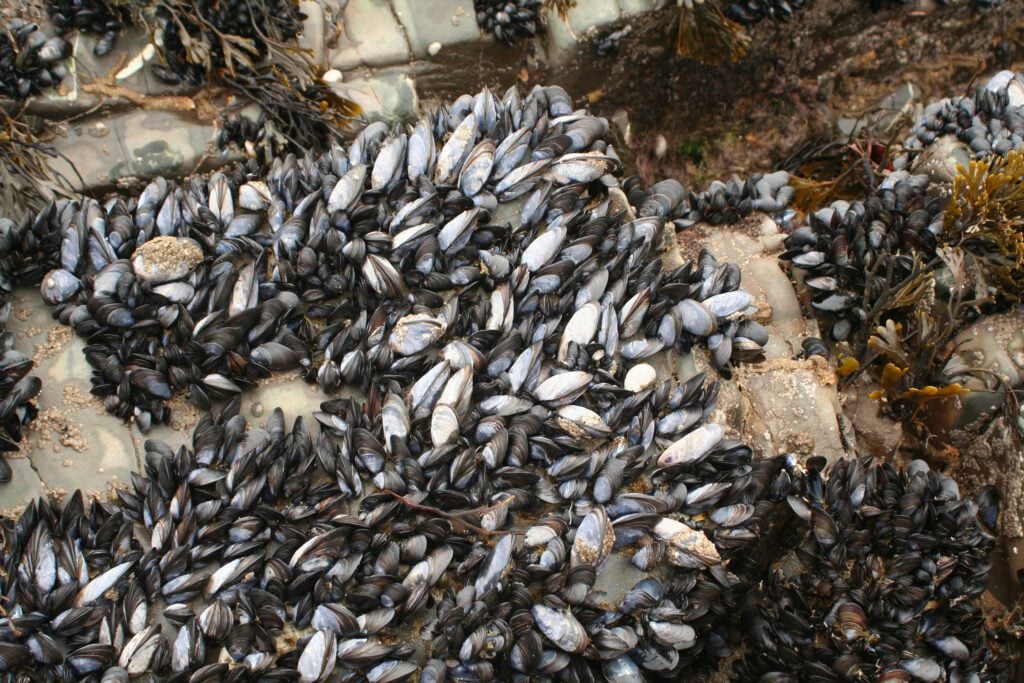
One of our most familiar bivalves (meaning two shells – or valves – that clamp together), the Blue or Common Mussel lives on rocky, sandy or muddy shores, from the low tide mark and in shallow seas all around the UK.
They form large, dense mussel beds that cover the seabed, with each mussel attaching itself to the seabed and each other using sticky fibres called byssus threads. If uncovered at low tide, mussel beds become a seabird buffet – particularly for Oystercatchers. Mussels are also an important food source for many creatures, including starfish, flatfish, crabs and Dog Whelks. They aren’t helpless victims though and will use their sticky byssus threads to immobilise the Dog Whelk predator, resulting in its slow death. Mussels are filter feeders, filtering detritus and plankton from the water. Their shells are usually a blueish-grey colour, though they are sometimes purple or brown.
Key Facts
- A very familiar shell, almost triangular in shape and blue-ish grey in colour with concentric lines.
- Blue mussels have a beard! The tuft of byssal threads that anchor the mussel to the seabed and other mussels are often called the beard – and they are incredibly strong! Scientists have found that the threads have a soft, stretchy core surrounded by a tough outer coating – allowing them to withstand rough seas and big waves without being washed away.
- Length: variable, normally 3-10cm Average Lifespan: 2-3 years, sometimes 10 years or more.
Status
Common
Seasonality
All year round