
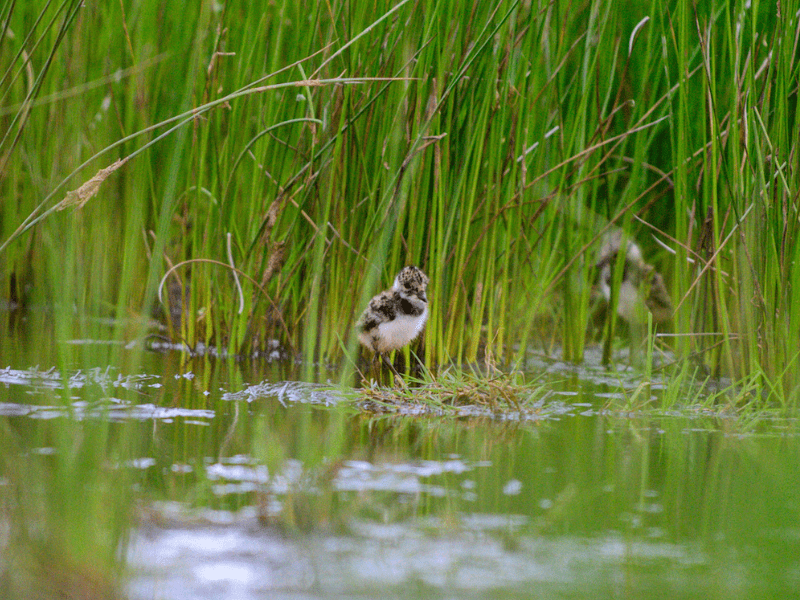
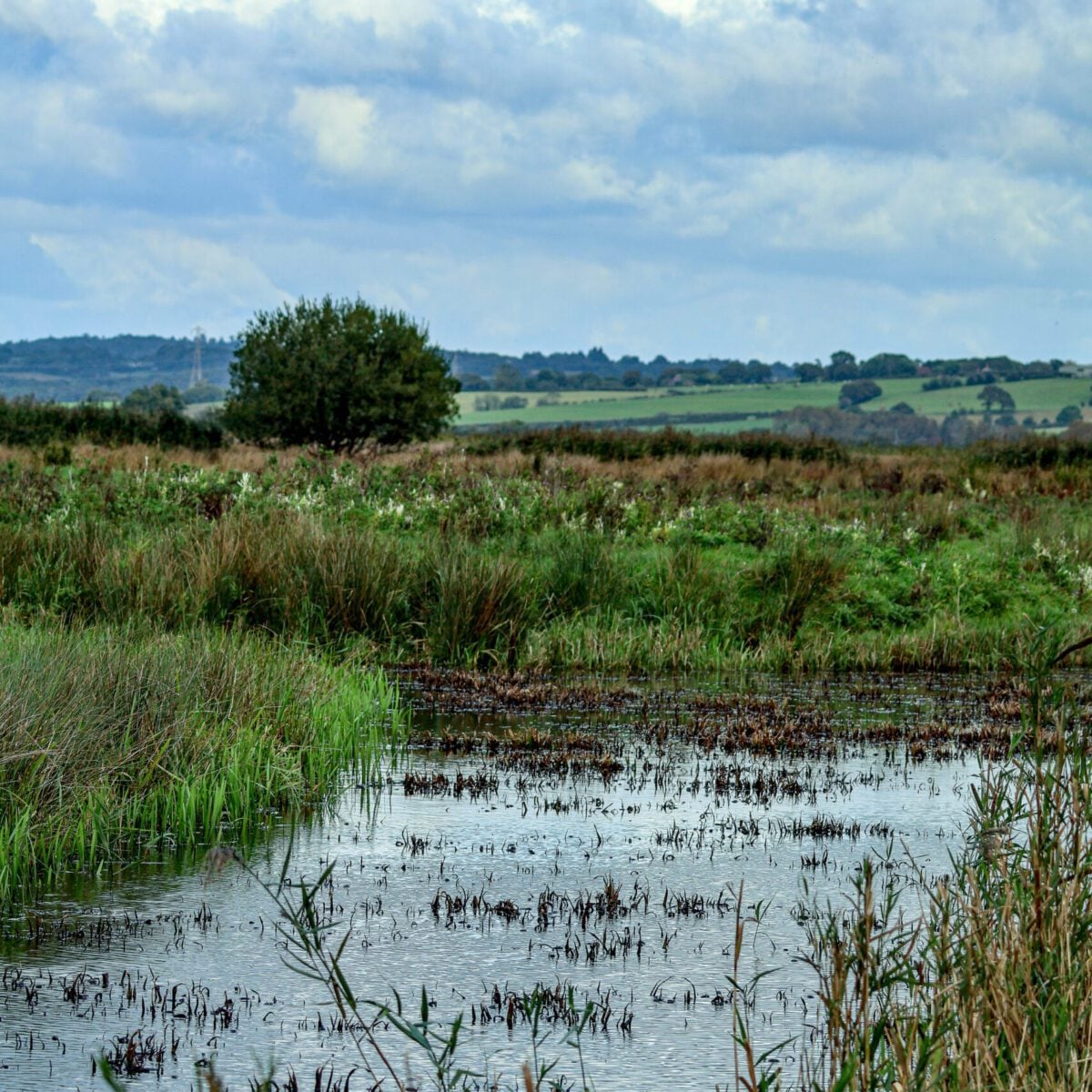
Breeding Lapwings are among the wildlife taking to the newest blue spaces on our Pevensey Levels nature reserve.
Just a few months ago, much of the site was a giant swirl of bare mud and tyre tracks.
A huge programme of earthworks, funded by £600,000 from the Network for Nature project, had just been completed during one of the wettest autumns on record in Sussex. The plan was to create extensive new wetland habitats in an area that has become progressively drier and poorer for wildlife in recent years.
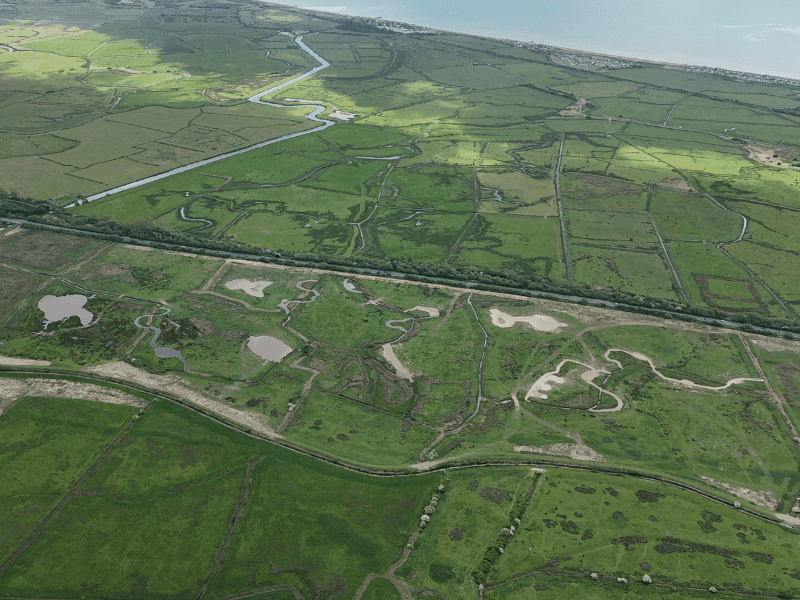
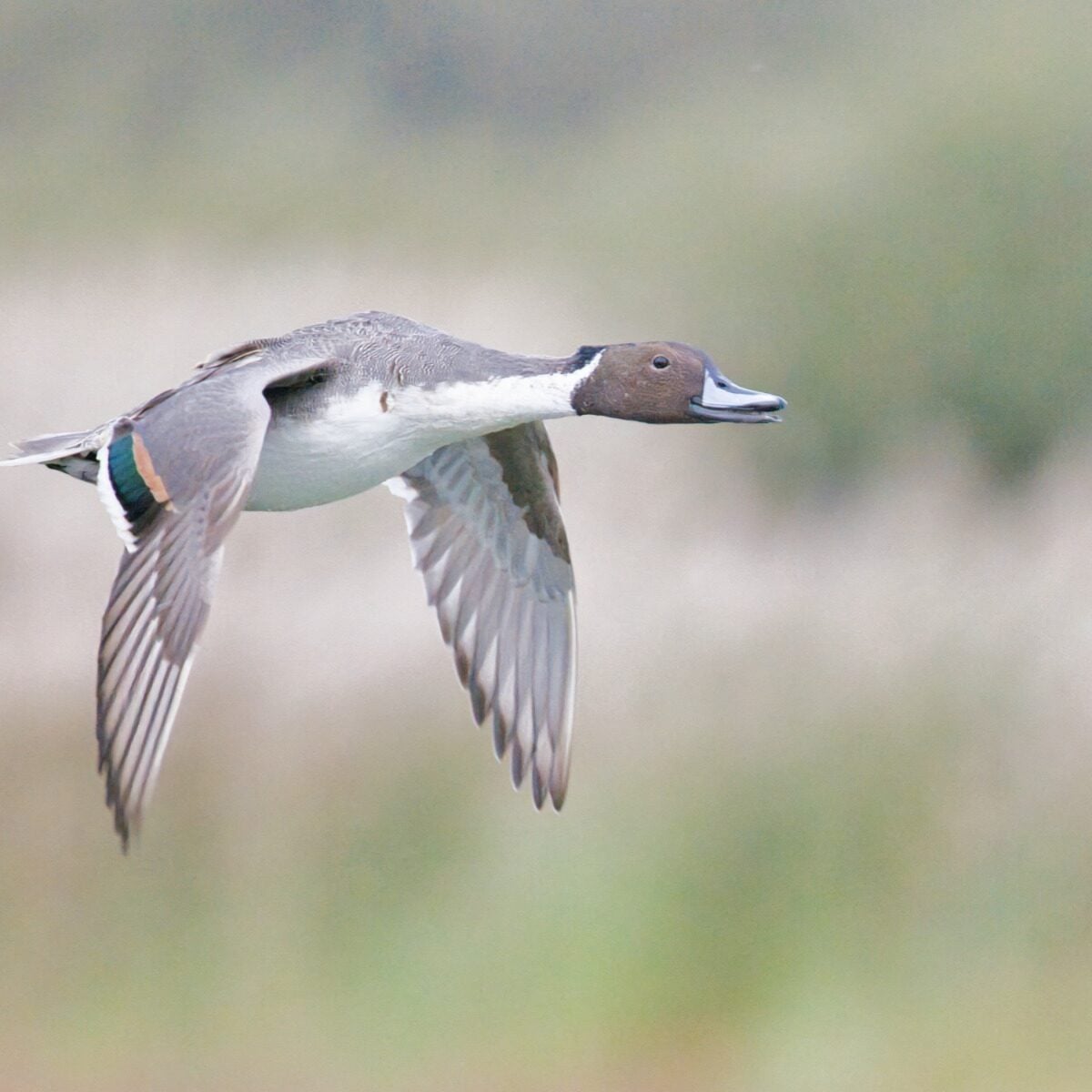
Wintering birds such as Teal and Wigeon began to use this area soon after work was complete. The question remained: would this new landscape hold water into the summer?
After an exceptionally dry spring, the results are promising.
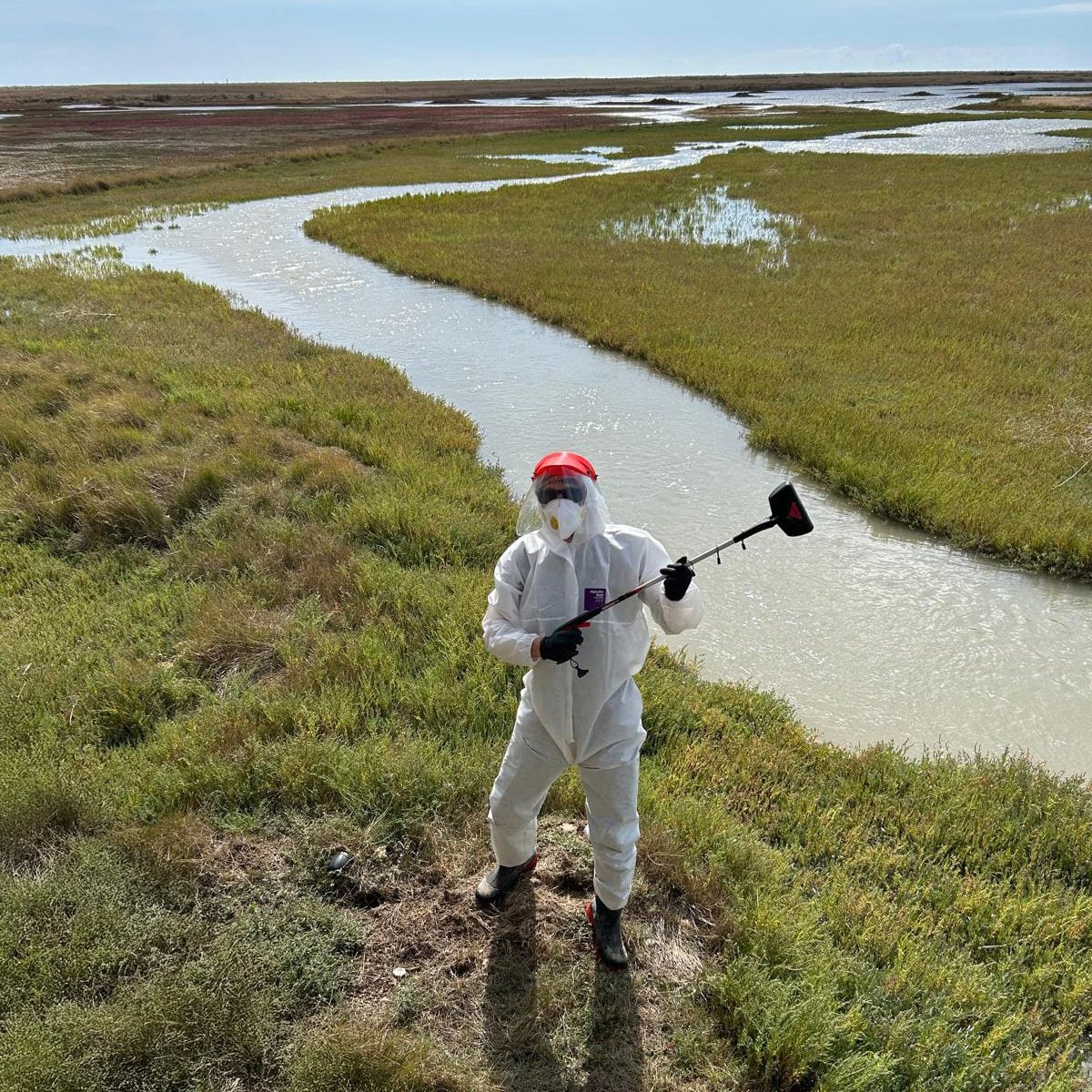
The new scrapes and wiggly ditches are wet, and lush green growth has surged around them. At the water’s edges, big patches of soft mud have endured despite the lack of rain.
That mud, and the cover afforded by the grass and rushes, is key to the success of Lapwings, which have successfully raised young.
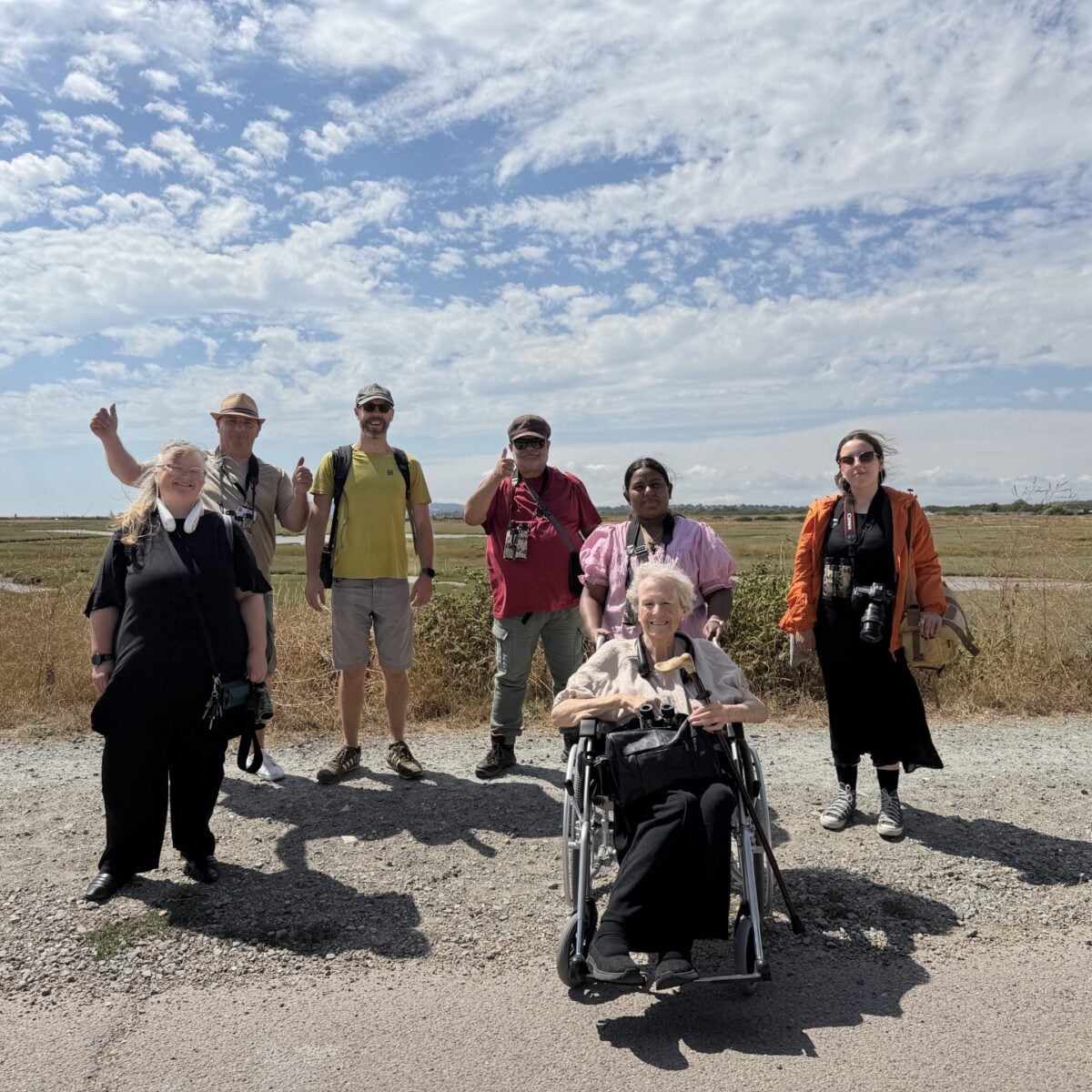
Small Lapwing chicks were photographed early in May. Then during a visit with local farmers at the end of May, two well-grown young birds were seen beside one of the pools.
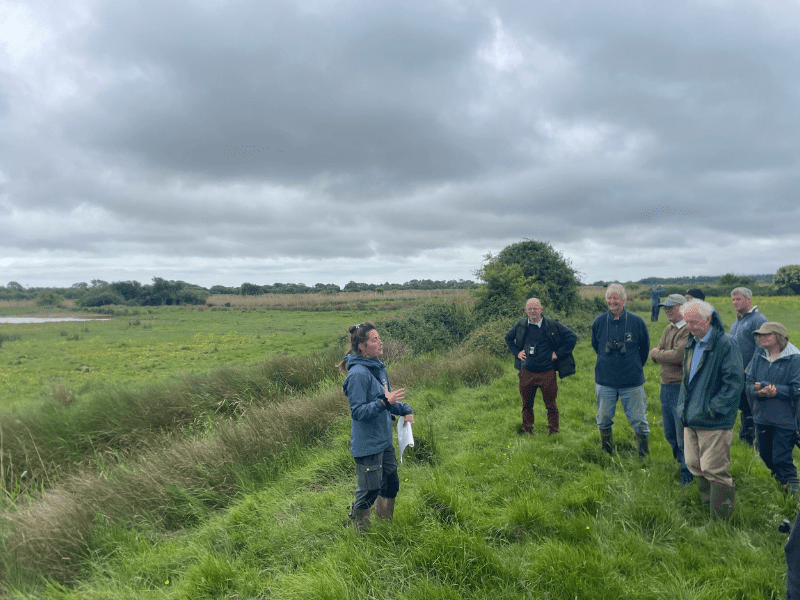
On the same day, the group counted at least 10 adult birds in the area too, with the potential for more to have been hidden out of sight.
To put this in context, in 2022, only 23 pairs of nesting Lapwings were recorded across the entire Pevensey Levels. This is an area of 3,500 hectares, of which the Sussex Wildlife Trust reserve comprises just 140 hectares, around 4%.
The new wetland areas are also being used by summering Little Egrets, Shelduck and Teal, while a pair of migratory Little Ringed Plovers visited earlier in the spring.
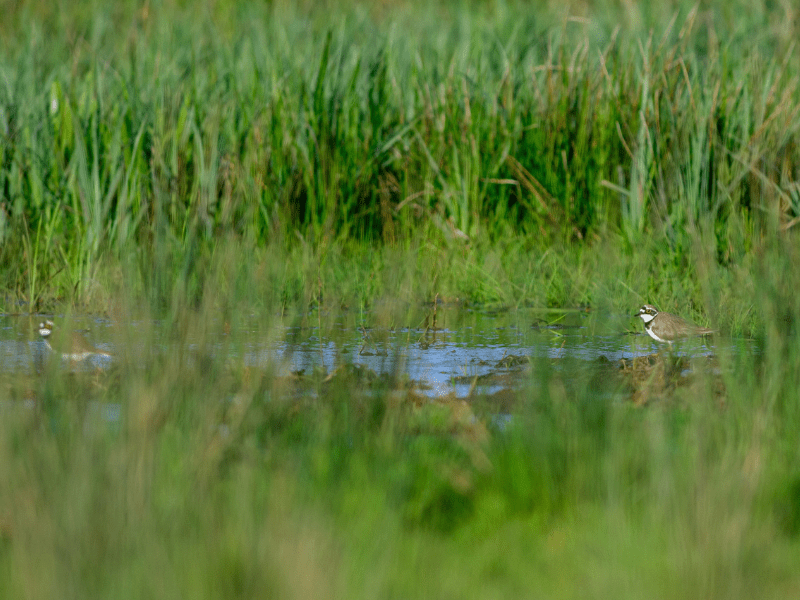
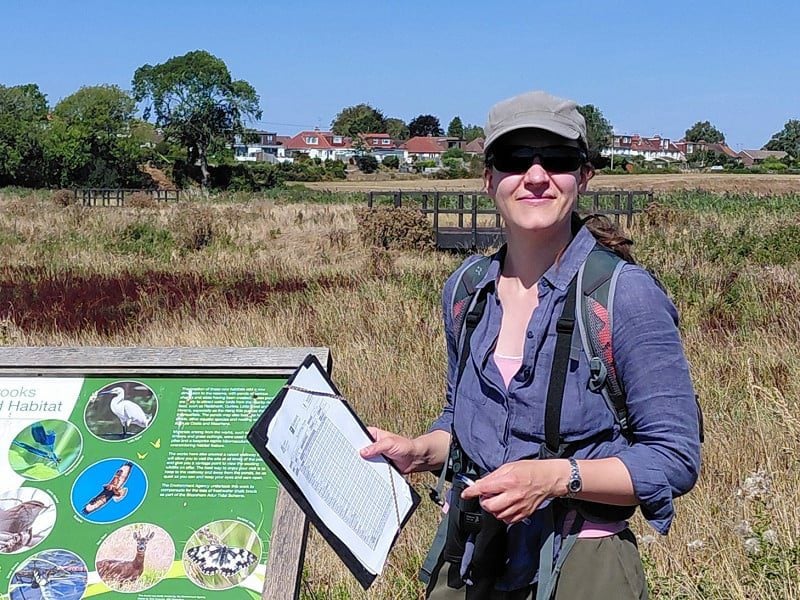
“It was a game of ‘wait and see’ when the diggers left before Christmas,” said Charlotte Pestell, Nature Recovery Officer at Sussex Wildlife Trust.
“It’s very exciting to see all this water still here, but now so much greenery too, and lots of species making use of it already.”
The project is part of a wider collaboration with local farmers, creating new habitats across other landholdings on the Levels. Work has also been carried out to extend a reedbed near Wartling, as well as to create new wetland near Hankham.

27 responses to “Promising signs on the Pevensey Levels”
This looks great! When is it open to the public! When can we come and look please? Thank you.
Fascinating stuff. I moved down here 5 years ago from Cheltenham where I volunteered for a few years with Severn Hams Group. A major achievement for us was attracting both Avocets and Little Ringed Plovers to breed on an island on one of our scrapes, and where they both raised chicks. However, the entire Severn floodplain was drying out rapidly through May and the water levels in the scrape dropped lower and lower so unsure if breeding succeeded. Rare Little Ringed Plovers are far more abundant here than Cheltenham so every chance breeding COULD succeed. Under lessons learned the key is to maybe go a metre or so deeper surrounding the islands in the scrapes to best secure a defensive moat throughout the breeding season!